



Specifications:
Location:
China
Size:
9.8 × 4.6 × 6.7 cm
Age:
Circa 1954–1955
Material:
Shoushan Stone | Handwritten Inscription
Available by request, 1-2 weeks
Price on request

Lot Essay
Delivery
Rarity and Collectible Value
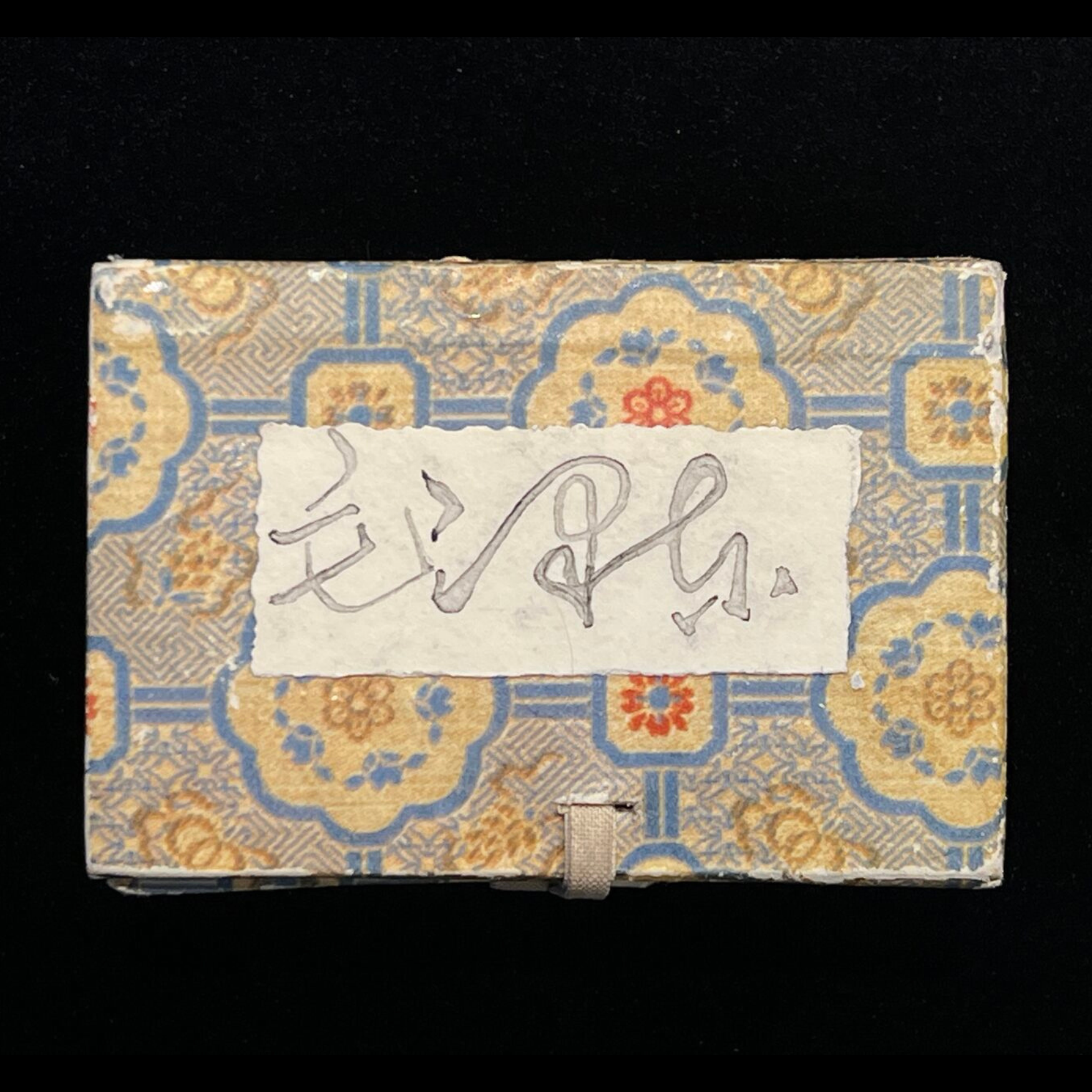
This exceptional historical artefact is a traditional Chinese carved stone seal presented in a richly decorated brocade case bearing a handwritten inscription attributed to Mao Zedong (1893–1976), the founding leader of the People’s Republic of China. According to the object’s documented description, the seal was presented as a personal diplomatic gift to Georgy Fyodorovich Aleksandrov, Minister of Culture of the Soviet Union, between 1954 and 1955. This association places the object within an important period of diplomatic and cultural relations between China and the USSR.
The collectible combines several elements of historical interest: traditional Chinese seal carving, a ceremonial presentation case, calligraphic inscription, and a reported connection to a major political figure of the twentieth century. Aleksandrov’s relatively brief tenure as Minister of Culture, from March 1954 to March 1955, provides a narrow historical timeframe for the reported presentation. The combination of diplomatic provenance, Chinese craftsmanship, and personalised inscription makes this an unusual example of mid-twentieth-century historical memorabilia, appealing to collectors of Asian art, political history, diplomatic gifts, and important personal artefacts.
Historical and Cultural Significance
The object originates from the Chinese tradition of carved personal seals, known as yinzhang (印章), which have served for centuries as instruments of identification, artistic expression, and official authority. In Chinese culture, seals occupy an important position at the intersection of calligraphy, sculpture, and administration. Historically, carved stone seals were used by scholars, artists, officials, and members of the imperial court, often embodying the owner’s identity and social position.
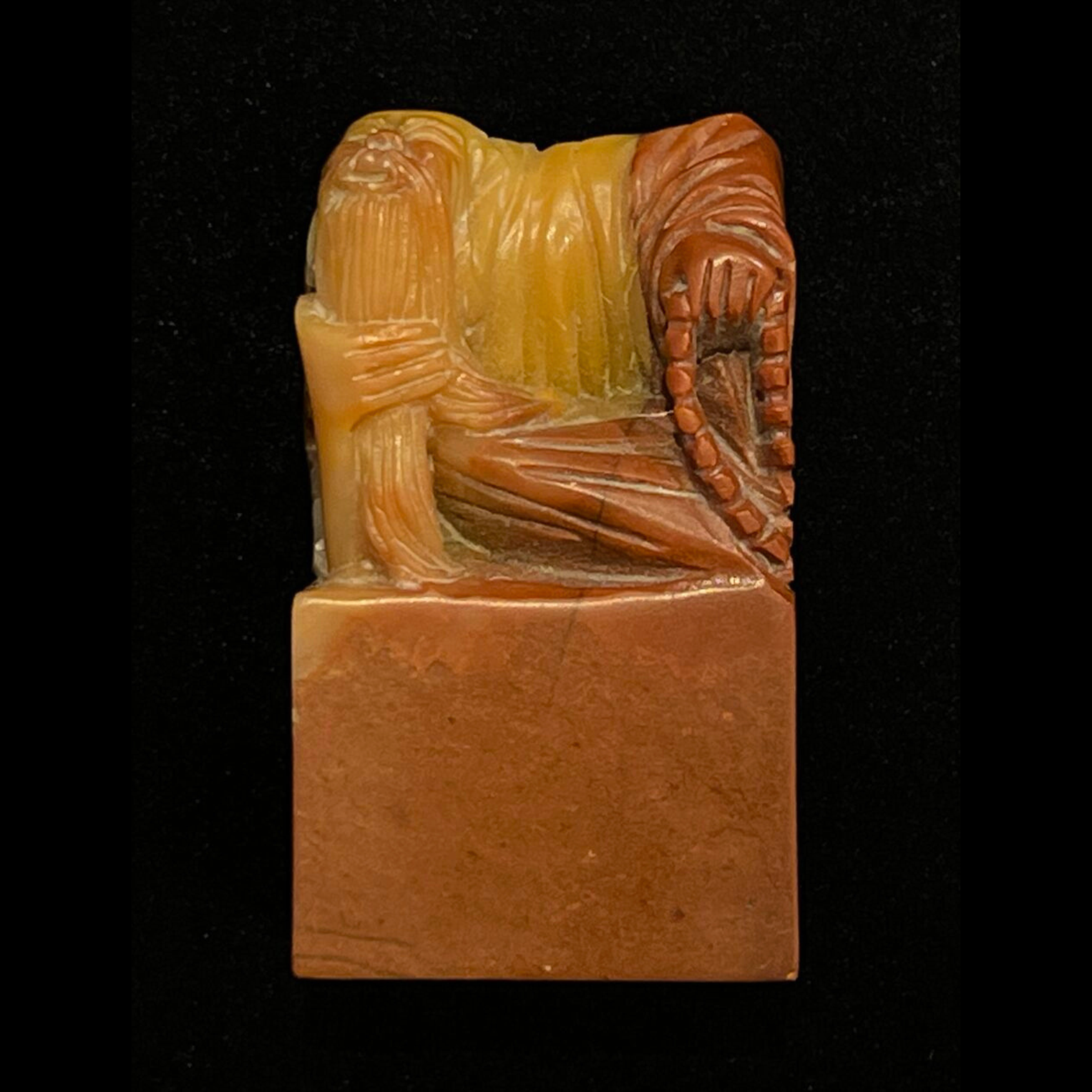
The seal is believed to have been carved from Shoushan stone, a material traditionally valued by Chinese seal engravers for its distinctive colouration, workable texture, and artistic possibilities. The carving appears to employ a technique associated with qiaodiao (巧雕), or ingenious carving, in which the sculptor incorporates the natural colour variations of the stone into the composition.
The artefact’s reported presentation dates to a period of extensive Sino-Soviet cultural exchange. During the mid-1950s, the two countries developed programmes involving artistic exhibitions, cultural delegations, theatrical performances, and exchanges between academic institutions. Georgy Aleksandrov, a Soviet philosopher and academician, served as Minister of Culture during this period, making a gift associated with traditional Chinese philosophical imagery particularly relevant to his professional position.
The seal reflects the broader tradition of diplomatic gifts in which carefully selected objects communicate cultural identity, respect, and political relationships through symbolic craftsmanship.
Image and Presentation
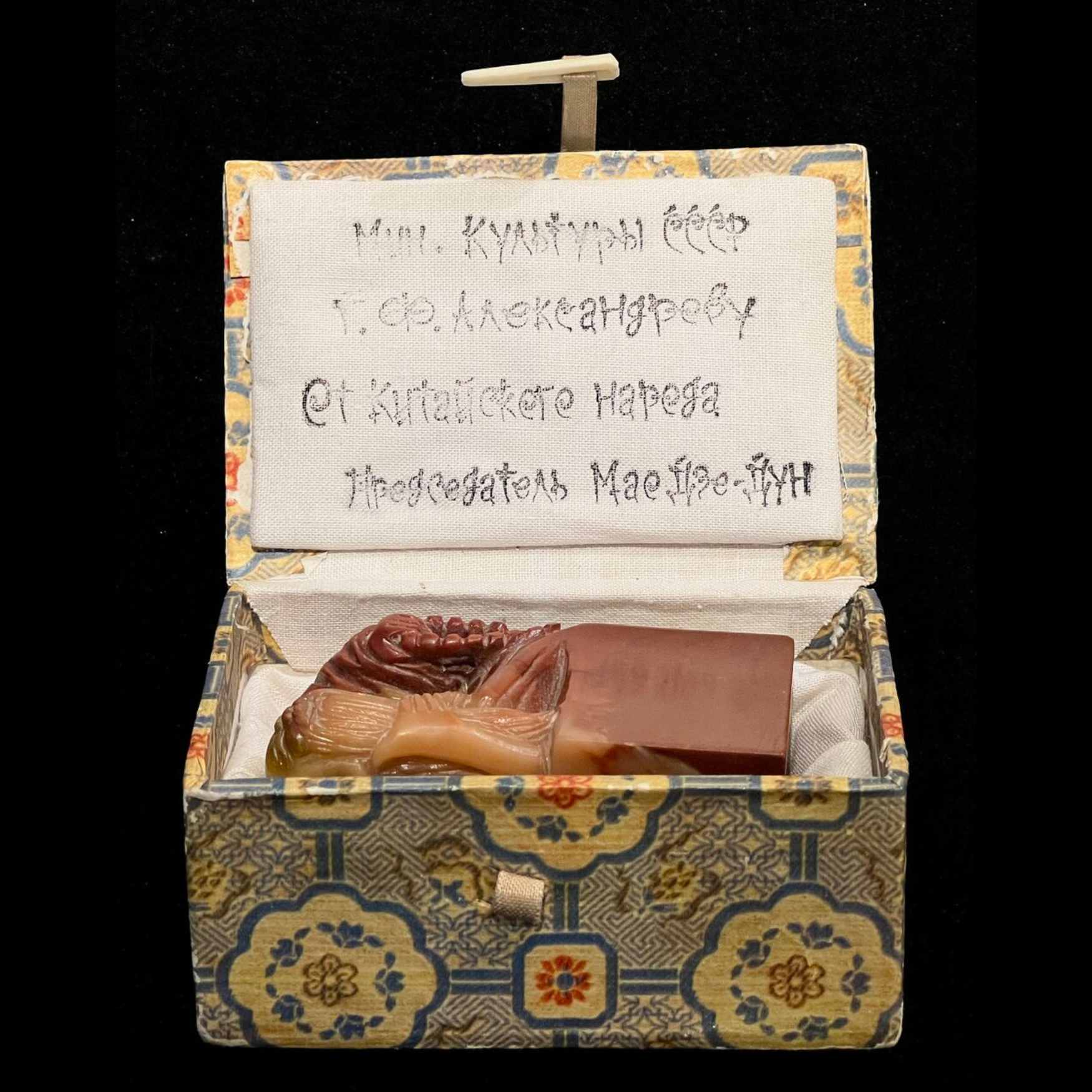
The collectible consists of a sculptural Chinese stone seal housed within a traditional presentation case covered in patterned silk brocade. The case forms an integral part of the object, combining the decorative language of Chinese textile craftsmanship with the ceremonial function of a diplomatic gift.
The stone seal features an intricately carved sculptural finial representing a seated figure in a contemplative posture. The figure appears to depict a Buddhist sage or enlightened practitioner, possibly Bodhidharma, known in China as Damo, or one of the Luohan figures associated with Buddhist spiritual wisdom. The sculptor has incorporated variations in the stone’s natural colouration into the composition, emphasising the figure’s layered garments, posture, and sculptural contours.
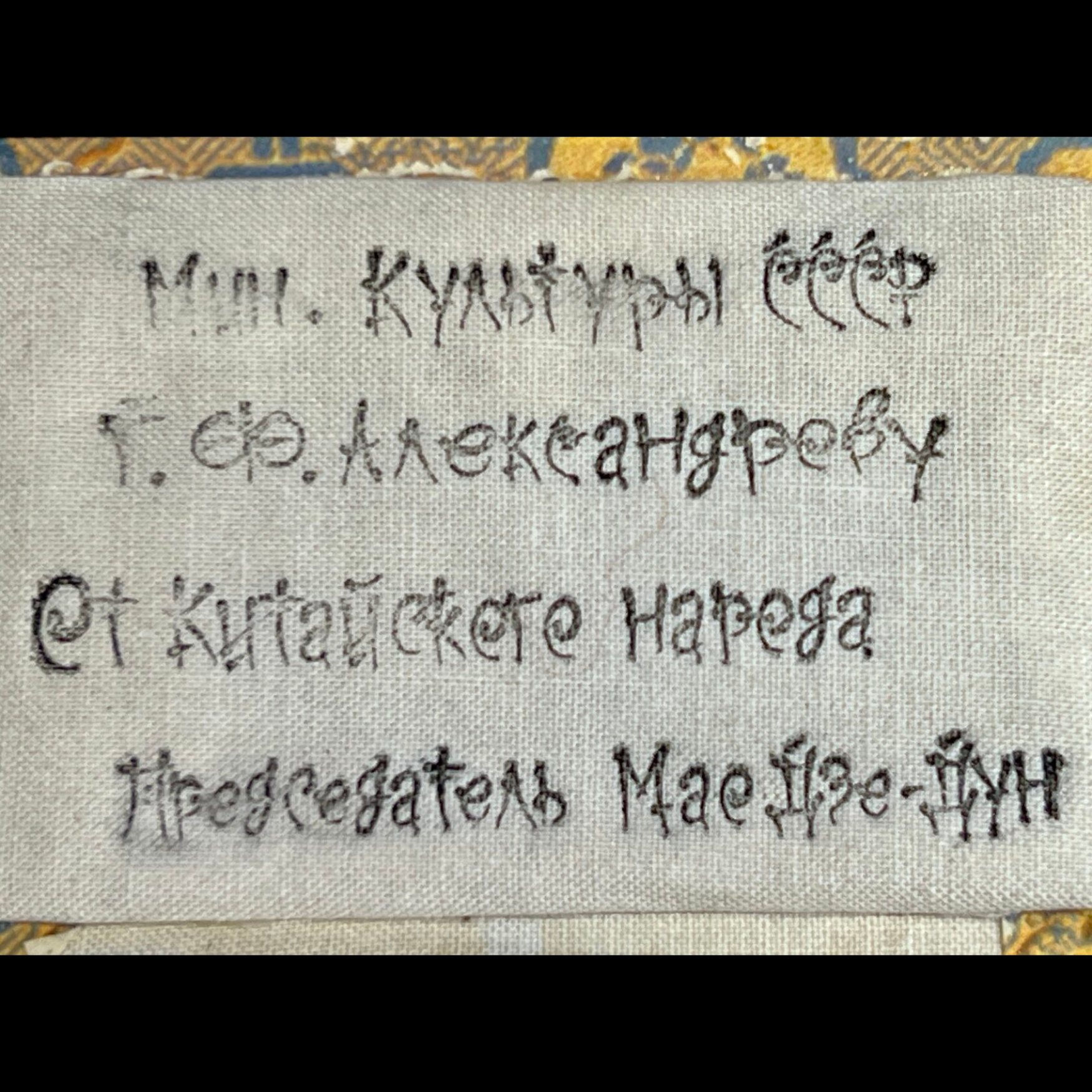
The presentation case carries a Chinese calligraphic inscription attributed to Mao Zedong, reading “Wen Hua” (文化), meaning “Culture.” This choice of words is particularly meaningful given the reported recipient’s position as Soviet Minister of Culture. The interior silk lining of the lid also features a Russian-language inscription identifying Chairman Mao Zedong, reflecting the formal presentation conventions associated with diplomatic gifts of the period.
With overall dimensions of 9.8 × 4.6 × 6.7 cm, the collectible is notably compact, allowing its carefully carved details and decorative case to be appreciated at close range. Its combination of sculptural craftsmanship, calligraphy, and historical context makes it suitable for presentation in a specialised collection of Asian art, diplomatic memorabilia, or twentieth-century historical artefacts.
Human Touch
The most distinctive personal element of this artefact is the calligraphic inscription attributed to Mao Zedong, which establishes a direct association between the object and one of the most consequential and controversial political figures of modern history. Born in Hunan Province in 1893, Mao became a central figure in the Chinese Communist movement and proclaimed the establishment of the People’s Republic of China in 1949. His leadership profoundly shaped China’s political, economic, and social development, including policies and campaigns that caused widespread suffering and remain subjects of historical examination.
Beyond his political role, Mao practised Chinese calligraphy and developed a highly recognisable writing style. Calligraphy has long occupied an important place in Chinese intellectual culture, expressing not only written meaning but also individual artistic character. The inscription “Culture” introduces a specifically personal and symbolic dimension to this object, linking the reported donor’s calligraphic expression with the professional responsibilities of its recipient.
The reported presentation to Georgy Aleksandrov adds another layer of historical meaning. As a philosopher and scholar of Western intellectual traditions, Aleksandrov occupied a position that connected political administration with academic and cultural life. A carved representation of an Eastern spiritual thinker would have carried an especially relevant symbolic association in this context.
Rather than functioning solely as a decorative seal, this object preserves the material language of mid-twentieth-century diplomacy: a compact personal gift in which craftsmanship, inscription, symbolism, and political history converge. It offers collectors a tangible opportunity to examine the cultural practices and international relationships that shaped a significant period in modern Chinese and Soviet history.
Delivery
Brought to you by

Lot HK_SM-019
Michael Jackson – Autographed Photograph with Diana Ross at the American Music Awards, 1984
Lot HK_SM-011
David Prowse – Autographed Darth Vader Photograph from Star Wars
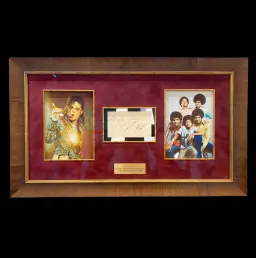
Lot SM-019
Michael Jackson, Marlon Jackson, Tito Jackson and Jackie Jackson (The Jackson 5) Signed Card
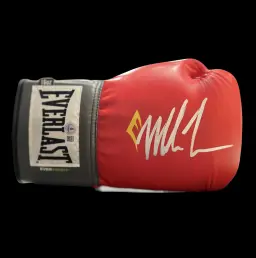
Lot SM-027
Mike Tyson Signed Boxing Glove (Red)
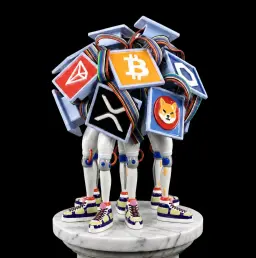
Lot SM-022
Crypto Money Sculpture by Taras Yoom, Yoomoota Art Universe
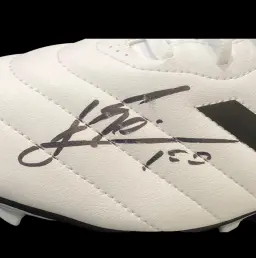
Lot HK_SM-017
Lionel Messi Signed Football Boot (White)
Lot SM-032
Elton John Waistcoat from the Artist’s Personal Wardrobe
Lot BK-009
54,484.00 HK$Icons of Everest: Signed Photograph by Hillary & Norgay with Tenzing Norgay’s Autobiography “After Everest”
Lot HK_SM-006
Christian Dior Personal sketch with handwritten notes
Lot HK_SM-002
Jackie Chan – Autographed Photograph
Lot HK_SM-018
Item has been added to your Cart
You cannot add "Mao Zedong – Seal in Case with Autograph" to your cart again.
Enquiry
Lot HK_SM-018
Thank you for your interest. Please fill out the below form, and our specialist will follow up with you shortly.
Thank you for your interest
We will be in touch shortly
We will never pass your personal information to anyone outside of Artefactum Gallery for their own marketing purposes without your consent. For more information about how we processes your data, please click here to read our Privacy Notice.
Brought to you by
Enquiry
Thank you for your interest. Please fill out the below form, and our specialist will follow up with you shortly.
Thank you for your interest
We will be in touch shortly
We will never pass your personal information to anyone outside of Artefactum Gallery for their own marketing purposes without your consent. For more information about how we processes your data, please click here to read our Privacy Notice.