




Specifications:
Location:
France
Age:
1940s
Frame size:
73.5 × 51 cm
Material:
Wooden frame
Available by request, 1-2 weeks
Price on request

Lot Essay
Delivery
Rarity and Collectible Value
This original hand-drawn fashion sketch with handwritten annotations attributed to Christian Dior (1905–1957) represents an exceptional piece of twentieth-century haute couture history, associated with one of the most influential designers in the evolution of modern fashion. Dating to the 1940s, the drawing reflects an important formative period in Dior’s artistic career, preceding or accompanying the development of the revolutionary design principles that would define his internationally celebrated New Look.
Unlike a printed fashion illustration or a later reproduction, an original working sketch provides a direct connection to the creative process of the designer. Its expressive pencil lines, carefully constructed silhouette, and handwritten markings reveal the preliminary stages through which a fashion concept was developed into a refined couture design.
Christian Dior transformed postwar women’s fashion through his emphasis on elegant proportions, accentuated waistlines, structured bodices, and generous skirts. His debut collection in 1947 established a new standard of femininity and luxury, fundamentally changing the direction of international fashion.
The sketch is particularly significant because it preserves the spontaneity and individuality of the designer’s creative vision. Rather than presenting a finished garment, it documents the artistic thinking behind the development of a couture silhouette.
For collectors of historical fashion, original design drawings, luxury heritage, and twentieth-century decorative arts, this piece offers a distinctive opportunity to engage with the creative legacy of the founder of the House of Dior.
Historical and Cultural Significance
The drawing is associated with Christian Dior’s work during the 1940s, a transformative decade in European fashion history. Born in Granville, Normandy, in 1905, Dior initially pursued interests in art and gallery management before establishing himself within the Parisian fashion industry.
During the 1930s, he began working as a fashion illustrator, producing designs for prominent Parisian fashion houses. In 1938, he joined the couture house of Robert Piguet, where he developed important skills in garment construction, proportion, and the relationship between fabric and the human figure.
Following the Second World War, Dior worked for Lucien Lelong, an established Parisian couturier whose fashion house played an important role in preserving French haute couture during a period of considerable economic and political uncertainty.
In December 1946, with the financial support of textile industrialist Marcel Boussac, Dior founded his own fashion house at 30 Avenue Montaigne in Paris. His first collection, presented on February 12, 1947, introduced the silhouettes that would become internationally recognised as the New Look.
Characterised by narrow waists, softly rounded shoulders, structured tailoring, and voluminous skirts, these designs represented a dramatic departure from the practical and fabric-conscious clothing associated with the wartime years.
The present sketch reflects the same exploration of silhouette, balance, and feminine proportions that became central to Dior’s design philosophy. Its carefully shaped bodice and expansive skirt demonstrate an interest in architectural garment construction, where fabric, line, and volume work together to create a harmonious visual structure.
As a historical fashion document, the drawing preserves an important connection to the artistic traditions of Parisian haute couture and the emergence of one of the world’s most recognisable luxury fashion houses.
Image and Presentation
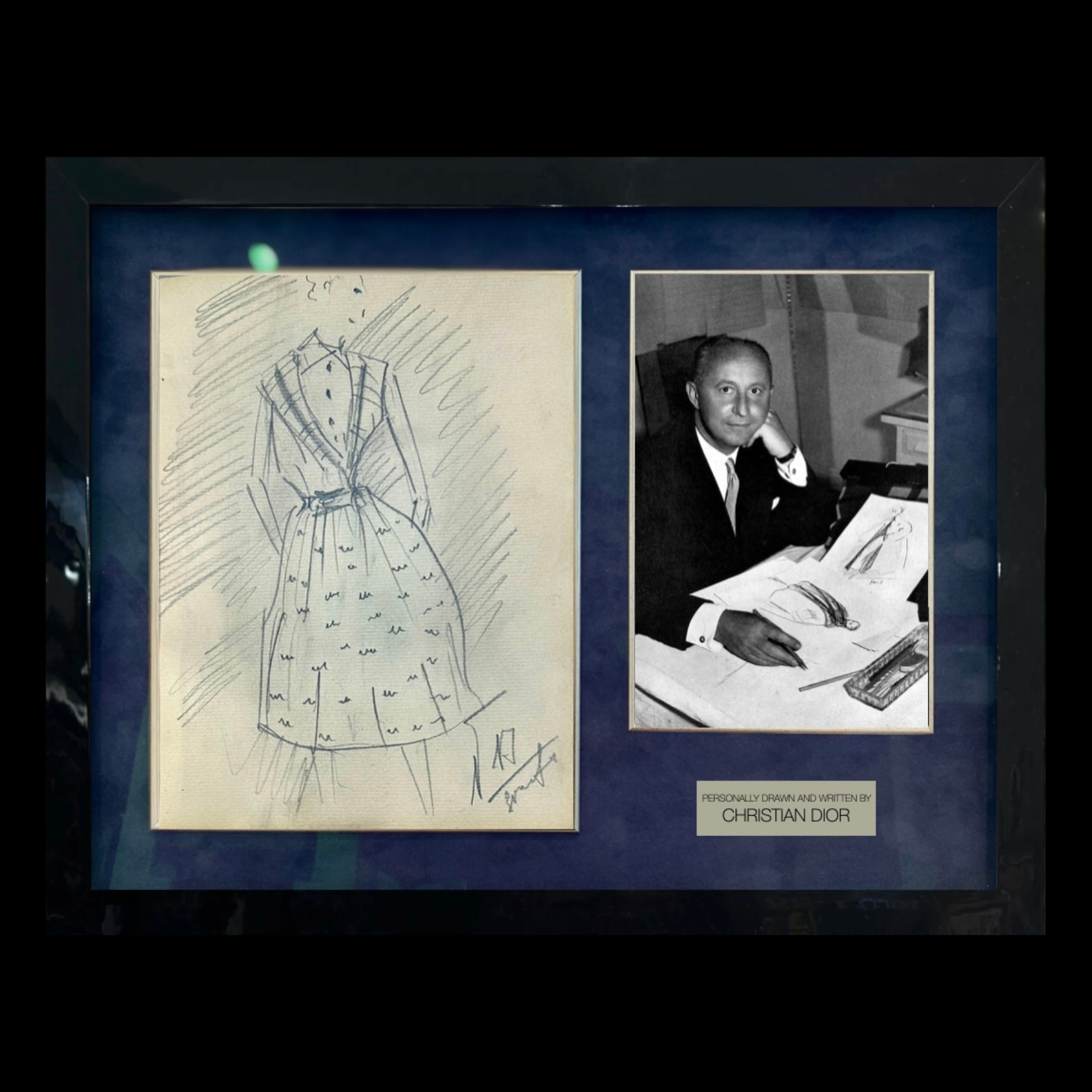
The collectible features an original pencil fashion sketch presented alongside a historical black-and-white portrait of Christian Dior within an elegant black rectangular frame. A deep navy-blue background creates a sophisticated contrast with the light-coloured drawing paper and monochromatic photograph, emphasising the historical and artistic character of the composition.
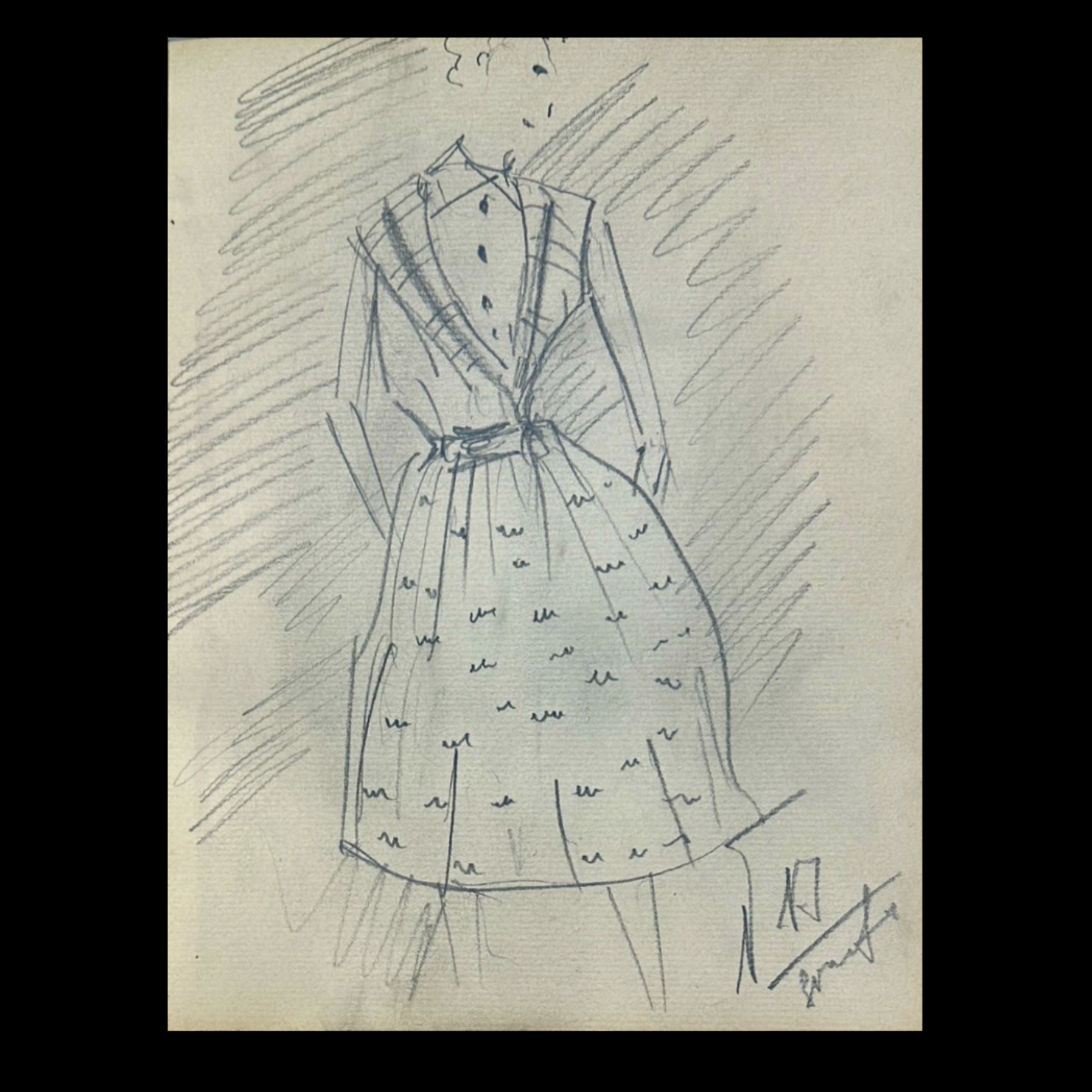
The sketch depicts a full-length female figure wearing a structured ensemble with a fitted bodice, pronounced waistline, and generously shaped skirt. The upper section features a tailored collar, a central row of buttons, and diagonal detailing across the chest, creating a carefully balanced arrangement of geometric lines.
The waist is accentuated by a narrow belt or gathered fastening, while the skirt expands into a broad silhouette extending below the knee. Small repeated pencil markings across the skirt suggest decorative details, surface texture, or fabric treatment, revealing the designer’s attention to the relationship between material and form.
The figure is rendered through confident, economical pencil strokes, with diagonal shading surrounding the silhouette to emphasise the garment’s volume and visual structure. The elongated proportions of the fashion figure are characteristic of traditional couture illustration, where the human body serves as an architectural framework for clothing design.
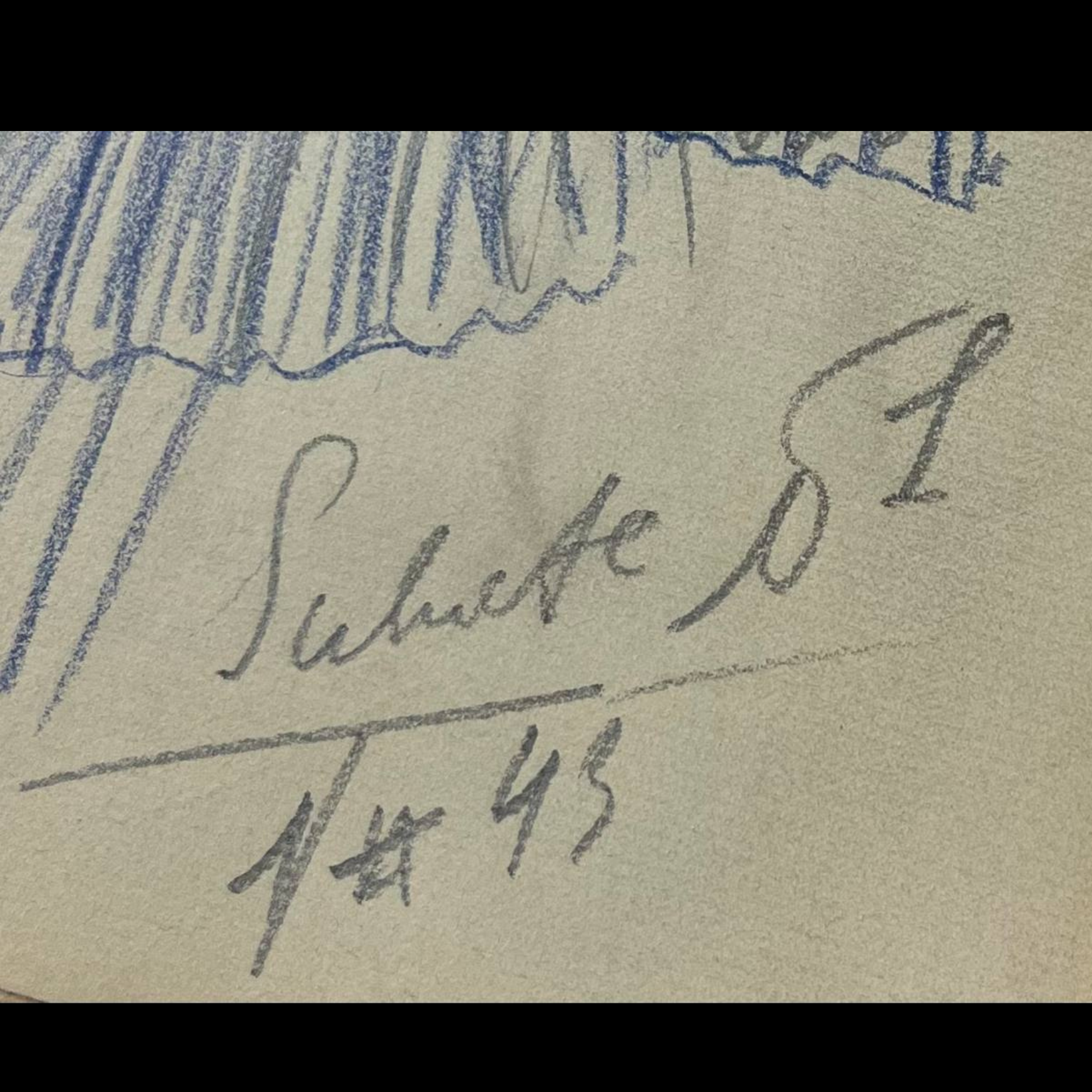
Handwritten markings and a stylised signature-like inscription appear in the lower-right section of the drawing, adding an individual documentary element to the composition.
To the right, a historical photograph presents Christian Dior seated at a desk, wearing a formal dark suit and tie. The designer rests his head against one hand while looking towards the camera, surrounded by papers, fashion illustrations, and drawing materials. The image captures Dior within his working environment, establishing a visual relationship between the creative figure and the original sketch displayed beside him.
A small metallic plaque beneath the photograph bears the inscription “Personally Drawn and Written by Christian Dior,” identifying the artistic attribution of the displayed drawing.
With overall dimensions of 73.5 × 51.1 cm and a depth of 0.1 cm as specified for the lot, the composition offers an impressive horizontal presentation. Its combination of original fashion illustration, historical portraiture, and refined framing makes it particularly suitable for luxury residential interiors, fashion galleries, executive offices, private libraries, and collections dedicated to the heritage of European haute couture.
Human Touch
The most compelling personal element of this collectible lies in the handwritten character of the drawing, preserving a direct connection to Christian Dior’s creative process and his extraordinary sensitivity to fashion as an artistic discipline.
Dior’s approach to design was deeply influenced by his appreciation of architecture, fine art, flowers, and the decorative traditions of European craftsmanship. His childhood in Normandy, surrounded by gardens and elegant domestic interiors, contributed to the development of an aesthetic sensibility characterised by refined proportions, romantic forms, and carefully controlled visual harmony.
His fashion sketches reveal how an initial artistic idea could be developed through simple lines before being translated into complex garments requiring exceptional technical precision. The present drawing demonstrates this process through its emphasis on the relationship between a fitted upper silhouette and an expansive skirt.
The handwritten annotations and spontaneous pencil marks introduce an intimate dimension, revealing the individuality behind the finished couture creations. Each line reflects a decision about proportion, structure, movement, or decorative detail, providing insight into the designer’s method of visualising clothing before production.
Christian Dior famously considered fashion design an art of transformation, using fabric and construction to create silhouettes that combined elegance, confidence, and a distinctive sense of femininity. His creations were supported by the extraordinary craftsmanship of Parisian ateliers, where skilled artisans translated his drawings into garments through meticulous cutting, fitting, and hand-finishing.
Although Dior personally directed his fashion house for only a decade before his death in 1957, his artistic vision established a lasting foundation for one of the most influential names in international luxury fashion.
This original sketch celebrates that creative legacy in its most immediate form. Rather than documenting a completed fashion collection, it preserves the artistic gesture through which a design began to take shape.
For collectors and admirers of Christian Dior, the piece represents a meaningful connection to the individual behind the celebrated fashion house, honoring his imagination, technical understanding, and enduring contribution to the history of haute couture.
Delivery
Brought to you by


Lot HK_SM-020
Mike Tyson Signed Boxing Glove (Black)
Lot HK_SM-013
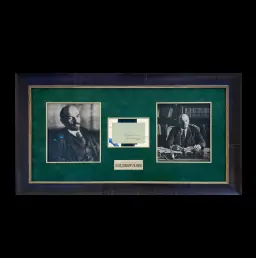
Henri Matisse – Framed Original Autograph with Portrait and La Danse Artwork
Lot HK_SM-009
Cristiano Ronaldo – Manchester United FC Jersey with Autograph

Lot SM-002
Another Kingdom: Oasis Chess by Yoomoota Art Universe
Lot SM-008
Quentin Tarantino Signed Pulp Fiction Film Script
Lot SM-033
Desert Pillman Sculpture by Taras Zheltyshev, Yoomoota Art Universe

Lot SM-022
Crypto Money Sculpture by Taras Yoom, Yoomoota Art Universe
Lot SM-029
Charles Leclerc Signed Scuderia Ferrari T-Shirt

Lot SM-021
Andrea Bocelli Signed Vinyl Record
Lot SM-001
Muhammad Ali Signed “God Is One” Brochure
Lot HK_SM-006
Item has been added to your Cart
You cannot add "Christian Dior Personal sketch with handwritten notes" to your cart again.
Enquiry
Lot HK_SM-006
Thank you for your interest. Please fill out the below form, and our specialist will follow up with you shortly.
Thank you for your interest
We will be in touch shortly
We will never pass your personal information to anyone outside of Artefactum Gallery for their own marketing purposes without your consent. For more information about how we processes your data, please click here to read our Privacy Notice.
Brought to you by
Enquiry
Thank you for your interest. Please fill out the below form, and our specialist will follow up with you shortly.
Thank you for your interest
We will be in touch shortly
We will never pass your personal information to anyone outside of Artefactum Gallery for their own marketing purposes without your consent. For more information about how we processes your data, please click here to read our Privacy Notice.