



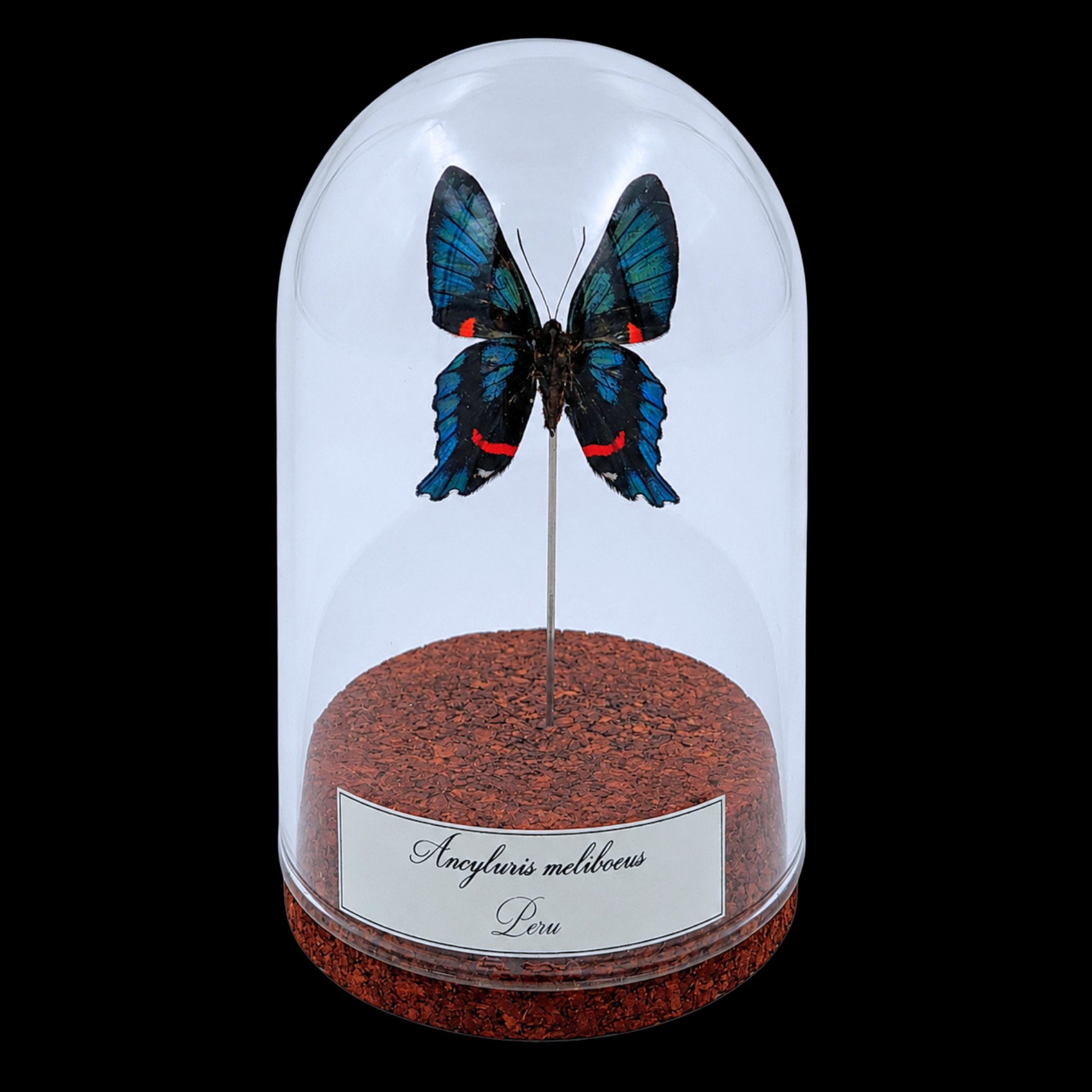
المواصفات:
الموقع:
بيرو
الجنس:
Ancyluris meliboeus
الحجم:
10 سم
المادة:
ناقوس زجاجي
متوفر في دبي
300,00 AED

مقال عن الـ Lot
التسليم
الوصف: Ancyluris meliboeus فراشة لافتة من المنطقة الاستوائية الجديدة تنتمي إلى فصيلة Riodinidae وتعيش في المناطق الاستوائية من أمريكا الجنوبية، بما في ذلك بيرو. ويُعرف النوع بجناحيه الداكنين المتباينين مع علامات قزحية أو زاهية الألوان نابضة. وتنشأ هذه التأثيرات البصرية عن حراشف مجهرية تؤثر بنيتها في انعكاس الضوء، فتنتج تلوينًا قد تتغير شدته بحسب زاوية النظر. ويدعم شكل جناحيها المستطيل وجسمها المدمج الطيران الرشيق عبر النباتات الاستوائية. ويُظهر النوع التخصص البنيوي والبصري اللافت المميز لفراشات الميتالمارك في المنطقة الاستوائية الجديدة.
الندرة والقيمة: تكمن القيمة البيولوجية لـAncyluris meliboeus في تلوينها البنيوي المعقد ومورفولوجيا جناحيها المميزة وتوزعها الاستوائي. وتوفر أسطح الجناحين القزحية مادة مهمة لدراسة التفاعل بين البنى البيولوجية المجهرية والضوء المرئي. والعيّنات التي تحتفظ بالحراشف السليمة وحواف الجناحين الكاملة والتلوين الطبيعي القوي قيّمة بصورة خاصة لمجموعات علم الحشرات. وتسهم الأمثلة المحفوظة جيدًا في البحث المتعلق بالإشارات البصرية وهندسة الحراشف والتنوع التطوري الاستثنائي لفصيلة Riodinidae.
الاكتشاف: تعيش Ancyluris meliboeus في الغابات الاستوائية الرطبة وأطراف الغابات والفسحات المشمسة. والبالغات نشطة نهارًا وتستخدم العيون المركبة لكشف الحركة والتنقل عبر النباتات المعقدة. وتحتوي قرون الاستشعار المهراوية على مستقبلات حسية تشارك في الكشف الكيميائي، بينما يتيح الخرطوم للفراشة استهلاك المغذيات السائلة. وتتطور اليرقات على نباتات عائلة مناسبة وتمر بعدة مراحل نمو قبل التعذر. ويمر النوع بتحول كامل عبر مراحل البيضة واليرقة والخادرة والبالغة. ويسهم البحث في فصيلة Riodinidae في دراسات التنوع البيولوجي الاستوائي والتلوين وتطور الحشرات.
اللمسة الإنسانية: بعد الحصول عليها بطريقة أخلاقية، حُفظت الفراشة بعناية وعُرضت داخل ناقوس زجاجي. ويحافظ الإعداد الخبير على حراشف الجناحين المجهرية والتلوين البنيوي والتفاصيل التشريحية الأساسية مع حماية العيّنة من التلف البيئي. ويتيح الغلاف الشفاف مراقبة الخصائص البصرية المتغيرة للجناحين عن قرب. وتحتفي Ancyluris meliboeus المحفوظة هذه بالتنوع البيولوجي الاستثنائي لفراشات بيرو، وتحفظ مثالًا رائعًا على التلوين البنيوي في الطبيعة.
التسليم
مقدم من


هل تحتاج إلى مزيد من التفاصيل؟
Lot PVG51
Phymateus viridipes – رمز نابض بالحياة لجنوب أفريقيا
Lot BC-202
الأطفال – الأناقة الصينية في العرض
Lot UM-303
470,00 AEDأورانيا ريفيوس – كنز مدغشقر المتلألئ

Lot BGC-110
350,00 AEDSiproeta stelenes داخل ناقوس زجاجي 12 سم، بيرو

Lot BGC-112
350,00 AEDGraphium cyrnus داخل ناقوس زجاجي 12 سم، إندونيسيا
Lot BGC-113
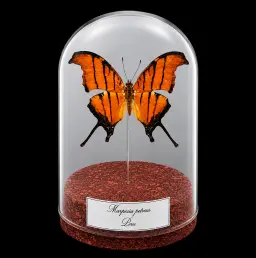
350,00 AEDMarpesia petreus داخل ناقوس زجاجي 12 سم، بيرو

Lot BGC-126
450,00 AEDHeliconius clysonymus على زهرة مجففة داخل ناقوس زجاجي 12 سم، بيرو
Lot ENT-047
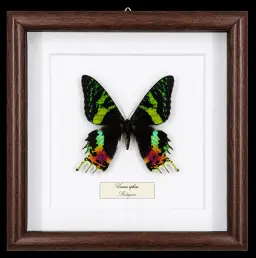
470,00 AEDUrania ripheus في إطار، مدغشقر (Copy)
Lot CA-01
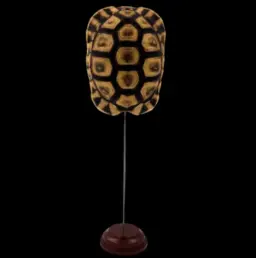
780,00 AEDChersina Angulata – صدفة السلحفاة الزاوية في جنوب إفريقيا
Lot IRR11
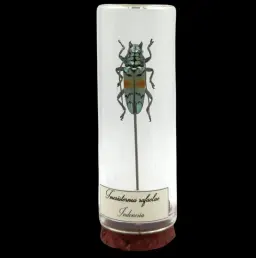
350,00 AEDجمال رقيق: Imesisternus rafaelae، إندونيسيا
Lot BGC-127
تمت إضافة المنتج إلى سلة التسوق الخاصة بك
لا يمكنك إضافة "Ancyluris meliboeus داخل ناقوس زجاجي 10 سم، بيرو" إلى سلة التسوق مرة أخرى.
استفسار
Lot BGC-127
شكرًا على اهتمامك. يرجى ملء النموذج أدناه، وسيقوم أحد المتخصصين لدينا بالاتصال بك قريبًا.
شكرًا على اهتمامك
سنتواصل معك قريبًا
لن نقوم أبدًا بنقل معلوماتك الشخصية إلى أي جهة خارج Artefactum Gallery لاستخدامها في أغراض تسويقية خاصة بها دون موافقتك. لمزيد من المعلومات حول كيفية معالجتنا لبياناتك، يرجى النقر هنا لقراءة «إشعار الخصوصية» الخاص بنا.
مقدم من
استفسار
شكرًا على اهتمامك. يرجى ملء النموذج أدناه، وسيقوم أحد المتخصصين لدينا بالاتصال بك قريبًا.
شكرًا على اهتمامك
سنتواصل معك قريبًا
لن نقوم أبدًا بنقل معلوماتك الشخصية إلى أي جهة خارج Artefactum Gallery لاستخدامها في أغراض تسويقية خاصة بها دون موافقتك. لمزيد من المعلومات حول كيفية معالجتنا لبياناتك، يرجى النقر هنا لقراءة «إشعار الخصوصية» الخاص بنا.