


Murchison : The Meteorite Older Than the Solar System — A Cosmic Icon of NHMAD
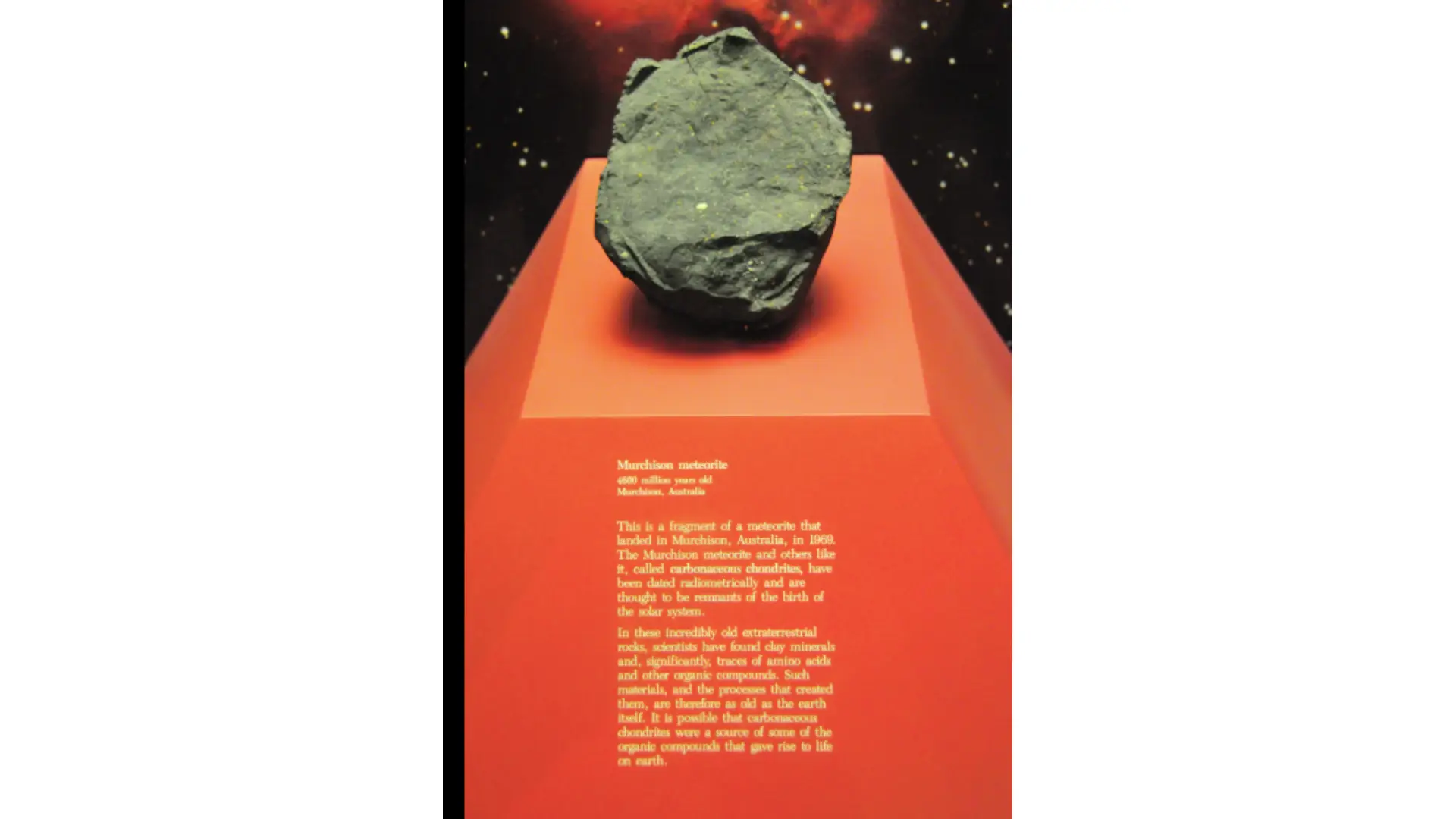
A deep-dive exploration of the legendary Murchison meteorite fragment exhibited at the Natural History Museum Abu Dhabi (NHMAD). This article reveals why Murchison is one of the most scientifically important cosmic objects ever discovered, how it aligns with Abu Dhabi’s vision for global scientific leadership, and what profound secrets it holds about the origins of life and the formation of our Solar System.
I. A Fall from the Heavens: The Discovery of the Murchison Meteorite
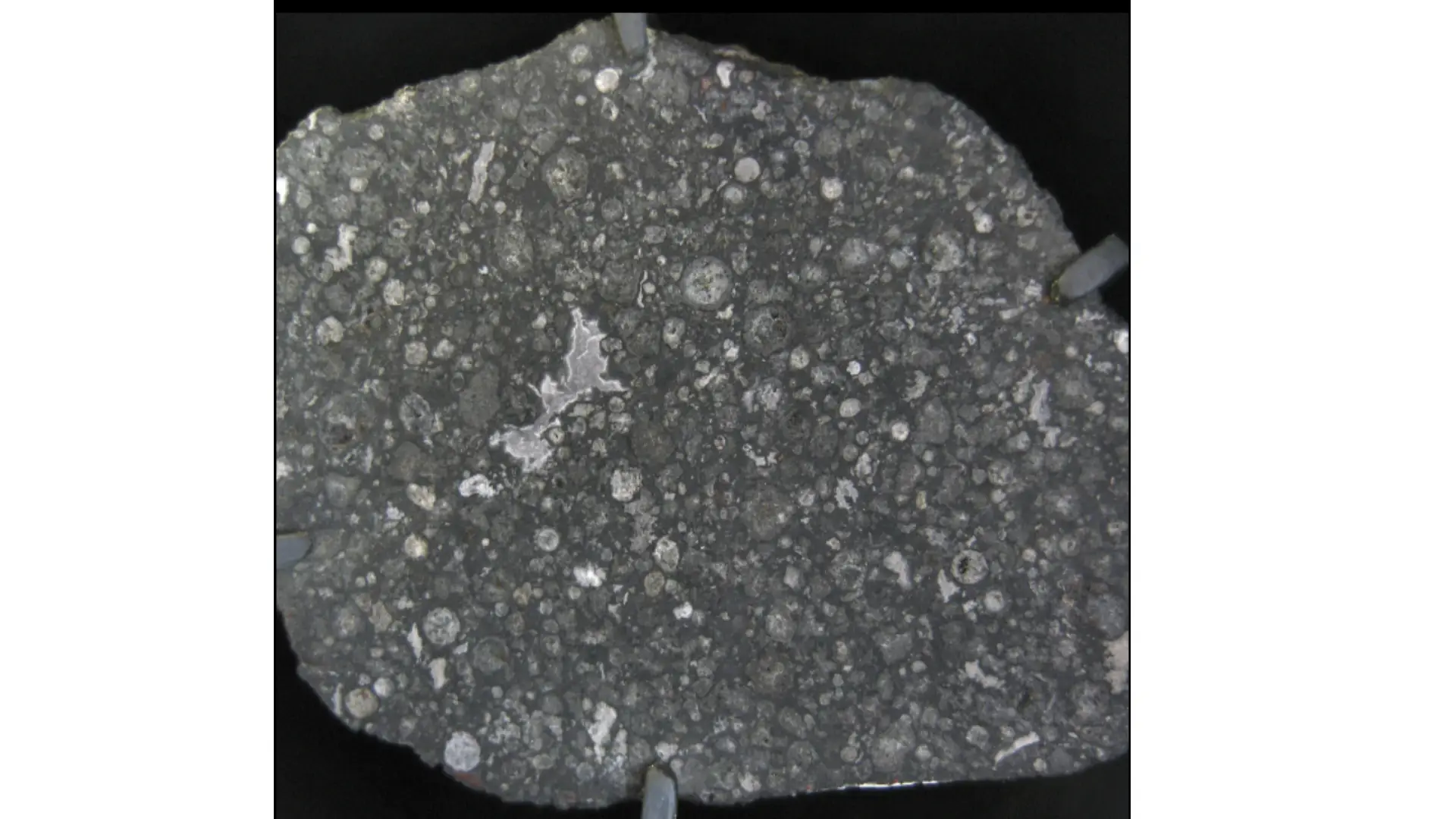
1. The Moment of Impact
On the morning of September 28, 1969, a brilliant fireball streaked across the sky above the small town of Murchison, Victoria, Australia. The meteorite fragmented explosively in the atmosphere, scattering thousands of dark stones across fields and farmland. Unlike many meteorite falls that are recovered long after impact, Murchison’s fragments were collected within hours and days, before significant terrestrial contamination could occur.
This rapid recovery proved crucial. Scientists were able to analyze material that remained chemically pristine, preserving fragile compounds that would otherwise degrade upon prolonged exposure to Earth’s environment. In total, more than 100 kilograms of material were recovered, making Murchison one of the largest and best-preserved meteorite falls in modern scientific history.
2. A Rare and Ancient Classification
Murchison was classified as a carbonaceous chondrite, type CM2 — a category so rare and scientifically valuable that fewer than a few percent of all known meteorites belong to it. Carbonaceous chondrites are considered the most primitive materials in the Solar System, having undergone minimal alteration since their formation.
What makes this classification extraordinary is its age. Murchison contains pre-solar grains — microscopic mineral fragments that formed in ancient stars before the Sun itself existed. These grains survived stellar explosions, interstellar travel, and planetary formation, making Murchison older than Earth and even older than the Solar System as a structured entity.
3. A Snapshot of the Early Universe
Carbonaceous meteorites like Murchison offer scientists a direct glimpse into the solar nebula — the cloud of gas and dust from which the Sun and planets formed approximately 4.6 billion years ago. Murchison became the benchmark specimen for studying this primordial material, allowing researchers to reconstruct the chemical and isotopic conditions present at the dawn of planetary formation.
Through its mineralogy and isotopic signatures, Murchison preserves a record of stellar processes, cosmic chemistry, and the earlier
II. A Chemical Time Capsule: The Meteorite That Redefined Origins

1. The Most Molecule-Rich Meteorite Ever Found
Murchison shocked the scientific world by revealing an unprecedented diversity of organic compounds. Researchers identified over 80 amino acids, many of which are not found naturally on Earth. Crucially, these molecules displayed non-terrestrial isotopic signatures, confirming their extraterrestrial origin.
Beyond amino acids, scientists detected purines, pyrimidines, sugars, alcohols, hydrocarbons, and other complex organic molecules. This molecular richness transformed Murchison into the most chemically studied meteorite in history and a cornerstone of astrobiological research.
2. Redrawing the Story of Life on Earth
The discovery of complex organic chemistry within Murchison fundamentally altered theories about the origin of life. The meteorite provided strong evidence that the building blocks of life did not originate solely on Earth, but may have been delivered through cosmic impacts during the planet’s early history.
Murchison plays a central role in studies of panspermia and prebiotic chemistry, suggesting that life’s raw ingredients were widespread throughout the early Solar System. Its molecular diversity demonstrates that complex chemical evolution was already underway long before Earth became habitable.
3. Scientific Milestones
Since 1969, Murchison has been cited in thousands of scientific papers and remains a reference specimen in nearly every textbook on astrobiology, planetary science, and organic chemistry. Landmark studies using Murchison reshaped understanding of amino acid chirality, isotopic fractionation, and molecular synthesis in space.
Even decades later, new analytical techniques continue to extract fresh insights from this meteorite, proving that its scientific value is far from exhausted.
III. The Murchison Fragment at NHMAD: A Cosmic Jewel in the Collection
1. The Museum’s Scientific Narrative
At the Natural History Museum Abu Dhabi, the Murchison fragment occupies a central position within galleries dedicated to Cosmic History and the Origins of Life. It serves as a tangible anchor connecting abstract cosmic processes to physical reality — a real object formed before planets existed.
Within NHMAD’s narrative, Murchison bridges astrophysics, chemistry, and biology, illustrating how cosmic events shaped the conditions that eventually allowed life to emerge.
2. A Display That Connects Visitors to Deep Time
The fragment is presented with carefully designed lighting, contextual graphics, and digital enhancements that explain its age, composition, and journey through space. Interactive elements allow visitors to explore molecular structures and isotopic data, transforming a small stone into a vast cosmic story.
Standing before Murchison is an emotional and intellectual experience — the realization that one is observing material older than the Sun itself fosters a profound sense of scale, time, and human curiosity.
3. A Tool for New Frontiers of Research
NHMAD plans to integrate the Murchison fragment into ongoing and future research initiatives in astrobiology and planetary science. Through collaborations with international laboratories and universities, the specimen may contribute to advanced molecular, isotopic, and comparative studies that push the boundaries of our understanding of life’s cosmic origins.
Questions & Answers — Extending the Murchison Story with Artefactum Gallery
Q: After seeing the Murchison meteorite at NHMAD, can I own a real meteorite myself?
A: Yes. While museum specimens like Murchison are never for sale, collectors can own authentic, legally sourced meteorites through specialized galleries such as Artefactum Gallery.
Q: What if I am inspired specifically by Murchison and want something similar?
A: Artefactum Gallery works by order. If a specific meteorite type (for example, carbonaceous chondrites or scientifically significant falls) is not available, the gallery can search and source suitable specimens for you worldwide.
Q: How does the “by order” service connect to the NHMAD experience?
A: NHMAD offers scientific context and inspiration; Artefactum Gallery allows visitors to continue that journey through collecting, turning museum discovery into personal ownership of a real cosmic object.
Q: Are the meteorites sourced by Artefactum Gallery authentic and documented?
A: Yes. All specimens are provided with provenance, scientific classification, and authenticity confirmation, along with guidance on legality and export.
Q: Can Artefactum Gallery assist with shipping and compliance?
A: Absolutely. The gallery supports secure packaging, international shipping, and customs documentation, ensuring a seamless and compliant acquisition process.
Related collections:
- Meteorites & Cosmic Materials
- Fossils & Prehistoric Specimens
- Minerals & Geological Wonders
Artefactum Gallery, Dubai
https://artefactumgallery.com
+971 568876217
Contacts: https://artefactumgallery.com/contact
Other Articles
- Beyond the Mammoth: Discover the Diverse Creatures of the Ice Age
- An Architectural Masterpiece Inspired by Nature: A Journey Through the Design of NHMAD
- The Marine Dragons of the Mesozoic
- Dinosaur Teeth
- Giants of the Ancient World
- Classification of Megalodon Teeth
- Tyrannosaurus Rex: The True King of Dinosaurs
- What Are Trilobites? Meet the Marine Pioneers of Earth's History
- Lost in Abu Dhabi: The “Stan” T. Rex Skeleton and the Wonders of NHMAD
- From Desert to Space: How NHMAD Tells the Story of Life on Earth — and Beyond
- How Is the Age of Fossils Determined?
- Natural History Museum Abu Dhabi to open in November 2025 at Saadiyat Cultural District
- Ammolite: The Ancient Gemstone with a Mesmerizing Rainbow Glow
- Discovering Ammonites: The Mysterious Fossils of Earth's Past
- Sabertooth Secrets: Exploring the Fierce Predators of Prehistoric Times
- Dinosaurs - Records and Achievements
- NHMAD’s Role in Preserving Arabian Peninsula Heritage: Showcasing a Unique Natural Legacy
- Dinosaurs Among Us
- What Are Meteorites? A Beginner’s Guide to Space Rocks
- What is a Fossil?
- Megalodon: The Largest Shark That Ever Lived
Lot RT-001
Rabbit full-mount

Lot CCBL1
10 000,00 AEDCoconut Crab (Birgus Latro), Indo-Pacific Specimen

Lot BC-202
350,00 AEDChildrena childreni – Elegance from China in Display

Lot MMP01
8 000,00 AEDGolden Mammoth Foot Print – Echo of the Ice Age

Lot MXT03
Mammoth ivory sculpture “Transience of Time” high quality mammoth tusk

Lot GWM450-E
Antler Bench with Cowhide Upholstery – A Statement of Rustic Luxury
Lot SK-102
6 600,00 AEDCast of Kelenken Skull, 3D Printed

Lot GWM400-BC
Antler Stool with Cowhide – Rustic Simplicity at Its Finest

Lot PRF-05
200,00 AEDAmber-Toned Glass Perfume Flask with Fragrance Remnants – Nostalgic Masterpiece

Lot M1814
93 800,00 AEDThe Sikhote-Alin meteorite