


Specifications:
Location:
Morocco
Size:
10 x 4 cm approx
Age:
400–485 million years old
Period:
Ordovician
Available by Request
Price on request

Lot Essay
Delivery
Rarity and Value
Fossil Orthoceras is valued for its geological age, preservation quality, and visual contrast rather than rarity alone. High-value specimens display a well-defined elongated conical shell with clear chamber segmentation (camerae) and visible siphuncle structure. Pieces that have been professionally cut and polished to reveal internal details, especially with strong contrast between the fossil shell and surrounding limestone matrix, are particularly prized. While Orthoceras fossils are relatively accessible, specimens with exceptional preservation, large size, or artistic preparation command higher value in collector, decorative, and educational markets.
Discovery and Significance
Orthoceras fossils are most commonly associated with Paleozoic marine deposits, especially from the Ordovician to Devonian periods, and are frequently sourced from North Africa, particularly Morocco. These fossils represent extinct nautiloid cephalopods that inhabited ancient oceans hundreds of millions of years ago. Their discovery provides critical evidence of early marine life and cephalopod evolution. Historically, Orthoceras fossils have been collected for scientific study and later gained popularity in decorative and cultural contexts due to their striking form and symbolic association with longevity and deep time.
Morphology and Accuracy
Authentic Orthoceras fossils exhibit a straight, elongated conical shell divided internally into multiple chambers separated by septa, with a central or marginal siphuncle visible in cross-section. The fossilized shell is typically preserved in limestone and may appear dark gray to black against a lighter matrix when polished. Accurate specimens retain consistent chamber spacing, natural tapering, and intact structural alignment. Surface polish should enhance internal features without distorting anatomical proportions, ensuring scientific and visual accuracy.
Human and Scientific Connection
Orthoceras fossils provide valuable insight into early cephalopod biology, buoyancy control mechanisms, and Paleozoic marine ecosystems. Scientifically, they help document the evolutionary history of mollusks and the development of chambered shells used for locomotion and depth regulation. Culturally, Orthoceras fossils are admired as tangible records of Earth’s ancient oceans and are commonly used in museums, educational collections, and decorative objects. As preserved remains of extinct life, they connect human curiosity, scientific discovery, and the immense geological timescale of planetary history.
Delivery
Brought to you by

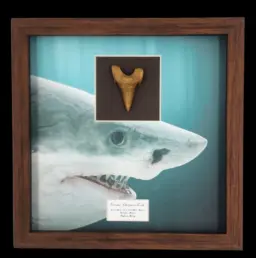
Lot OOT-005
900,00 AEDPrehistoric Power: Authentic Otodus obliquus Tooth, 4.7 cm
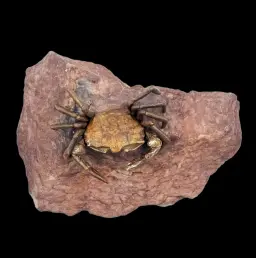
Lot OL-023
8 500,00 AEDFossilized Crab from the Oligocene Epoch (23–33 Million Years Ago)
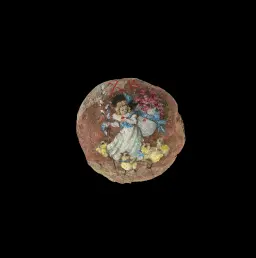
Lot DE1
12 900,00 AEDFossilized Hadrosaurus Dinosaur Egg, Painting made by Nikas Safronov
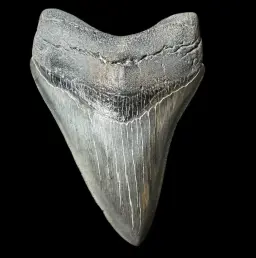
Lot MT90
Megalodon Tooth, 125 gr, Polishing, h 11 cm, circa 13 mln years old
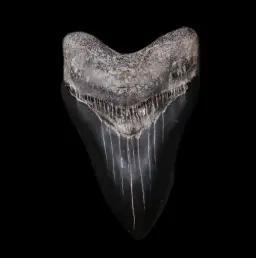
Lot MT87
Megalodon Tooth, 90 gr, Mesuem quality, h 9.5 cm, circa 13 mln years old
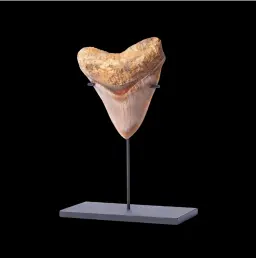
Lot MT12
Megalodon tooth 11.7 museum quality (Indonesia)
Lot MT-C1
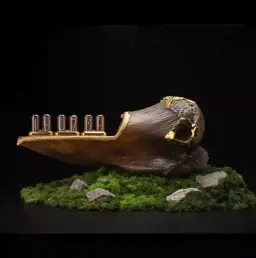
110 000,00 AEDMammoth thigh bone clock, 24k gold, circa 40 000 years old, 2023
Lot TR-1
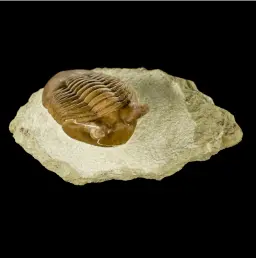
8 000,00 AEDPrehistoric arthropod – trilobite (Paraceraurus exsul), circa 464 mln years old, well preserved
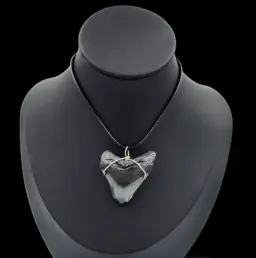
Lot MTS-1121
1 100,00 AEDMegalodon Tooth- Pendant, 14gr
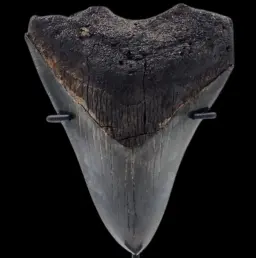
Lot MT-005
3 200,00 AEDMegalodon Tooth, 67gr, h 10.2cm, circa 13 mln years old
Enquiry
Lot FO-11
Thank you for your interest. Please fill out the below form, and our specialist will follow up with you shortly.
Thank you for your interest
We will be in touch shortly
We will never pass your personal information to anyone outside of Artefactum Gallery for their own marketing purposes without your consent. For more information about how we processes your data, please click here to read our Privacy Notice.
Brought to you by

Enquiry
Thank you for your interest. Please fill out the below form, and our specialist will follow up with you shortly.
Thank you for your interest
We will be in touch shortly
We will never pass your personal information to anyone outside of Artefactum Gallery for their own marketing purposes without your consent. For more information about how we processes your data, please click here to read our Privacy Notice.