
Rarity and Value
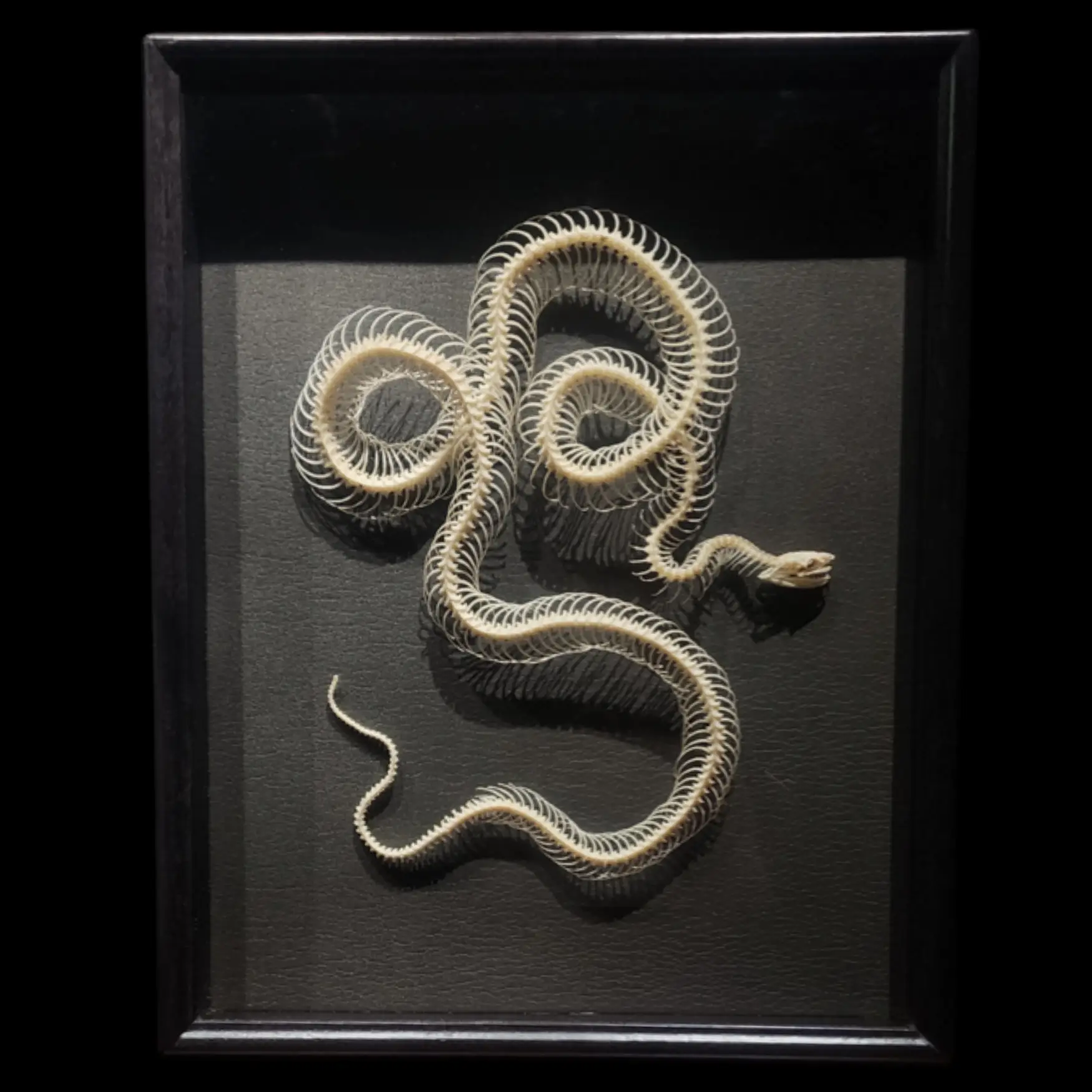
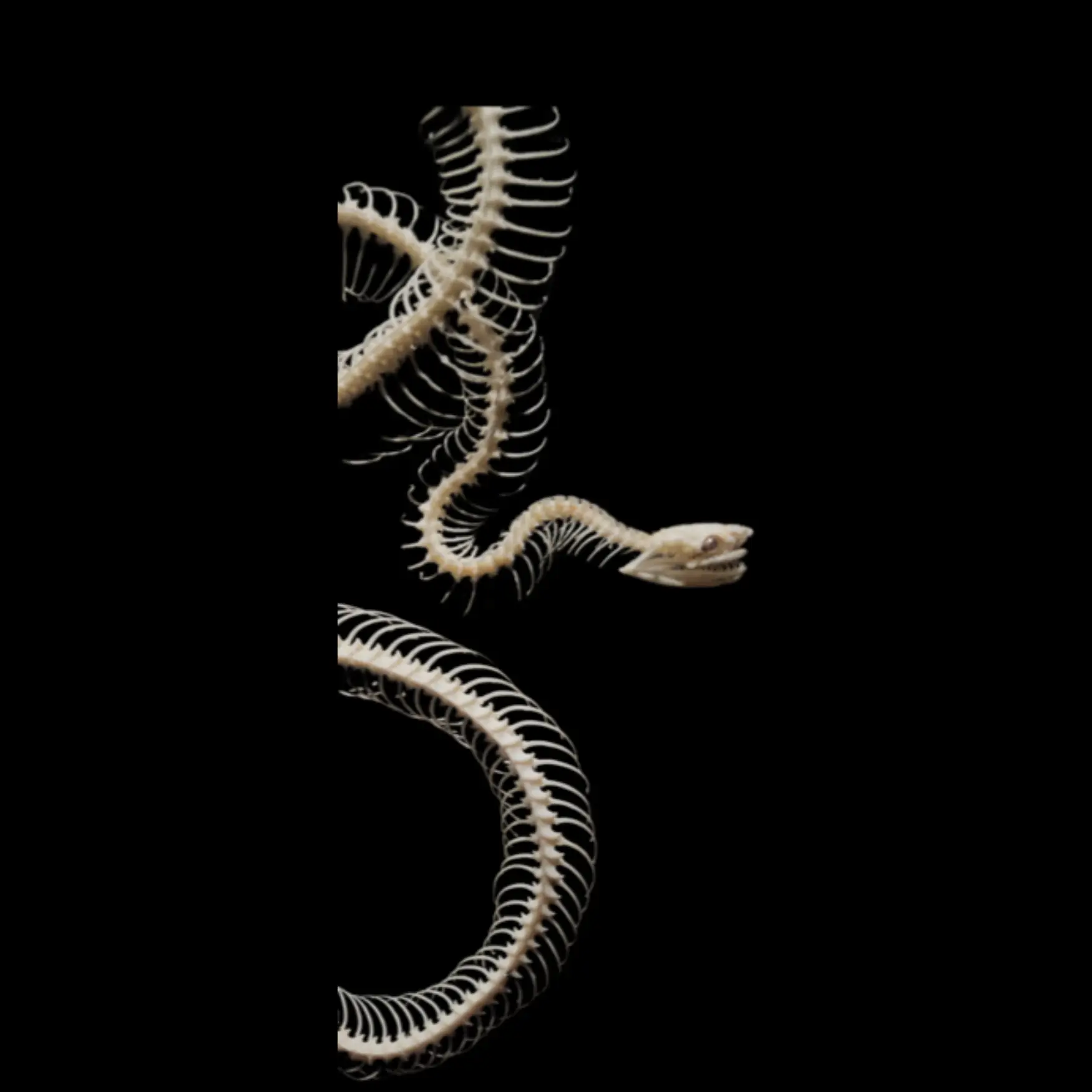
The smooth snake (Coronella austriaca) skeleton is a rare osteological specimen due to the species’ protected status across much of its European range and the inherent fragility of small reptile bones. Complete or well-articulated skeletons are uncommon, as preservation requires specialized preparation techniques and ethical, legally compliant sourcing. As a result, such specimens are highly valued for educational, comparative anatomical, and museum study purposes.
Anatomy and Structure
The skeleton displays the characteristic elongated vertebral column typical of snakes, composed of numerous pre-cloacal and caudal vertebrae with well-defined zygapophyses that provide flexibility and strength. The skull is compact and lightly built, featuring kinetic joints that allow limited cranial movement for prey ingestion. Unlike venomous snakes, Coronella austriaca has small, uniform teeth adapted for grasping rather than envenomation.
Material and Preparation
Snake skeletons are composed of lightweight, highly mineralized bone optimized for mobility. Preparation commonly involves dermestid beetle cleaning or controlled maceration to preserve delicate structures such as ribs and cranial elements. When properly prepared and mounted, the skeleton maintains anatomical accuracy while remaining structurally stable for long-term display or study.
Scientific and Cultural Significance
Scientifically, the smooth snake skeleton provides insight into non-venomous colubrid anatomy, locomotion, and ecological adaptation. It is particularly valuable for comparative studies involving reptilian evolution and functional morphology. Beyond science, the specimen invites appreciation of the hidden complexity and elegance of an often-misunderstood species, bridging education, conservation awareness, and natural history.