



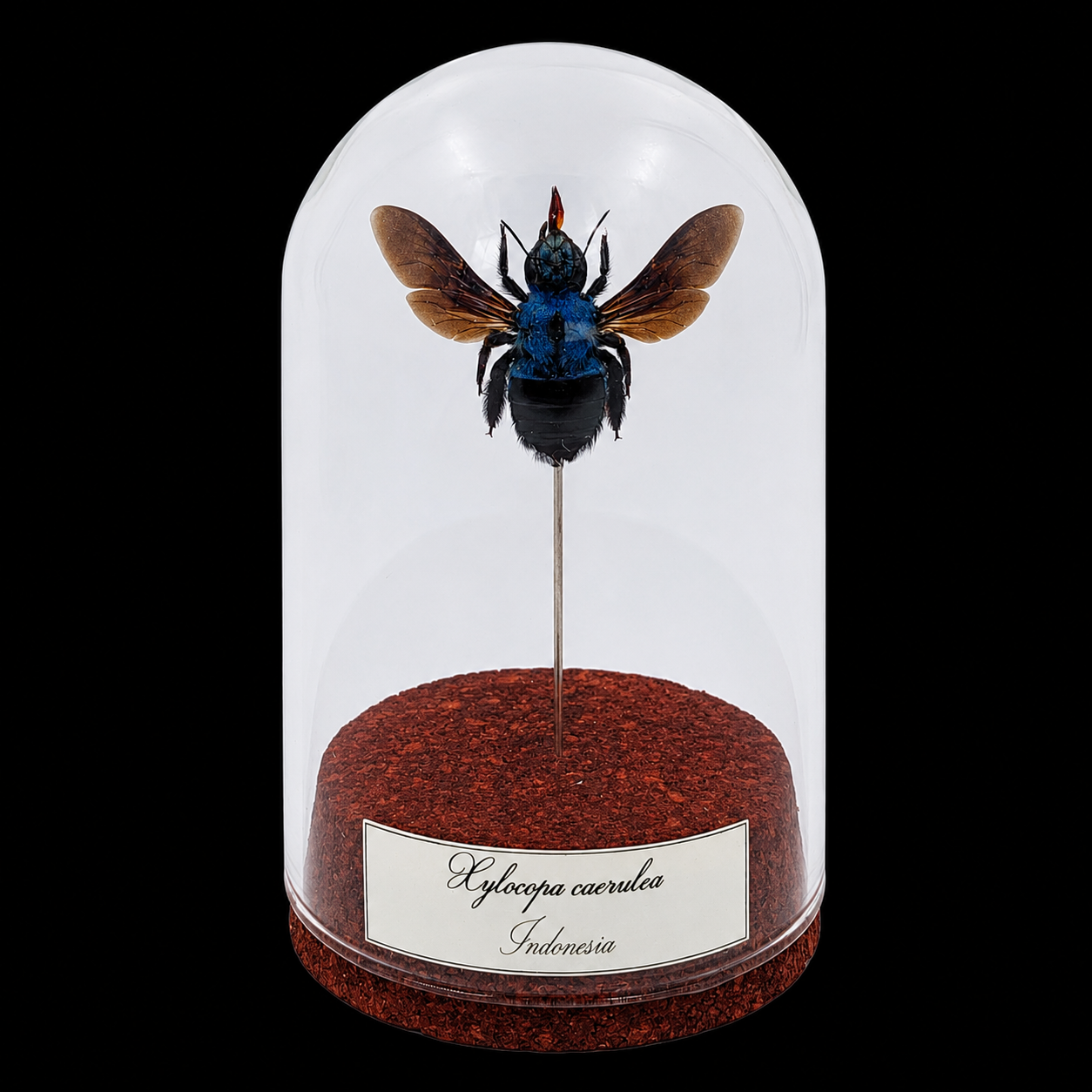
Specifications:
Location:
Indonesia
Genus:
Xylocopa caerulea
Size:
10 cm
Material:
Glass cloche
Available in Dubai
700,00 AED

Lot Essay
Delivery
Description: Xylocopa caerulea, commonly known as the Blue Carpenter Bee, is a distinctive tropical bee belonging to the family Apidae and occurring in Southeast Asia, including Indonesia. The species is recognized for its robust body and striking blue coloration produced by dense, light-reflecting hairs covering much of the thorax and abdomen. Unlike pigment-based coloration, the visual intensity of these hairs is influenced by their microscopic structure and interaction with light. Powerful flight muscles occupy much of the thorax, supporting active flight between flowering plants. Its strong mandibles and compact anatomy reflect the specialized biology characteristic of carpenter bees.
Rarity and Value: The biological value of Xylocopa caerulea lies in its distinctive blue appearance, specialized nesting behaviour, and ecological importance as a pollinating insect. Carpenter bees are significant components of tropical pollination networks and are capable of visiting a wide range of flowering plants. Specimens retaining complete wings, antennae, legs, and dense natural body hairs are particularly valuable for entomological collections. Well-preserved examples provide important insight into bee morphology, structural appearance, pollination biology, and the diversity of tropical Apidae.
Discovery: Xylocopa caerulea inhabits tropical and subtropical environments where flowering vegetation and suitable nesting material are available. Female carpenter bees use powerful mandibles to excavate tunnels in wood, creating protected chambers for developing offspring. Adults feed primarily on nectar and collect pollen, transferring pollen grains between flowers during repeated visits. Their sensory antennae detect chemical and environmental signals, while compound eyes support visual orientation during flight. Scientific research on carpenter bees contributes to understanding pollination ecology, nesting behaviour, and plant–insect interactions.
Human Touch: Following ethical sourcing, the bee was carefully preserved and displayed within a glass cloche. Expert preparation maintains the dense blue body hairs, delicate wings, antennae, and essential anatomical details while protecting the specimen from environmental damage. The transparent enclosure allows close observation of its robust morphology and remarkable natural coloration. This preserved Xylocopa caerulea represents an exceptional example of Indonesian insect biodiversity and highlights the biological specialization and ecological importance of tropical carpenter bees.
Delivery
Brought to you by

Need more details?
Lot BGC-092
450,00 AEDRhetus periander on dandelion in glass cloche, Peru
Lot BGC-109
350,00 AEDNessaea hewitsoni in Glass Cloche 12 cm, Peru
Lot HGF56
700,00 AEDTriclidac sp. “Walking Fish” – Fascinating Specimen in Perfect Condition
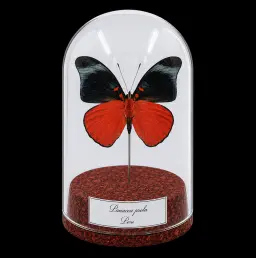
Lot BGC-115
350,00 AEDPanacea prola in Glass Cloche 12 cm, Peru
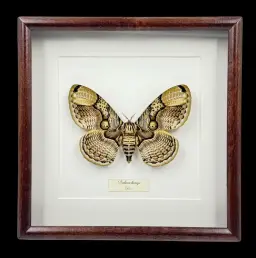
Lot BH-001
1 200,00 AEDBrahmaea hearseyi – Enigmatic Owl Moth in Exquisite Wooden Frame
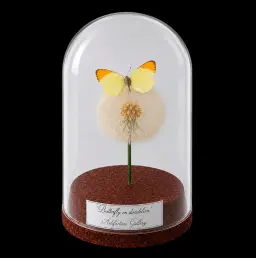
Lot BGC-117
450,00 AEDColotis auxo on dandelion in Glass cloche 12 cm, South Africa
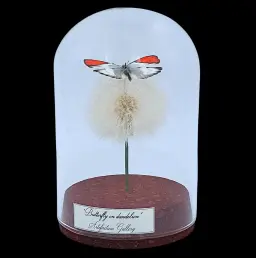
Lot BGC-093
450,00 AEDColotis annae, South Africa
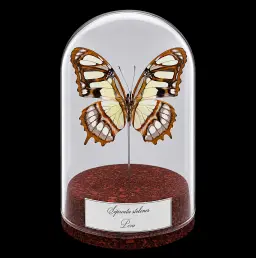
Lot BGC-110
350,00 AEDSiproeta stelenes in Glass Cloche 12 cm, Peru
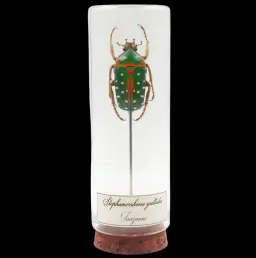
Lot SG026
350,00 AEDStephanorrhina guttata – The Jewel Beetle of Tanzania
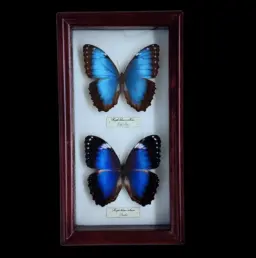
Lot FB-111
1 950,00 AEDMorpho papirius & Morpho helenor violaceus in Frame
Lot BGTC-006
Item has been added to your Cart
You cannot add "Xylocopa caerulea in Glass Cloche 10 cm, Indonesia" to your cart again.
Enquiry
Lot BGTC-006
Thank you for your interest. Please fill out the below form, and our specialist will follow up with you shortly.
Thank you for your interest
We will be in touch shortly
We will never pass your personal information to anyone outside of Artefactum Gallery for their own marketing purposes without your consent. For more information about how we processes your data, please click here to read our Privacy Notice.
Brought to you by

Enquiry
Thank you for your interest. Please fill out the below form, and our specialist will follow up with you shortly.
Thank you for your interest
We will be in touch shortly
We will never pass your personal information to anyone outside of Artefactum Gallery for their own marketing purposes without your consent. For more information about how we processes your data, please click here to read our Privacy Notice.
