



Lot MTR-125
56 g Rare pallasite meteorite with Widmannstätten pattern, 4 bln years old
Specifications:
Location:
Other
Size:
7 x 6 x 6.2 x 0.2 cm
Weight:
56 g
Type:
Stony-iron
Kind:
Slice
Detection year:
1967
Available in Dubai
Price on request

Lot Essay
Delivery
Rarity and Collectible Value
The Seymchan meteorite is an extraordinary extraterrestrial specimen originating from the asteroid belt between Mars and Jupiter. Renowned for its remarkable metallic structure and distinctive crystalline patterns, Seymchan is one of the most visually fascinating meteorites available to collectors of natural history and cosmic artifacts. First discovered in 1967 in the Magadan region of northeastern Russia, the meteorite is particularly notable for its unusual composition, with both iron-rich and olivine-bearing pallasitic varieties identified within the same meteorite material.
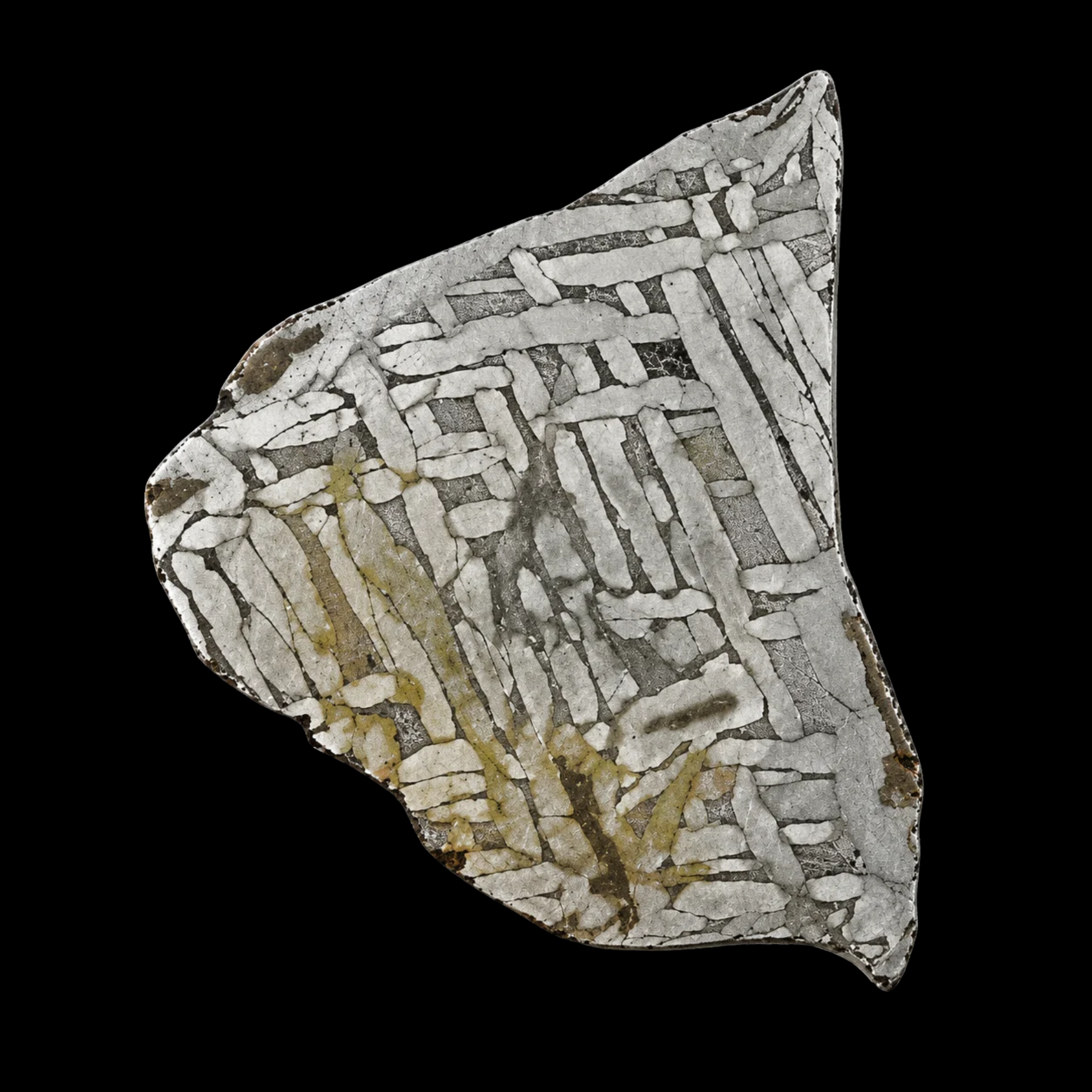
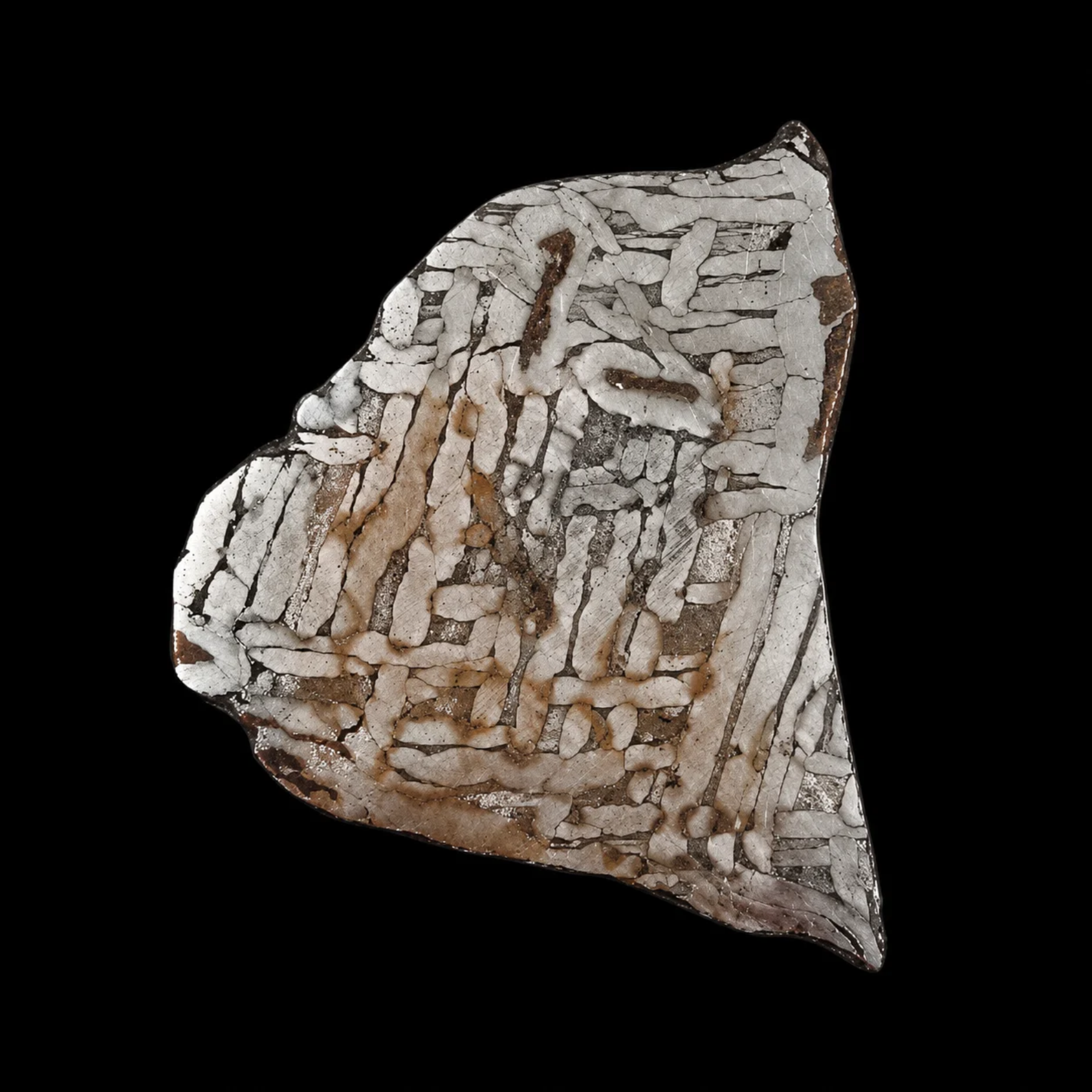
This polished and etched slice reveals an intricate Widmanstätten pattern, formed by the slow cooling of iron-nickel metal within its parent asteroid over millions of years. The interlocking crystalline bands represent a natural structure that cannot be reproduced through ordinary terrestrial metalworking processes. Each slice reveals a unique arrangement of metallic crystals, making it a distinctive geological specimen and an exceptional collectible.
Origin and Architectural Context
The Seymchan meteorite was discovered near the settlement of Seymchan, in the Magadan Oblast of Russia, in 1967. Additional material recovered from the region in the early 2000s revealed the meteorite’s remarkable structural diversity, including metal-rich sections and areas containing translucent olivine crystals.
The meteorite is believed to have originated from a differentiated parent asteroid, where metallic iron and nickel underwent extremely slow cooling deep within the parent body’s interior. This gradual cooling allowed distinct metallic phases, primarily kamacite and taenite, to develop their characteristic interlocking crystalline structures.
The resulting Widmanstätten pattern provides a physical record of ancient processes that took place during the early history of the Solar System, approximately 4.5 billion years ago.
The specimen represents a tangible fragment of this cosmic history, preserving evidence of planetary formation, asteroid differentiation, and the extraordinary conditions of deep space.
Presentation
The specimen is presented as an irregularly shaped, polished iron meteorite slice, photographed from both sides against a deep black background. Its asymmetrical outline features gently curved edges, a broad central body, and an elongated angular extension, preserving the natural geometry of the meteorite fragment.
Both surfaces reveal a striking network of interlocking metallic crystals. Broad silver-gray crystalline bands intersect at varying angles, creating a complex geometric arrangement resembling woven metal, overlapping ribbons, and finely structured architectural elements.
The first photographed surface displays predominantly cool silver and steel-gray tones, with clearly defined elongated crystalline plates extending diagonally, horizontally, and vertically across the slice. Subtle golden-brown areas and darker inclusions introduce additional visual complexity, emphasizing the natural variations within the meteorite’s metallic composition.
The reverse surface exhibits a similarly intricate crystalline structure, with a slightly warmer overall appearance. Brownish-gold mineral discolorations are concentrated across the central and lower portions, contrasting with the pale silver metallic bands. These variations highlight the distinctive character of each exposed surface.
Fine lines, natural boundaries between metallic phases, and localized darker areas create an extraordinary level of visual detail. The etched surface enhances the contrast between the individual iron-nickel crystals, making the internal structure immediately recognizable.
The combination of natural metallic colors, intricate geometric patterns, and an irregular silhouette gives the specimen a sculptural presence. Displayed against a black background, the slice becomes a striking example of extraterrestrial natural art, suitable for private meteorite collections, contemporary interiors, scientific exhibitions, and natural history galleries.
Human Touch
What makes the Seymchan meteorite particularly compelling is the opportunity to observe an ancient cosmic process directly through its physical structure. The intricate metallic patterns visible on both sides are not decorative additions created by human craftsmanship but the natural result of extremely slow cooling within an asteroid.
By cutting, polishing, and carefully etching the metal, the meteorite’s previously hidden crystalline architecture becomes visible. This preparation transforms an otherwise unassuming metallic fragment into a remarkable visual record of the early Solar System.
Each intersecting band reflects the growth of iron-nickel crystals under conditions that existed long before Earth acquired its present form. The specimen therefore connects human observation and scientific discovery with events that occurred billions of years ago.
The irregular edges, contrasting metallic phases, and naturally occurring discolorations reinforce the individuality of the slice. No two meteorite sections reveal precisely the same crystalline arrangement, giving every polished specimen its own distinctive visual identity.
For collectors, the Seymchan meteorite offers a rare combination of scientific importance and artistic beauty. Its intricate Widmanstätten pattern invites close examination, while its extraterrestrial origin introduces a profound connection to the formation and evolution of our Solar System.
Delivery
Brought to you by

Video of the Lot
Lot SM-A20
1 560,00 AED17 g Pallasite meteorite slice with geometric patterning, etched and preserved
Lot M1814
93 800,00 AEDThe Sikhote-Alin meteorite
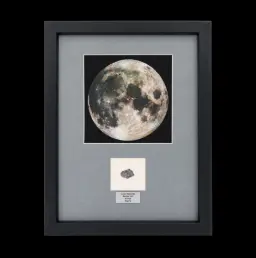
Lot MTR-122
2 100,00 AED0.94 g Lunar Meteorite “Bechar 003”
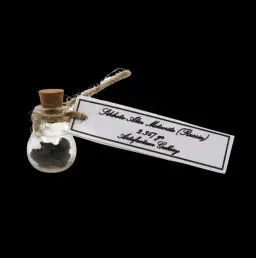
Lot SA-018
220,00 AED2.367 g Sikhote-Alin meteorite in sealed round bottle
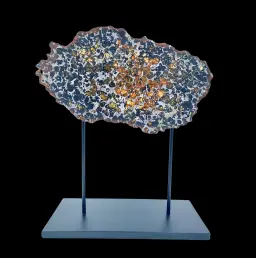
Lot MTR-118
12 550,00 AED114 g Pallasite meteorite slice showcasing Widmanstätten pattern, 4 bln years old
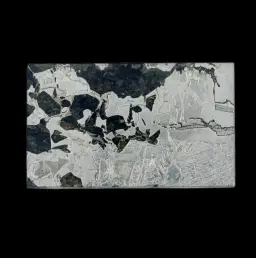
Lot SM-A11
2 200,00 AED22.981 g Pallasite meteorite slice showcasing Widmanstätten pattern, 4 bln years old
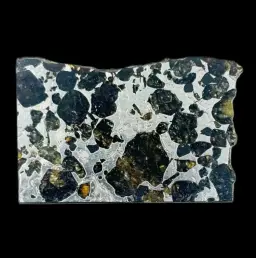
Lot SM-A12
1 700,00 AED17.372 g Pallasite meteorite slice showcasing Widmanstätten pattern, 4 bln years old
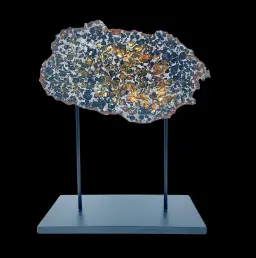
Lot MTR-117
12 330,00 AED112 g Pallasite meteorite slice showcasing Widmanstätten pattern, 4 bln years old
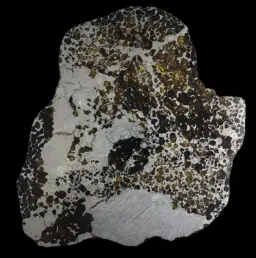
Lot M-09-1
64 600,00 AED680 g Pallasite meteorite slice showcasing Widmanstätten pattern, 4 bln years old
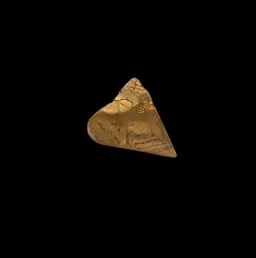
Lot MTR-121
2 670,00 AED17.02 g Seymchan Meteorite, 24K Gold Gilded, Widmanstätten Pattern, 4.56 Bln Years Old
Lot MTR-125
Item has been added to your Cart
You cannot add "56 g Rare pallasite meteorite with Widmannstätten pattern, 4 bln years old" to your cart again.
Enquiry
Lot MTR-125
Thank you for your interest. Please fill out the below form, and our specialist will follow up with you shortly.
Thank you for your interest
We will be in touch shortly
We will never pass your personal information to anyone outside of Artefactum Gallery for their own marketing purposes without your consent. For more information about how we processes your data, please click here to read our Privacy Notice.
Brought to you by

Enquiry
Thank you for your interest. Please fill out the below form, and our specialist will follow up with you shortly.
Thank you for your interest
We will be in touch shortly
We will never pass your personal information to anyone outside of Artefactum Gallery for their own marketing purposes without your consent. For more information about how we processes your data, please click here to read our Privacy Notice.
