


Specifications:
Location:
Europe
Size:
Plate: 20 x 19 cm. Frogs: from 4.5 x 4.5 cm to 10 x 8.5 cm
Period:
Pleistocene epoch
Material:
Mammoth tusk | Agate
Available for request
16 000,00 AED

Lot Essay
Delivery
Rarity and Value
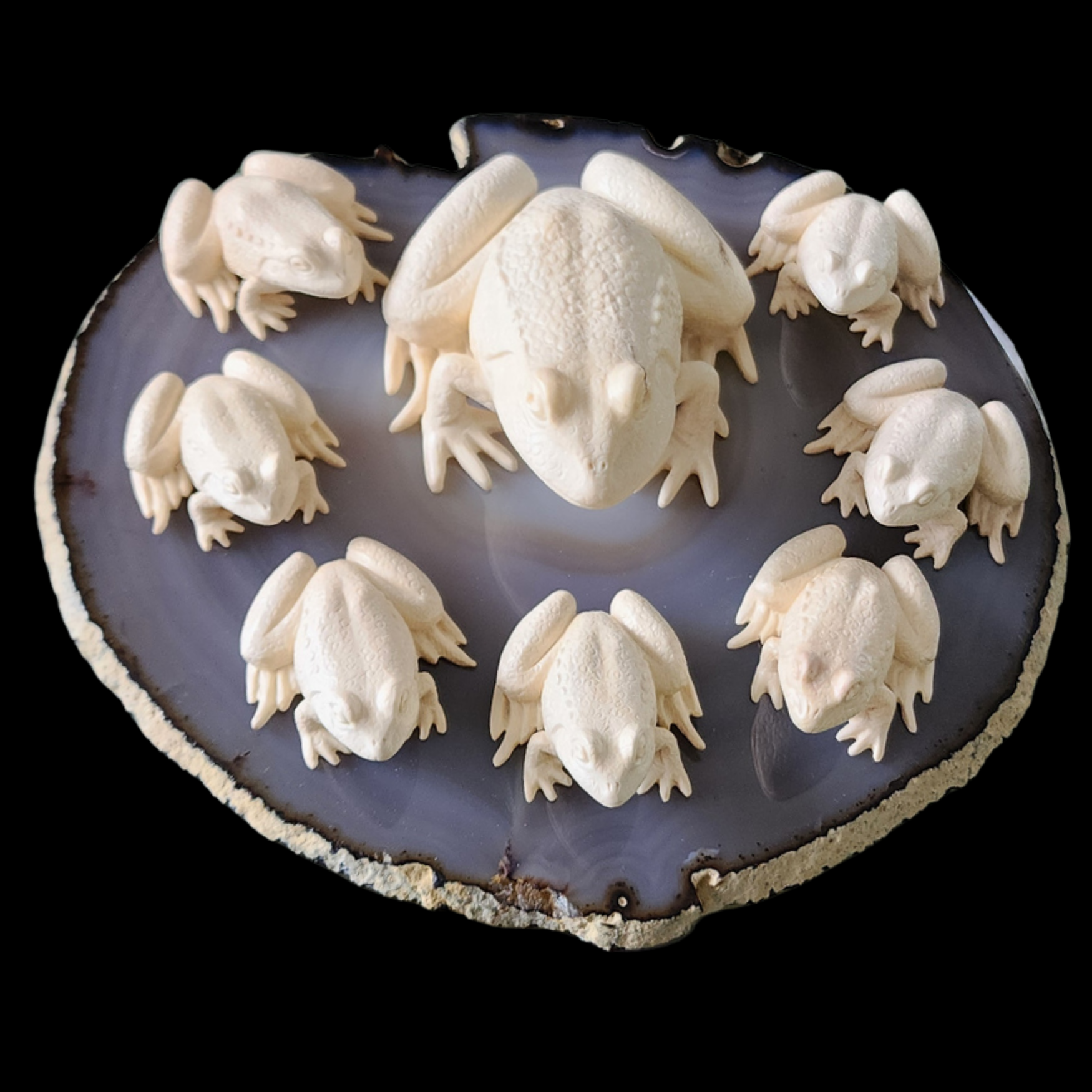
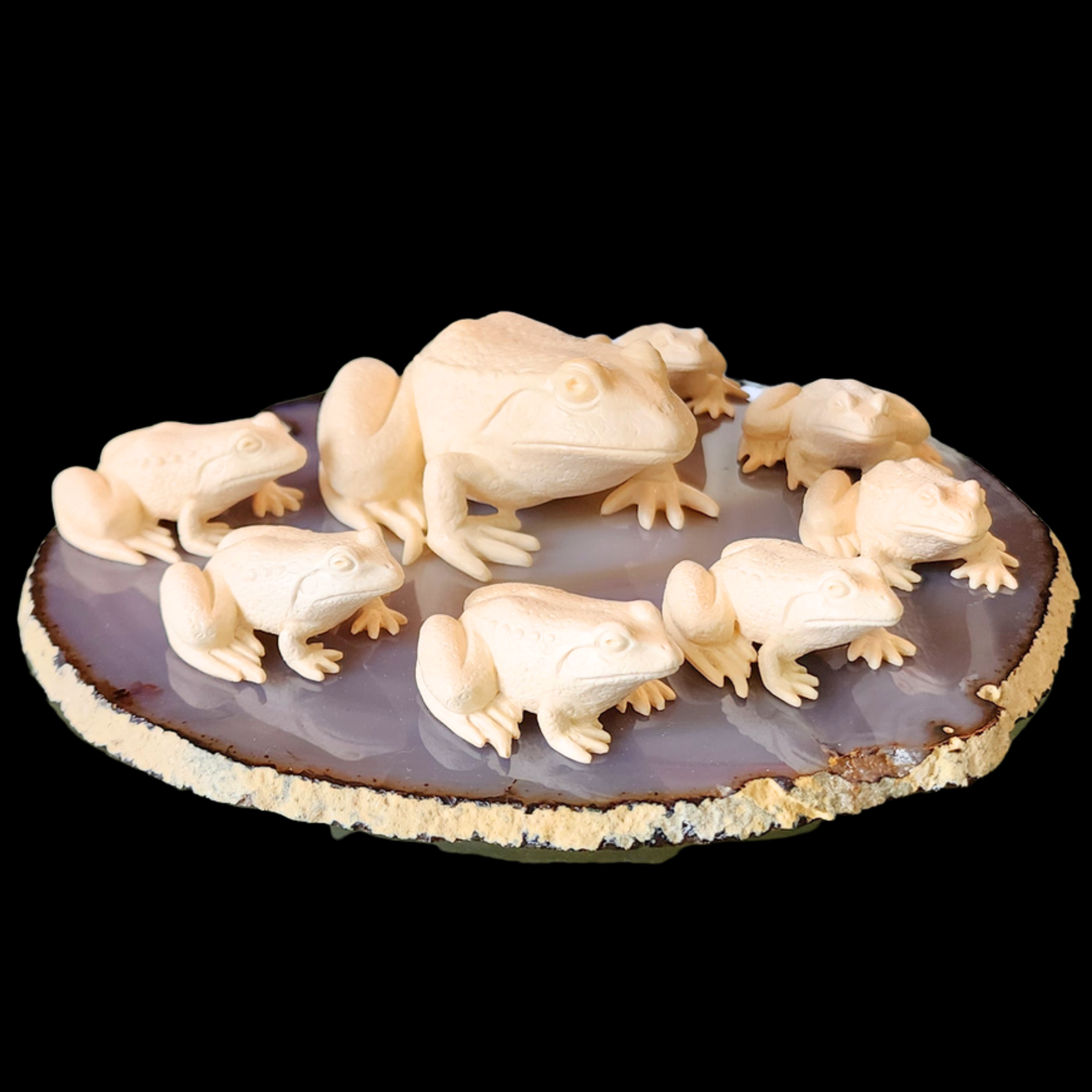
This remarkable sculptural composition features eight finely carved frogs arranged upon a polished natural agate slice. The frogs have been expertly crafted from genuine Woolly Mammoth ivory, a rare prehistoric material preserved within Arctic permafrost for thousands of years. The warm cream and ivory tones of the mammoth tusk create a striking contrast against the translucent gray-lavender agate base, highlighting both the natural beauty of the materials and the skill of the artisan. Objects combining fossil mammoth ivory with decorative mineral specimens are highly prized by collectors, as they unite natural history, lapidary art, and traditional carving techniques within a single display piece.
Formed from the remains of an animal that roamed the Earth during the Ice Age, the mammoth ivory used in this composition represents a tangible connection to a world that vanished thousands of years ago. Its prehistoric origin, natural beauty, and increasing rarity make it one of the most desirable organic materials employed in contemporary artistic craftsmanship.
Discovery
The Woolly Mammoth (Mammuthus primigenius) was one of the most iconic mammals of the Late Pleistocene, inhabiting the vast steppe-tundra ecosystems of Europe, Asia, and North America from approximately 400,000 to 4,000 years ago. Perfectly adapted to the harsh climates of the Ice Age, these remarkable animals possessed a dense woolly coat, a thick insulating layer of fat, and elongated curved tusks that could exceed 4 meters in length. Adult males commonly reached heights of 3 to 4 meters at the shoulder and weighed between 6 and 8 tonnes.
As highly specialized herbivores, mammoths relied on massive molars to process abrasive grasses, sedges, and other tundra vegetation. Throughout their lives, they developed a succession of large grinding teeth composed of tightly packed enamel plates, an adaptation that enabled them to consume vast quantities of coarse plant material. These complex dental structures are among the most distinctive anatomical features of the species and remain clearly visible even after fossilization.
Following the gradual disappearance of mammoths at the end of the Ice Age, many of their remains became preserved within Arctic permafrost and mineral-rich sediments. Over thousands of years, tusks, bones, and teeth underwent natural fossilization while retaining much of their original structure. Today, fossil mammoth ivory is valued not only for its scientific significance but also for its remarkable beauty, making it one of the most sought-after prehistoric materials used in contemporary artistic craftsmanship.
Symbolism
Unlike many decorative animal carvings, frogs possess a rich symbolic meaning across numerous cultures. In East Asian traditions, frogs are closely associated with prosperity, abundance, fertility, and good fortune. Their ability to thrive near water has long connected them with the life-giving forces of nature, renewal, and the continuous flow of wealth.
The arrangement of a larger central frog surrounded by seven smaller frogs evokes themes of family, protection, continuity, and generational prosperity. Such compositions are often interpreted as symbols of growth, harmony, and the successful transmission of fortune from one generation to the next. The circular placement further reinforces ideas of unity, balance, and the cyclical rhythms of nature.
Craftsmanship
Each frog has been individually hand-carved from mammoth ivory with careful attention to anatomical detail. Delicately rendered eyes, limbs, and textured skin create a lively and naturalistic appearance, while subtle variations between the figures emphasize the hand-crafted nature of the work. The central frog serves as the focal point of the composition, surrounded by smaller companions in a balanced radial arrangement.
The frogs are mounted on a polished agate slice displaying soft translucent bands and natural mineral formations. The organic edge of the stone has been preserved, retaining the geological character of the specimen and providing an elegant contrast to the smooth ivory carvings. Together, the prehistoric ivory and ancient mineral create a harmonious presentation celebrating both artistic craftsmanship and the beauty of the natural world.
Preservation
The mammoth ivory remains in excellent condition, displaying a smooth surface and attractive natural coloration characteristic of well-preserved fossil material. The agate base retains its polished finish while preserving the original contours of the stone. Both materials are stable and well suited for long-term display.
The composition presents beautifully as a cabinet-of-curiosities object, a collector’s mineral display, or a symbolic decorative artwork celebrating prosperity, harmony, family continuity, and the enduring relationship between nature and time. Combining a material that originated during the Ice Age with the timeless symbolism of frogs and the natural elegance of agate, this sculpture offers a unique blend of prehistoric heritage, artistic mastery, and cultural meaning.
Delivery
Brought to you by

Need more details?
Lot MS5
Mammoth ivory sculpture “White cloud” high quality mammoth tusk
Lot MS10
Mammoth ivory sculpture “Night hunter” high quality mammoth tusk
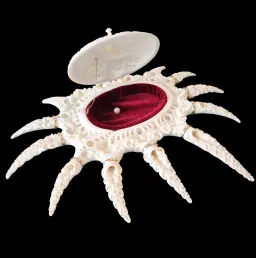
Lot FSL-024
Mammoth Ivory Casket with Gold and Diamonds
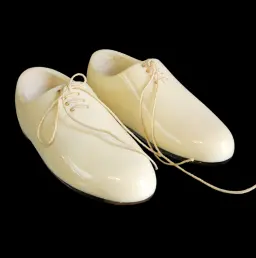
Lot FSL-028
Pair of Decorative Shoes Carved from Fossil Mammoth Ivory
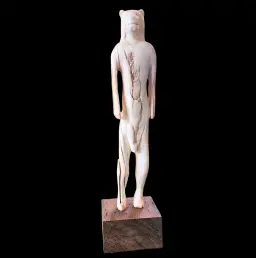
Lot FSL-025
Cro-Magnon Figure in Mammoth Ivory on Bog Oak Base
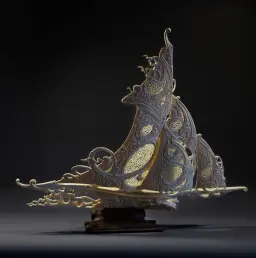
Lot MS4
Mammoth ivory sculpture “Fair Wind” high quality mammoth tusk
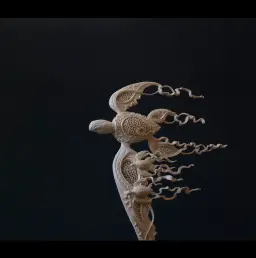
Lot mS7
Mammoth ivory sculpture “Gulfstream” high quality mammoth tusk
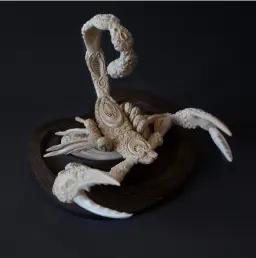
Lot MS8
70 000,00 AEDMammoth ivory sculpture “Scorpion” high quality mammoth tusk
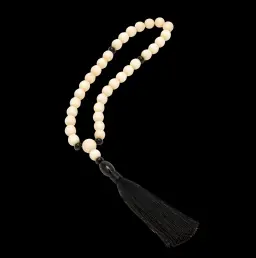
Lot FSL-030
7 500,00 AEDMammoth Ivory Misbaha
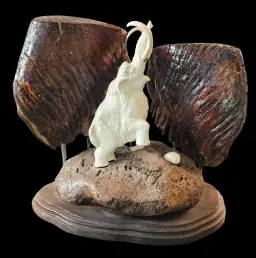
Lot FSL-029
37 000,00 AEDWoolly Mammoth Between Ancient Molars
Lot FSL-023
Item has been added to your Cart
You cannot add "Circle of Prosperity: Mammoth Ivory Frogs on Agate" to your cart again.
Enquiry
Lot FSL-023
Thank you for your interest. Please fill out the below form, and our specialist will follow up with you shortly.
Thank you for your interest
We will be in touch shortly
We will never pass your personal information to anyone outside of Artefactum Gallery for their own marketing purposes without your consent. For more information about how we processes your data, please click here to read our Privacy Notice.
Brought to you by

Enquiry
Thank you for your interest. Please fill out the below form, and our specialist will follow up with you shortly.
Thank you for your interest
We will be in touch shortly
We will never pass your personal information to anyone outside of Artefactum Gallery for their own marketing purposes without your consent. For more information about how we processes your data, please click here to read our Privacy Notice.