


المواصفات:
الموقع:
أخرى
حجم الإطار:
72 × 5 × 66 cm
المادة:
إطار خشبي
متوفر عند الطلب
السعر عند الطلب

مقال عن لوط
التسليم
Rarity and Collectible Value
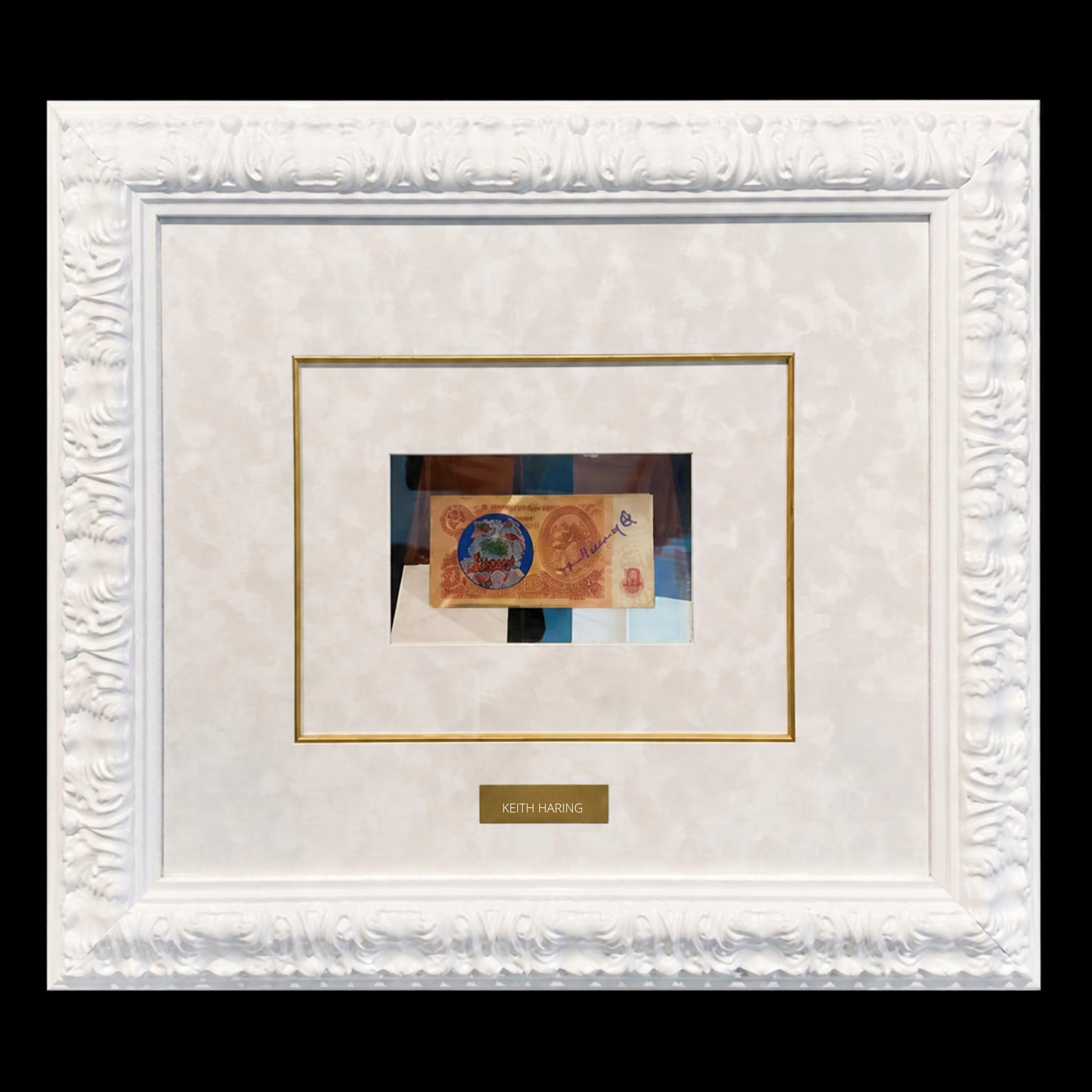
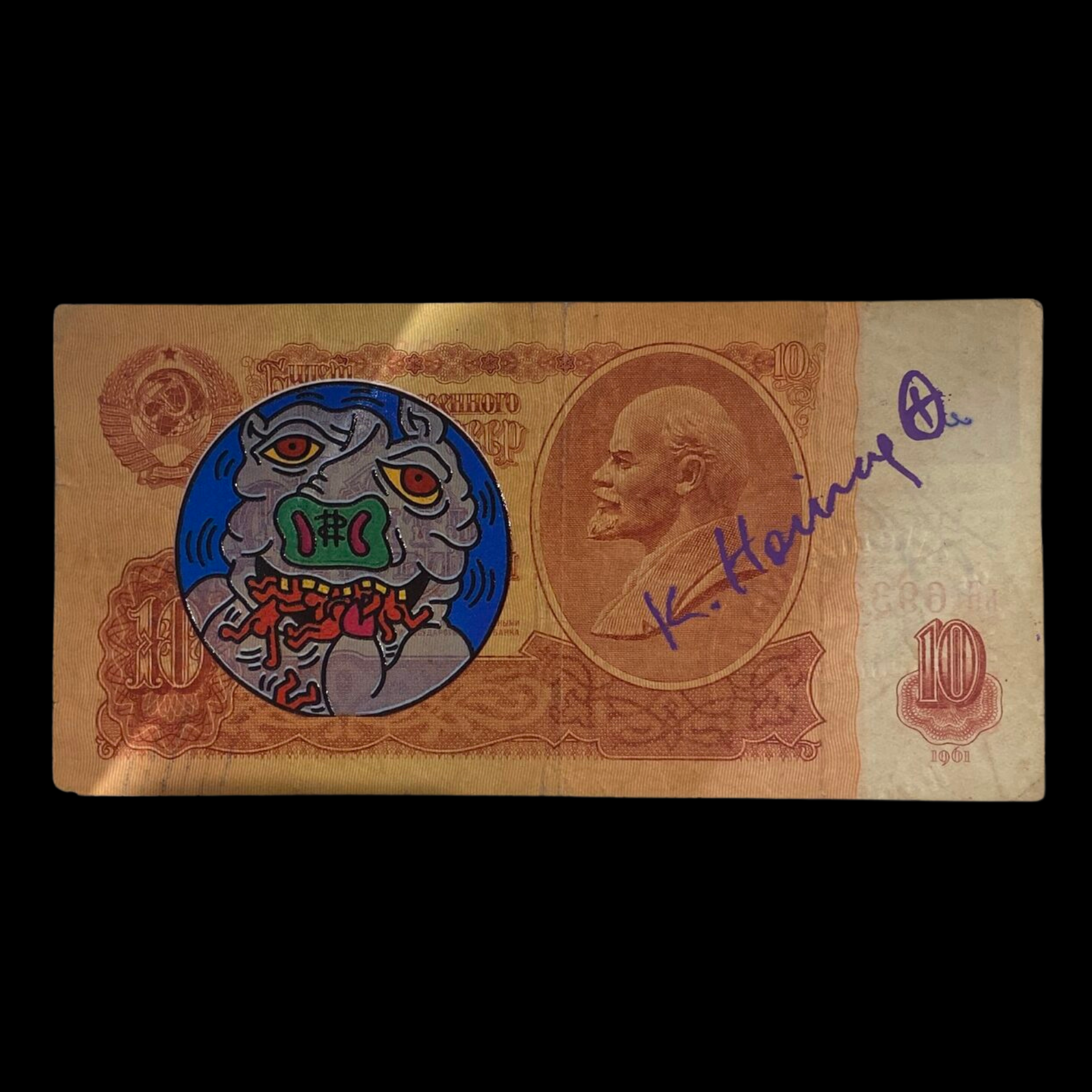
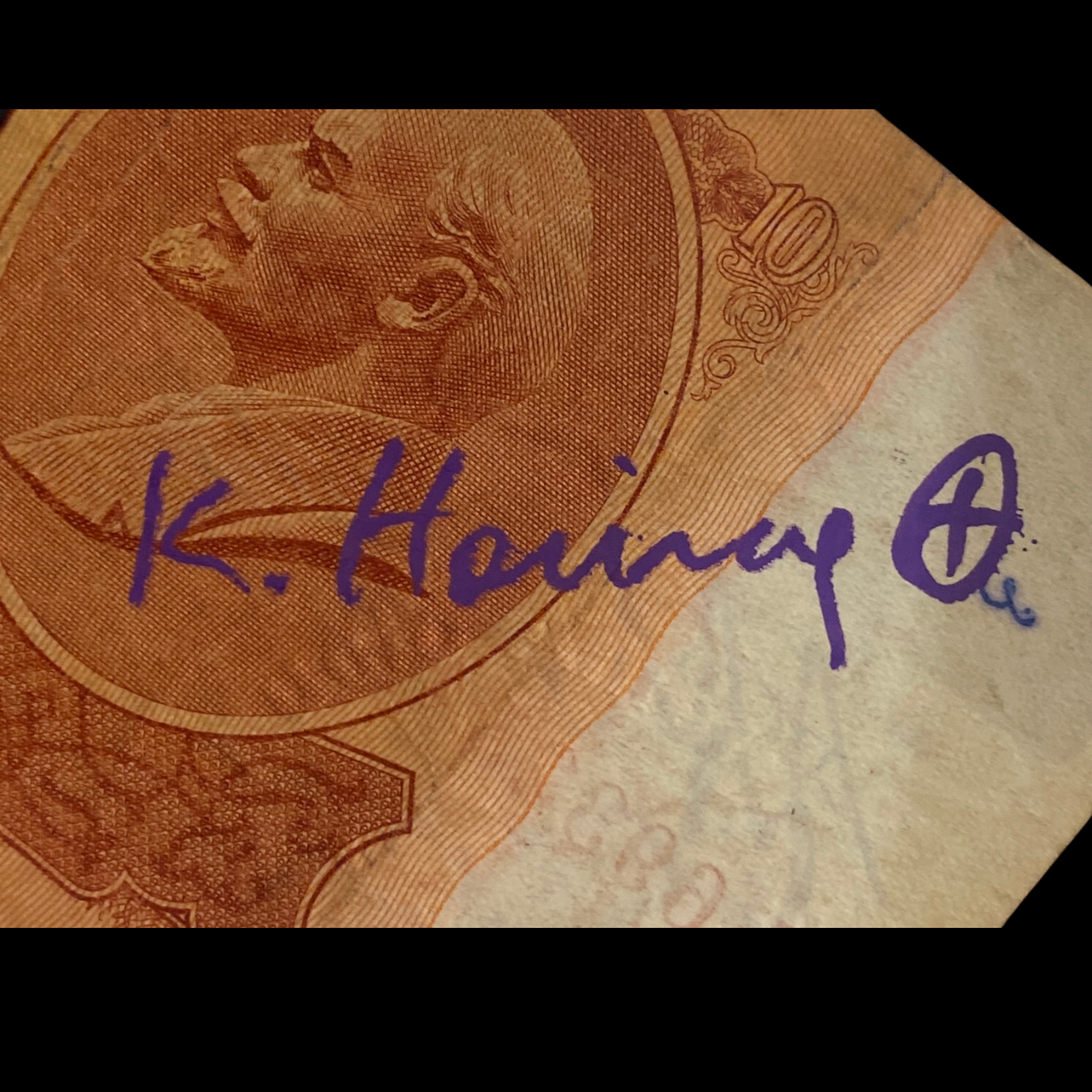
This Soviet 10-ruble banknote has been transformed from an ordinary monetary object into a distinctive piece associated with American artist Keith Haring. The front bears Haring’s handwritten signature in purple ink beside the portrait of Vladimir Lenin, while a large circular drawing occupies much of the left side of the note. Executed in blue, grey, green, red and black, the image uses the bold outlines and simplified visual language closely associated with Haring’s work.
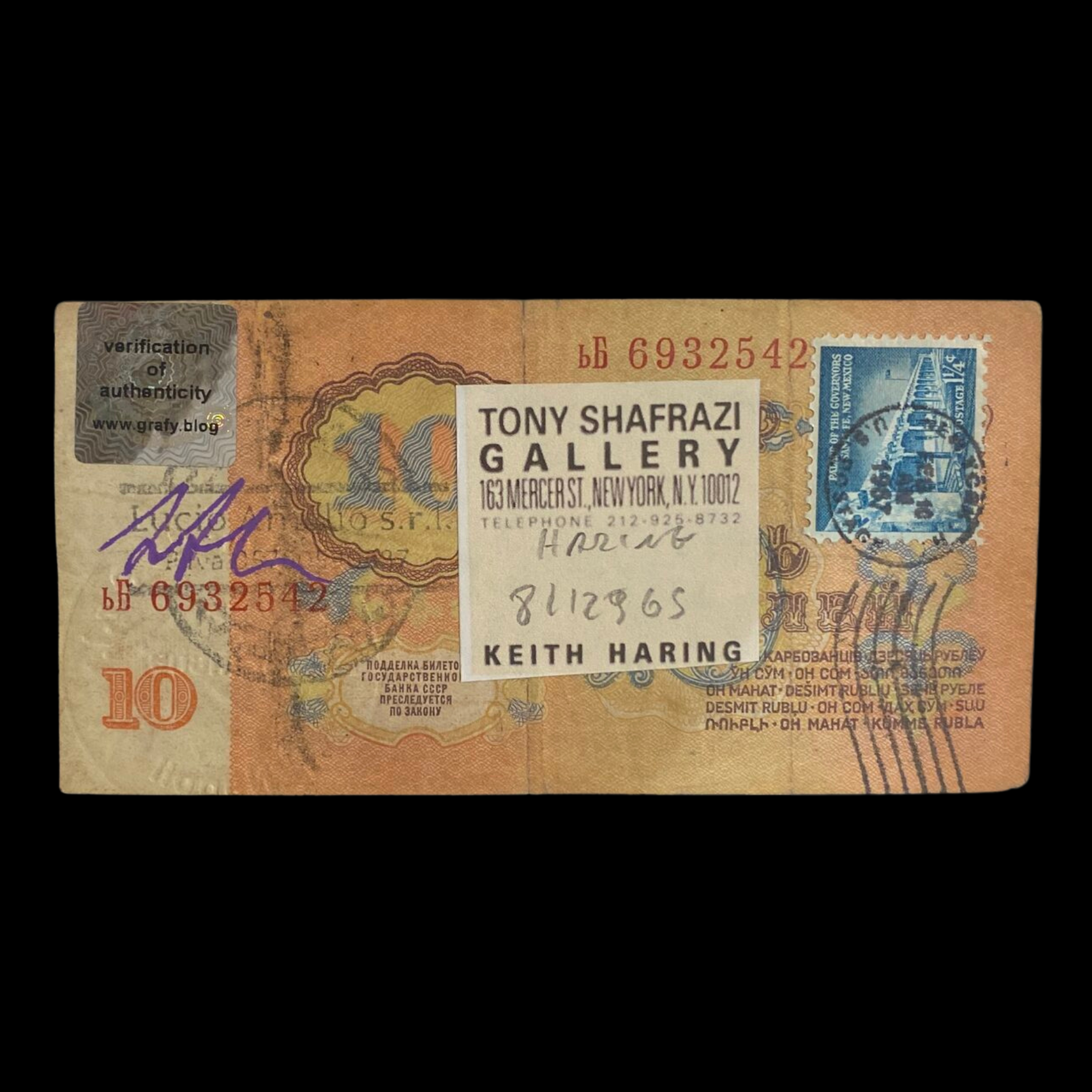
The reverse preserves further documentary evidence connected with the object, including a Tony Shafrazi Gallery label bearing Keith Haring’s name and contact details, together with an authenticity label. The connection with Tony Shafrazi is historically relevant: Haring chose Shafrazi as his dealer, and his highly successful 1982 exhibition at Tony Shafrazi Gallery in New York helped establish him within the international contemporary art world.
Origin and Artistic Context
Keith Haring emerged from New York’s downtown art scene at the beginning of the 1980s. After moving to the city in 1978, he became involved with an alternative community of artists, musicians and performers that included figures such as Jean-Michel Basquiat and Kenny Scharf. Between 1980 and 1985, Haring created hundreds of chalk drawings on unused black advertising panels in the New York subway, developing the energetic line, simplified figures and instantly recognizable symbols that became central to his visual vocabulary.
By 1982, Haring had begun exhibiting internationally and held his first major one-man exhibition at Tony Shafrazi Gallery. His practice consistently crossed boundaries between gallery art, street culture and everyday objects. He drew on walls, posters, clothing and other unconventional surfaces, believing that art should remain accessible beyond traditional museum environments. Against this background, an altered banknote is particularly characteristic of his wider approach: a standardized object of exchange becomes an individual image through direct intervention by the artist.
Artwork and Presentation
The banknote retains the familiar warm brown-orange palette and printed imagery of Soviet currency, including the portrait of Lenin on the front. Haring’s intervention deliberately disrupts this formal state design. A large circular figure has been drawn over the left side of the note, incorporating multiple eyes, a stylized mouth, vivid color fields and strong black contour lines. The energetic, almost cartoon-like image creates a striking contrast with the rigid engraved vocabulary of the original currency.
Haring’s purple signature runs diagonally beside Lenin’s portrait, adding a second, more personal graphic element. On the reverse, the original Soviet printing remains visible together with later labels and markings associated with the work’s history. The banknote is presented centrally within an elaborate white frame measuring 72 × 5 × 66 cm, surrounded by a pale mount and a narrow gold inner border. The unusually large presentation emphasizes the small banknote as an independent artwork rather than merely as numismatic material.
Human Touch
Haring’s work was defined by immediacy. His images were frequently produced rapidly and directly, without elaborate preparatory processes, allowing the movement of the artist’s hand to remain visible in the finished object. This directness was already central to his subway drawings, which he described as a laboratory for developing his ideas and visual language.
At the same time, the playful appearance of Haring’s art often carried serious social meaning. Throughout the 1980s he created numerous public works and campaigns connected with children, public health and social causes. After being diagnosed with AIDS in 1988, he established the Keith Haring Foundation in 1989 to support children’s organizations and groups involved in AIDS education, prevention and care.
This banknote captures several qualities fundamental to his practice: accessibility, humor, graphic immediacy and the transformation of an everyday object through drawing. By placing his imagery and signature directly onto Soviet currency, Haring converts an impersonal symbol of economic and political authority into a unique, hand-altered object carrying the unmistakable presence of the artist.
Delivery
مقدم من

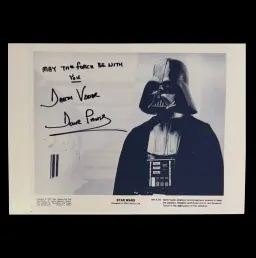
Lot SM-009
David Prowse – Star Wars Photograph with Inscription and Autograph
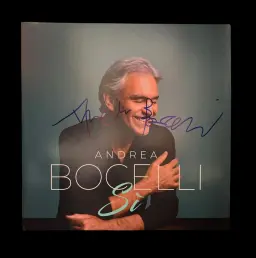
Lot SM-021
Andrea Bocelli – Autographed Record

Lot SM-013
Yuri Gagarin, Andrian Nikolayev, Pavel Popovich and German Titov – Photograph with Four Autographs
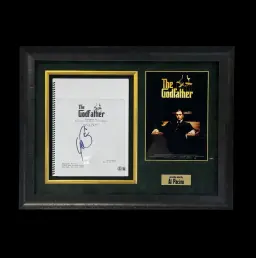
Lot SM-006
Al Pacino – The Godfather Film Script with Autograph
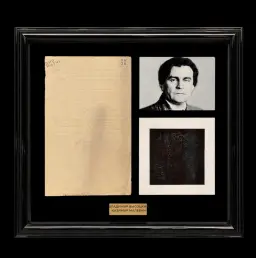
Lot SM-016
Kazimir Malevich – Signed Museum Document
Lot SM-029
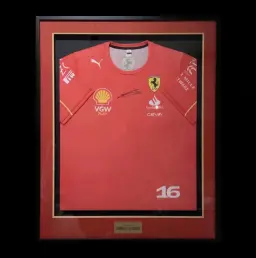
Charles Leclerc – Autographed Scuderia Ferrari T-Shirt

Lot SM-017
Zaha Hadid – Photograph with Autograph

Lot SM-026
Coco Chanel – Dress with Autograph on Original Label
Lot SM-004
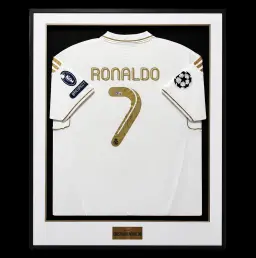
Cristiano Ronaldo – Signed Real Madrid Football Shirt

Lot SM-003
Lionel Messi – Signed Football Boot
Lot SM-015
تمت إضافة المنتج إلى سلة التسوق الخاصة بك
You cannot add "Keith Haring – Autographed and Illustrated Soviet Banknote" to your cart again.
استفسار
Lot SM-015
شكرًا على اهتمامك. يرجى ملء النموذج أدناه، وسيقوم أحد المتخصصين لدينا بالاتصال بك قريبًا.
شكرًا على اهتمامك بـ
سنتواصل معك قريبًا
لن نقوم أبدًا بنقل معلوماتك الشخصية إلى أي جهة خارج «معرض أرتيفاكتوم» لاستخدامها في أغراض تسويقية خاصة بها دون موافقتك. لمزيد من المعلومات حول كيفية معالجتنا لبياناتك، يرجى النقر هنا لقراءة «إشعار الخصوصية» الخاص بنا.
مقدم من

استفسار
شكرًا على اهتمامك. يرجى ملء النموذج أدناه، وسيقوم أحد المتخصصين لدينا بالاتصال بك قريبًا.
شكرًا على اهتمامك بـ
سنتواصل معك قريبًا
لن نقوم أبدًا بنقل معلوماتك الشخصية إلى أي جهة خارج «معرض أرتيفاكتوم» لاستخدامها في أغراض تسويقية خاصة بها دون موافقتك. لمزيد من المعلومات حول كيفية معالجتنا لبياناتك، يرجى النقر هنا لقراءة «إشعار الخصوصية» الخاص بنا.