



Specifications:
Location:
Other
Genus:
Machairodus
Size:
32 x 17 x 28 cm
Age:
approx. 15–2.5 million years old
Period:
Miocene – Early Pliocene
Family:
Felidae
Material:
Metal holder
Available in Dubai
275 500,00 AED

Lot Essay
Delivery
Rarity and Value
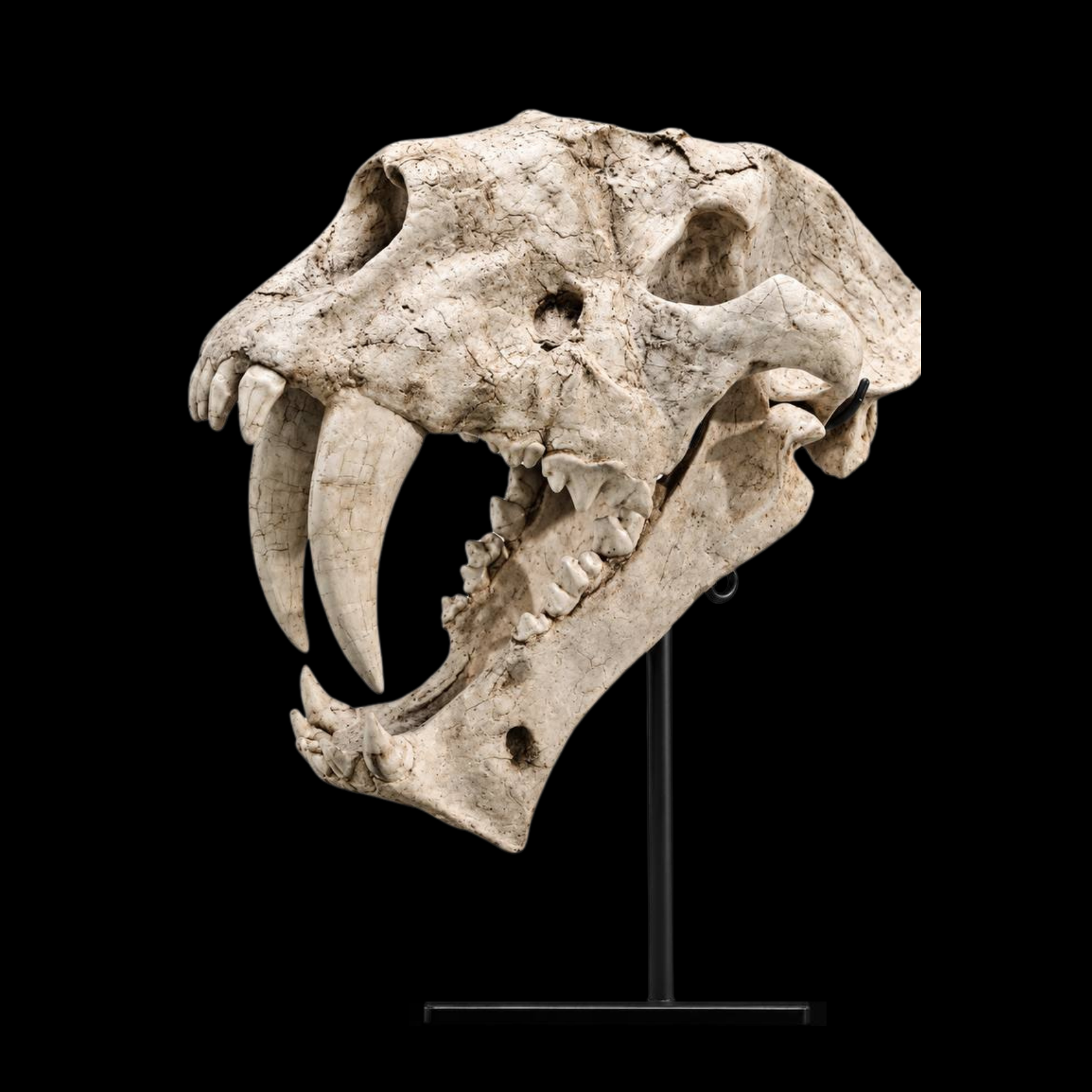
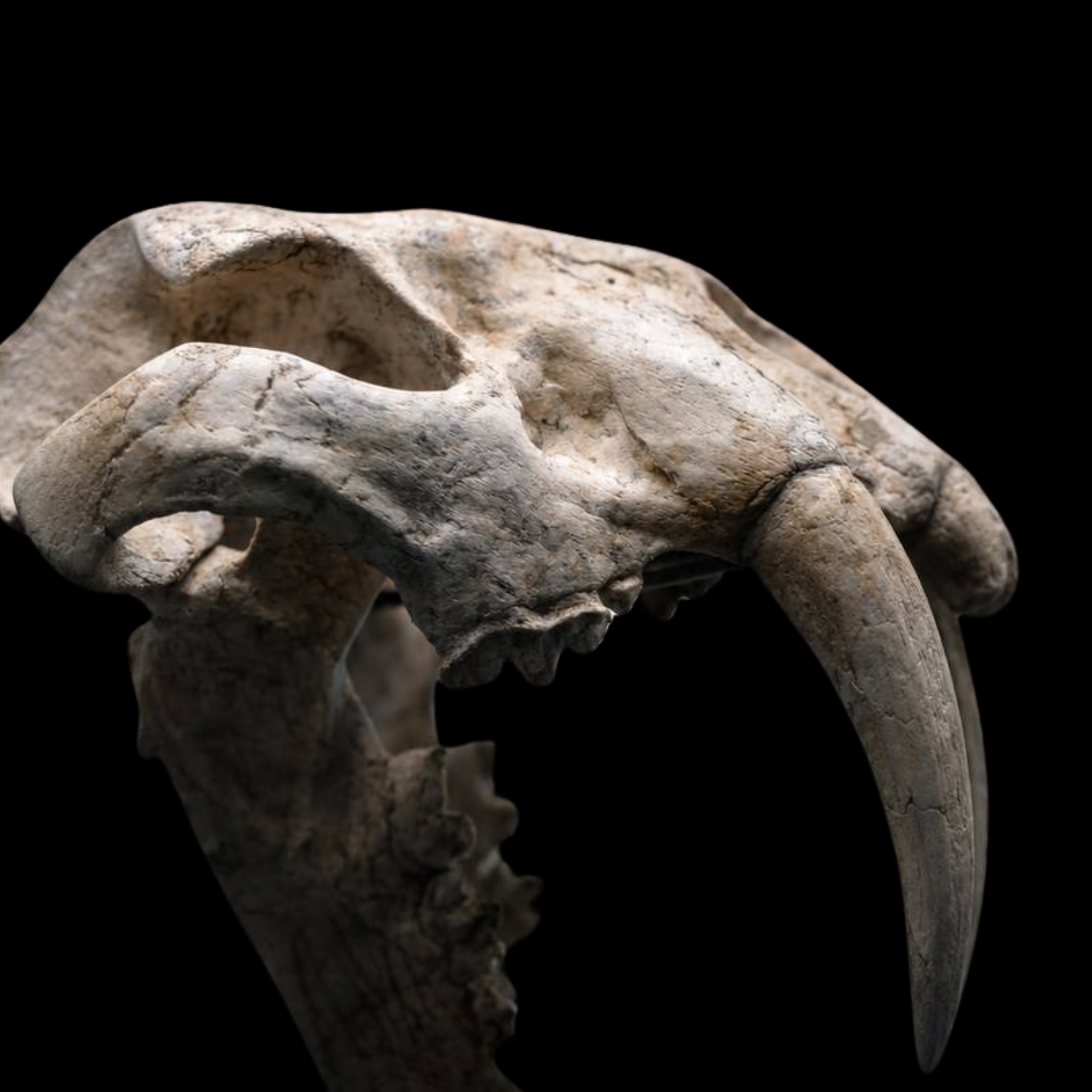
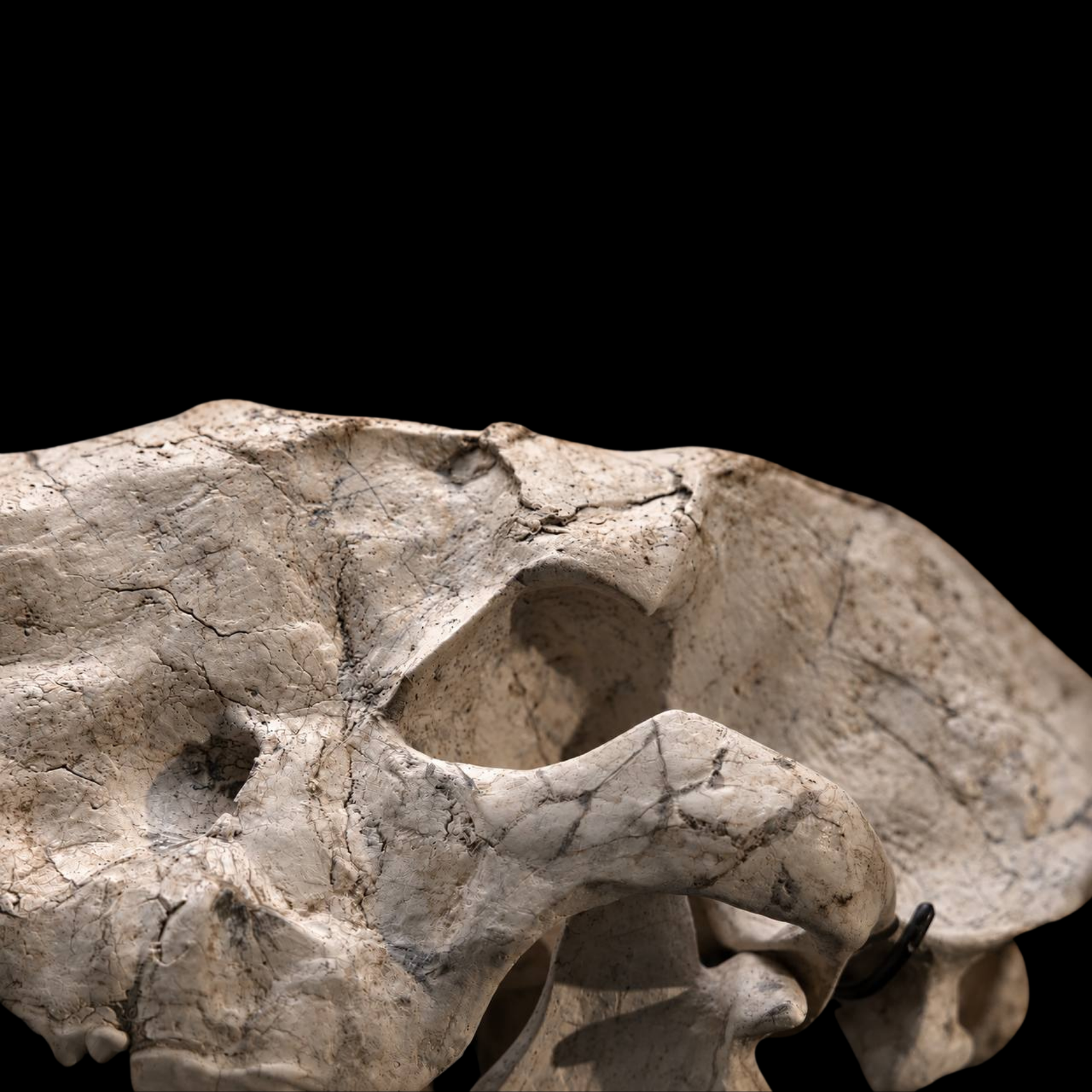
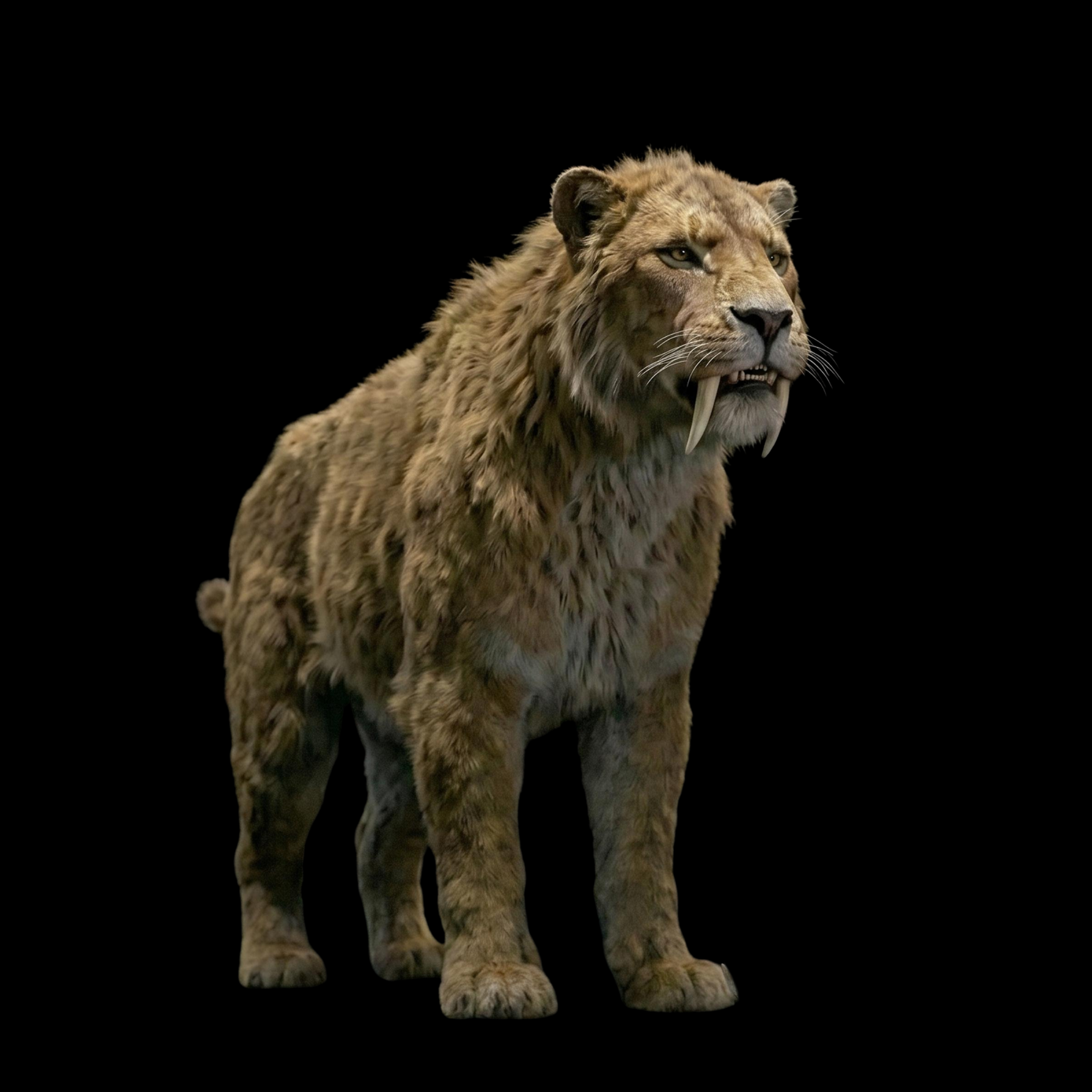
This skull of Machairodus represents one of the most distinctive predatory felids of the Miocene and early Pliocene. Machairodus belonged to the extinct subfamily Machairodontinae, the saber-toothed cats, and was characterized by greatly elongated upper canines, a powerful skull, and specialized jaws adapted for killing large prey. Unlike the conical canines of modern big cats, its saber-like teeth were laterally compressed and designed to penetrate soft tissues with controlled, precise bites. Larger species of Machairodus may have reached around 2 metres in body length and approximately 200 kg, placing them among the major mammalian predators of their ecosystems. Cranial material is especially informative because the skull preserves the anatomical adaptations associated with feeding, bite mechanics, sensory function, and predatory behaviour.
Evolutionary Context and Distribution
Machairodus appeared during the Miocene and survived into the early Pliocene, with members of the genus and closely related machairodontines occurring across large parts of Africa, Eurasia, and North America. These cats formed part of an evolutionary radiation of saber-toothed felids that developed several different solutions for subduing large-bodied prey. Machairodus should not be regarded as a direct ancestor of the later Smilodon, but both belonged to the broader saber-toothed cat lineage and shared highly specialized predatory adaptations. The widespread distribution of Machairodus indicates that these predators were capable of occupying varied environments, from open woodland and savanna-like habitats to more mixed landscapes inhabited by abundant large herbivores.
Anatomy and Predatory Adaptations
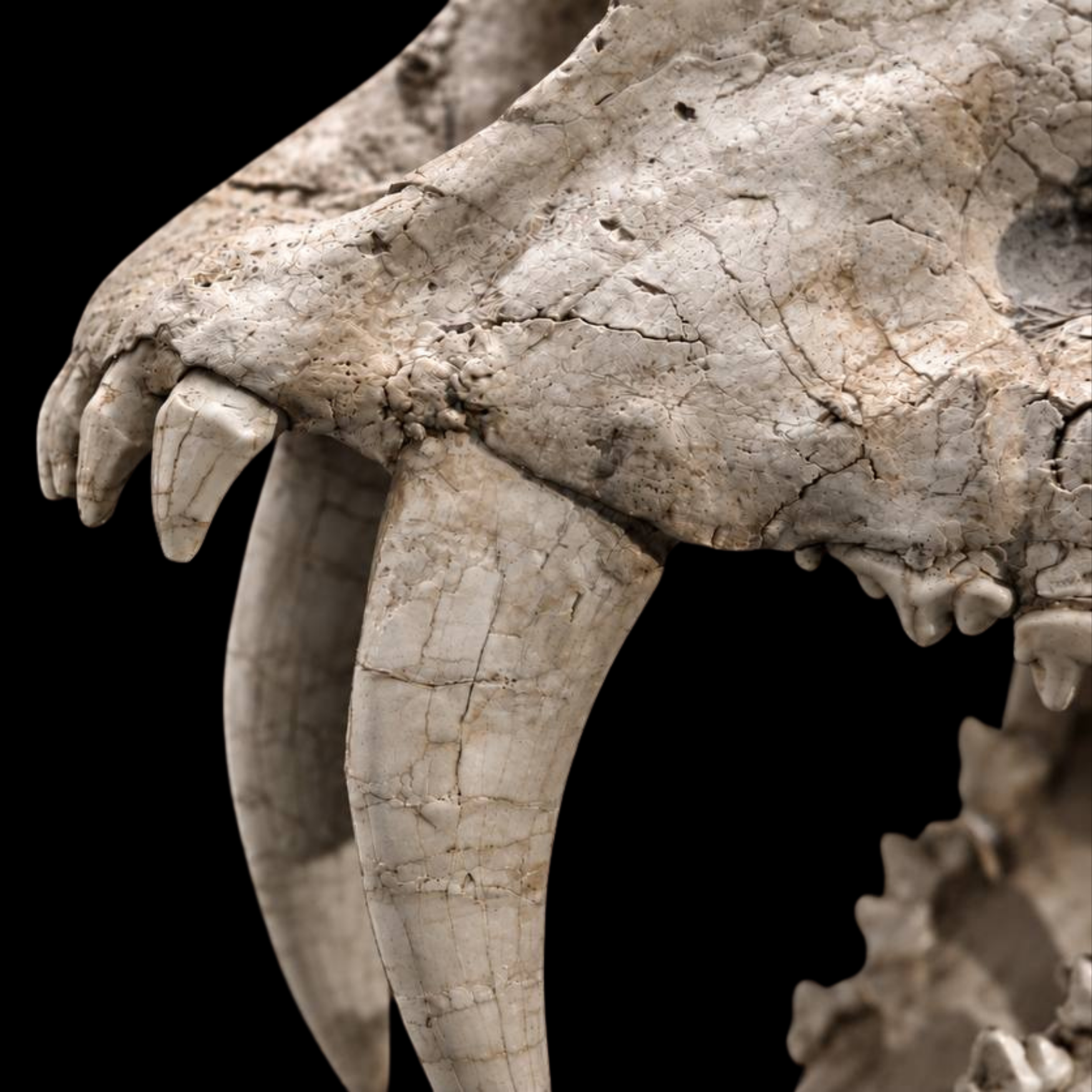
The most striking feature of Machairodus was its pair of elongated upper canine teeth. The skull evolved around these enlarged weapons: the jaws could open to a much wider angle than in most living cats, allowing the canines to clear the lower jaw during a strike. Strong neck musculature helped drive and control the head, while robust forelimbs were probably important for restraining prey before the killing bite was delivered. The canines were effective but comparatively vulnerable to sideways forces, suggesting that Machairodus relied on immobilizing prey rather than simply biting repeatedly during prolonged struggles. Its cheek teeth remained strongly carnassial, functioning like shears to slice flesh efficiently. Together, these features reveal a predator specialized not merely for strength, but for a highly controlled hunting technique.
Paleoecology and Extinction
Machairodus lived in ecosystems populated by large ungulates, early proboscideans, rhinoceroses, equids, and other substantial herbivores that could provide the prey base required by a large hypercarnivore. Its anatomy suggests an ecological role focused on ambush and close-range attacks rather than extended pursuit. During the late Miocene and Pliocene, changing climates and habitats repeatedly reorganized mammalian communities, altering prey availability and competition between carnivores. Machairodus eventually disappeared, while other machairodontine lineages continued to evolve and later produced even more specialized saber-toothed predators. Its skull therefore records an important stage in the evolution of mammalian predation, when felids developed some of the most extreme cranial and dental adaptations ever seen in the cat family.
Delivery
Brought to you by

Need more details?
Lot FSL-037
1 500,00 AEDFossilized Mosasaur Tooth in Natural Matrix
Lot MT-0021
3 600,00 AEDMegalodon Tooth, 125gr, h 10.5cm, circa 13 mln years old
Lot FSL-012
900,00 AED186 gr Plate of Fossilised Otodus Shark’s Tooth
Lot AH-001
Ammonite – A Window Into Prehistoric Oceans
Lot BA-01
14 700,00 AEDAmmonite Speetoniceras versicolor – A Multicolored Masterpiece of the Early Jurassic Sea
Lot OOT-002
900,00 AEDPrehistoric Power: Authentic Otodus obliquus Tooth, 5.2 cm
Lot FSL-019
55 100,00 AEDMarble Fossil Table with Orthoceras and Gastropod Fossils
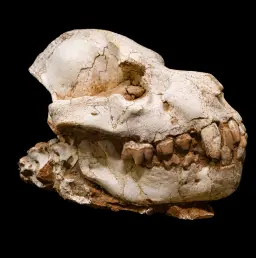
Lot FSL-031
246 000,00 AEDDinocrocuta Skull – Relic of a Miocene Bone-Crushing Predator
Lot OOT-005
900,00 AEDPrehistoric Power: Authentic Otodus obliquus Tooth, 4.7 cm
Lot OOT-003
900,00 AEDPrehistoric Power: Authentic Otodus obliquus Tooth, 4.5 cm
Lot FSL-041
Item has been added to your Cart
You cannot add "Machairodus Skull – Saber-Toothed Predator of the Miocene" to your cart again.
Enquiry
Lot FSL-041
Thank you for your interest. Please fill out the below form, and our specialist will follow up with you shortly.
Thank you for your interest
We will be in touch shortly
We will never pass your personal information to anyone outside of Artefactum Gallery for their own marketing purposes without your consent. For more information about how we processes your data, please click here to read our Privacy Notice.
Brought to you by

Enquiry
Thank you for your interest. Please fill out the below form, and our specialist will follow up with you shortly.
Thank you for your interest
We will be in touch shortly
We will never pass your personal information to anyone outside of Artefactum Gallery for their own marketing purposes without your consent. For more information about how we processes your data, please click here to read our Privacy Notice.
