


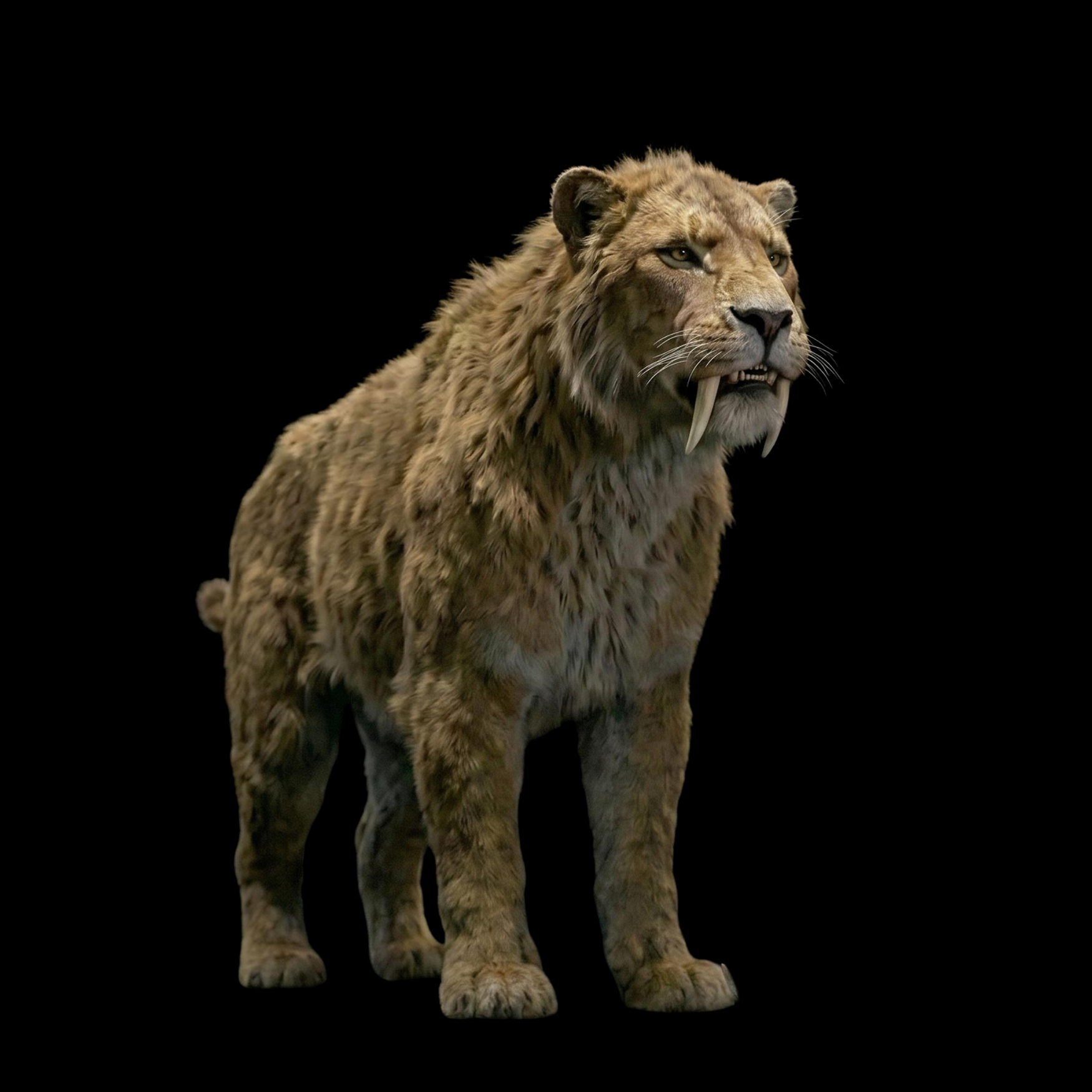
Lot FSL-041
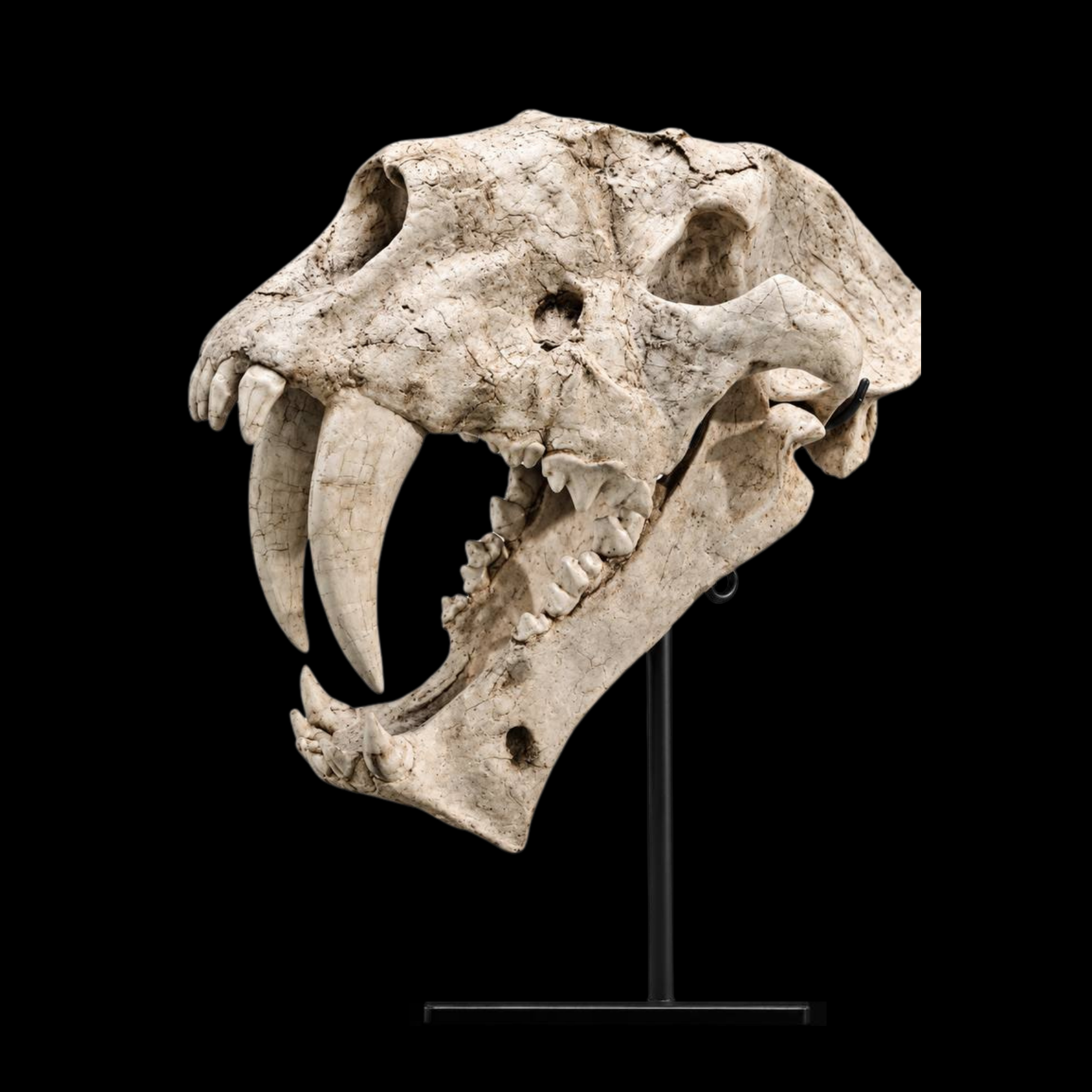
Megantereon Skull – Rare Saber-Toothed Predator of the Pliocene and Pleistocene
Specifications:
Location:
Taiwan
Genus:
Megantereon
Size:
32 x 17 x 28 cm
Age:
approx. 3.6 - 0.6 mln y.o.
Period:
Pliocene – Middle Pleistocene
Family:
Felidae
Animal:
Saber-toothed Cats
Material:
Metal holder
Available in Dubai
275 500,00 AED

Lot Essay
Delivery
Rarity and Value
This fossil skull of Megantereon represents an exceptionally significant example of an extinct saber-toothed feline predator that inhabited Africa, Eurasia, and parts of North America during the Pliocene and Pleistocene epochs.
Belonging to the extinct subfamily Machairodontinae and the tribe Smilodontini, Megantereon was one of the most remarkable early representatives of the dagger-toothed cats, a lineage that also includes the famous Smilodon.
Fossil remains of Megantereon are notably rare, and well-preserved cranial specimens are particularly exceptional. Despite the genus having occupied an extensive geographical range for millions of years, much of its fossil record consists of isolated teeth, jaw fragments, and incomplete skeletal elements. Relatively few sufficiently preserved skulls are available for detailed anatomical investigation.
This scarcity makes cranial material especially important to paleontology. The skull preserves critical evidence of the animal’s evolutionary history, feeding adaptations, jaw mechanics, and sensory anatomy.
Unlike the enormous Smilodon populator, Megantereon was a more compact, powerfully built predator, generally comparable in size to a modern leopard or jaguar. Its relatively modest body size contrasted dramatically with its highly specialised dentition and exceptionally robust forelimbs.
A fossil skull attributed to Megantereon therefore represents an important example of the evolutionary experimentation that produced some of the most extraordinary predators in mammalian history.
Evolutionary Context and Distribution
Megantereon appeared during the Pliocene and persisted into the Middle Pleistocene, with fossil occurrences spanning several million years.
The genus is documented across Africa, Europe, Asia, and North America, although its precise evolutionary origin and the classification of individual species remain subjects of scientific research.
Among the best-known species are Megantereon cultridens from Eurasia and Megantereon whitei from Africa. Additional forms have been described from China and other regions, reflecting a complex evolutionary history.
Megantereon belonged to the same evolutionary tribe as Smilodon and is often considered closely related to the lineage from which the later, more specialised saber-toothed cats evolved.
One particularly fascinating aspect of its history is its chronological overlap with early members of the human lineage.
At several Pleistocene fossil localities, remains of Megantereon have been discovered in geological contexts associated with early hominins. This demonstrates that saber-toothed predators and early humans inhabited some of the same ancient ecosystems.
The geographical distribution of Megantereon also reveals its ecological flexibility. Its fossils occur in regions representing different ancient environments, although its powerful build suggests a particular adaptation to hunting where vegetation or terrain provided opportunities for ambush.
Anatomy and Predatory Adaptations
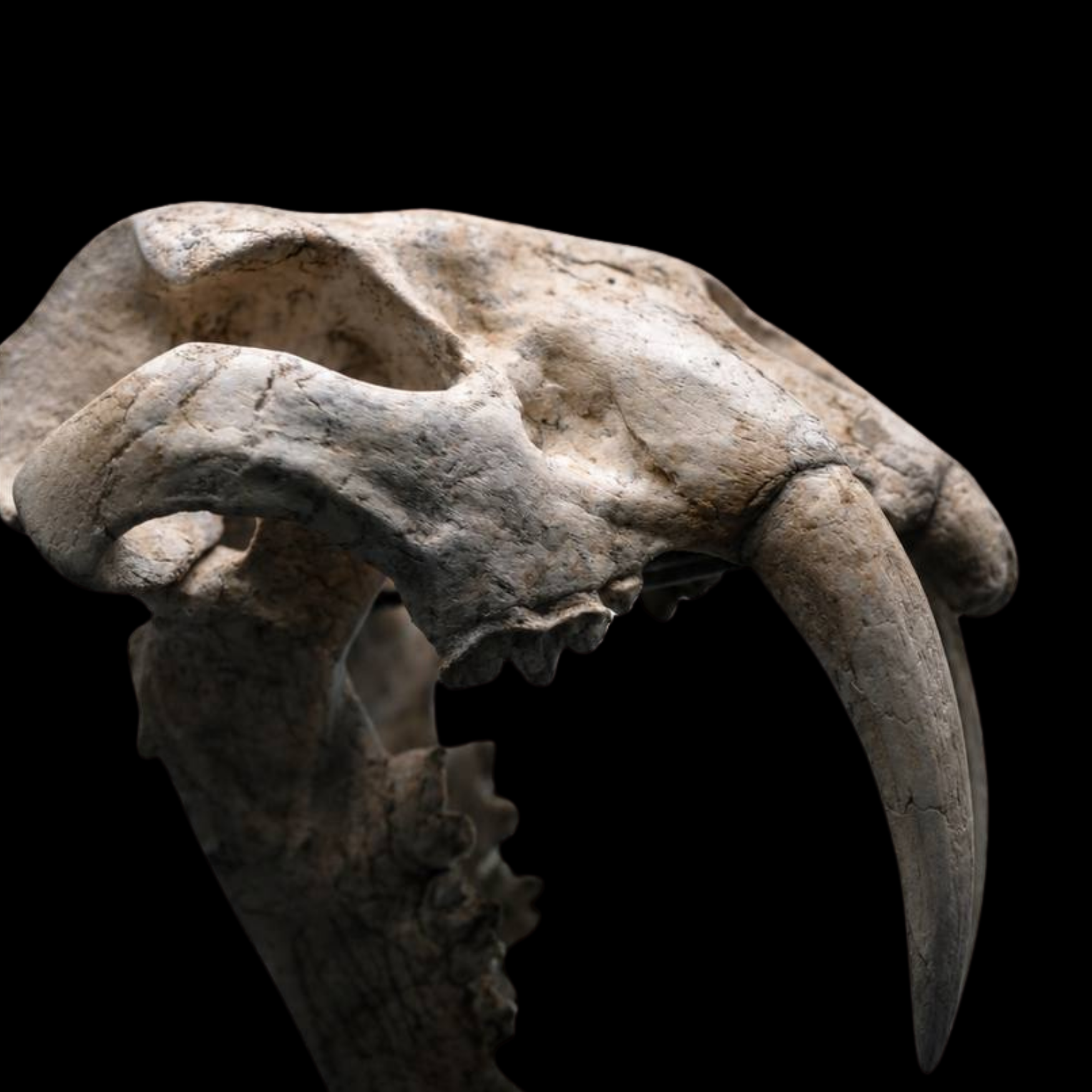
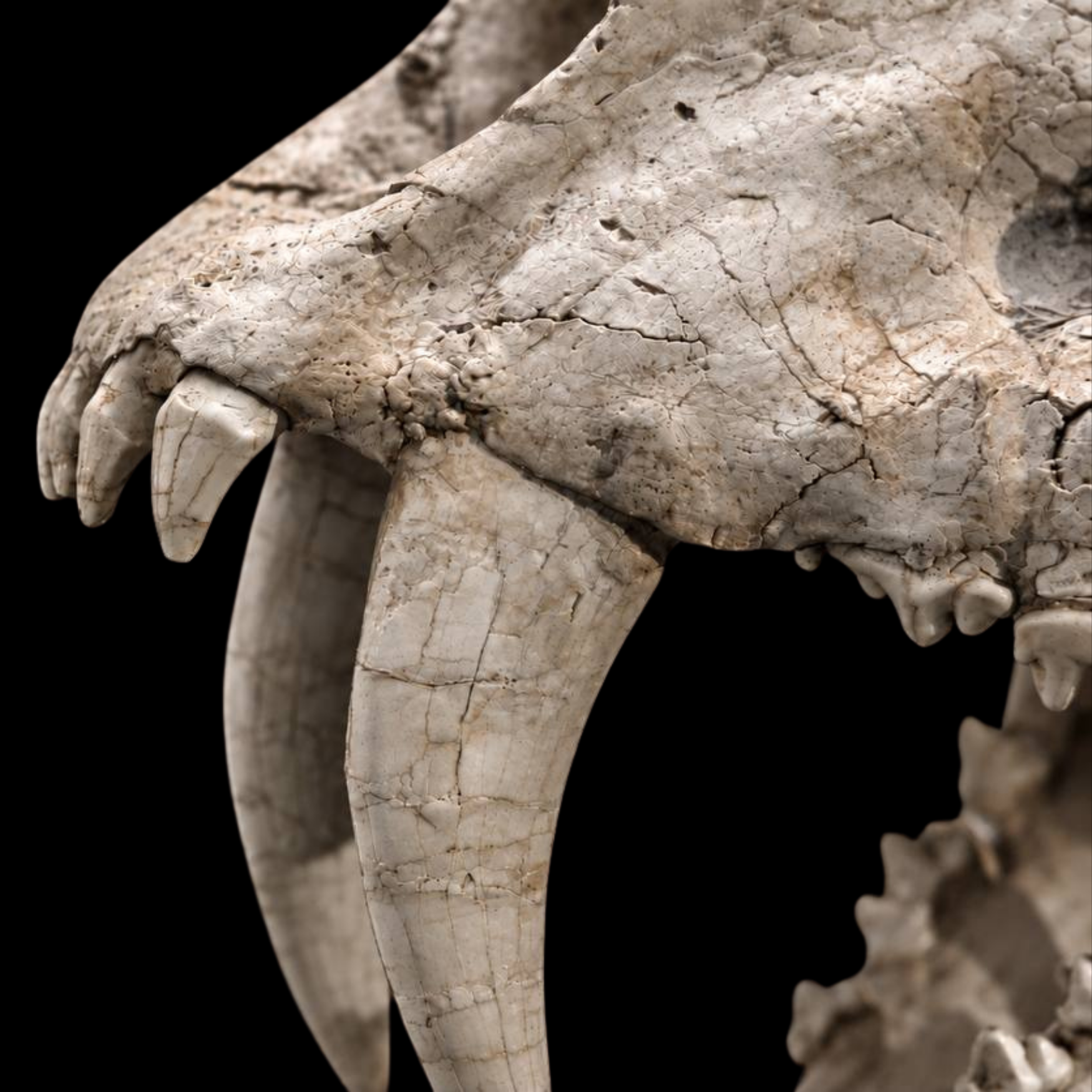
The most distinctive anatomical feature of Megantereon was its pair of extraordinarily elongated, laterally compressed upper canine teeth.
These dagger-like canines were fundamentally different from the shorter, conical teeth of modern lions, tigers, and leopards. Their shape indicates a specialised killing mechanism in which precision and controlled penetration were more important than repeated powerful biting.
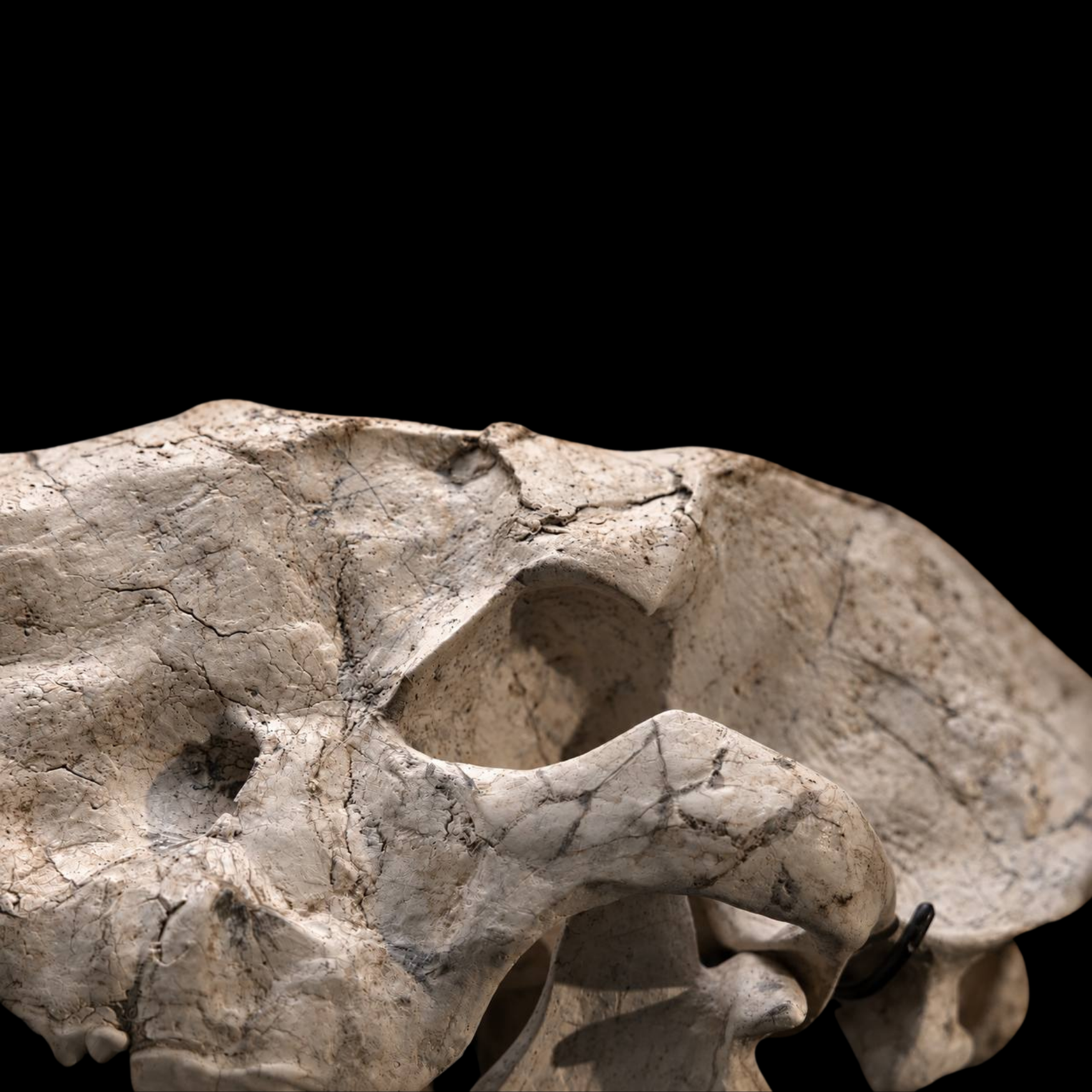
The skull possessed several important adaptations associated with this feeding strategy.
Its upper canines were long, flattened, and generally lacked the prominent serrations characteristic of some other saber-toothed predators. The jaw structure permitted a wide gape, creating sufficient space for the enlarged teeth to function effectively.
The lower jaw also displayed characteristic bony projections, known as mandibular flanges, which were associated with the unusual proportions of the upper canines.
Recent anatomical research suggests that the tips of the upper sabers may have remained visible even when the mouth was closed, giving Megantereon a striking appearance unlike that of any living feline.
The predator’s postcranial skeleton was equally specialised. Its forelimbs were exceptionally strong relative to its body size, suggesting that it relied on muscular strength to seize and restrain struggling prey.
Rather than depending on prolonged pursuit, Megantereon was probably an ambush predator, using powerful forelimbs to immobilise its victims before delivering a carefully controlled bite to vulnerable areas such as the throat.
This strategy would have helped reduce sideways pressure on the elongated canines, which were effective penetrating weapons but vulnerable to damaging lateral forces.
Its cutting cheek teeth further demonstrate that Megantereon was a highly specialised carnivore, anatomically adapted for slicing flesh.
Together, these characteristics reveal a predator whose success depended on a remarkable combination of muscular power, specialised dentition, and controlled hunting behaviour.
Paleoecology and Extinction
Megantereon inhabited ancient ecosystems populated by a diverse range of large mammals, including early horses, deer, bovids, rhinoceroses, and other herbivorous species.
Its powerful body and specialised killing apparatus suggest that it was capable of subduing prey of substantial size, potentially including animals approaching or exceeding its own body mass.
Unlike some larger saber-toothed cats, Megantereon combined relatively compact proportions with exceptionally robust forelimbs, making it particularly well suited to close-range predatory encounters.
Fossil discoveries from important Pliocene and Pleistocene localities have helped paleontologists reconstruct its evolutionary relationships and ecological role.
An especially significant discovery was a nearly complete skull from Sabretooth Cave in southern China, described in 2020. The specimen provided valuable anatomical information and demonstrated the importance of rare, well-preserved cranial material for understanding this genus.
Other important discoveries from Europe and China have contributed to reconstructing its skull anatomy, musculature, and probable external appearance.
Megantereon eventually disappeared during the Middle Pleistocene. Its extinction occurred against a background of changing climates, shifting habitats, evolving herbivore communities, and competition among large carnivores.
However, the precise causes of its disappearance remain uncertain.
Its evolutionary significance extends beyond its own extinction. As a member of the Smilodontini, Megantereon provides essential evidence for understanding the development of the extreme saber-toothed adaptations later expressed in Smilodon.
The exceptional scarcity of well-preserved skulls makes every securely identified cranial discovery scientifically valuable, offering the possibility of new insights into the evolution, ecology, and predatory behaviour of one of prehistory’s most distinctive feline hunters.
Delivery
Brought to you by

Need more details?
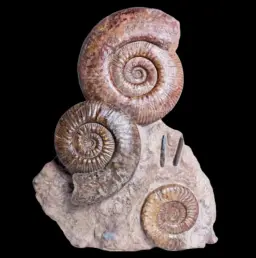
Lot AS-11
Ammonite Cluster – Natural Sculpture from an Ancient Sea
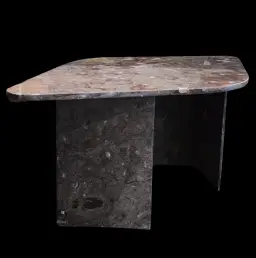
Lot FSL-017
15 800,00 AEDMarble Fossil Table with Orthoceras and Gastropod Fossils
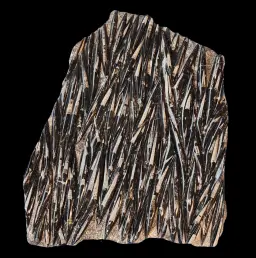
Lot FSL-007
40 400,00 AEDFossilized Orthoceras cephalopods in limestone matrix
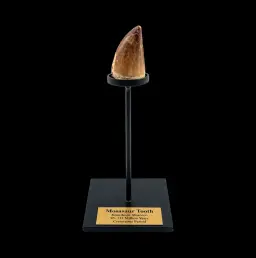
Lot FSL-047
1 700,00 AEDMosasaur Tooth – Relic of a Cretaceous Sea Predator

Lot DE1
132 910,00 AEDFossilized Hadrosaurus Dinosaur Egg, Painting made by Nikas Safronov
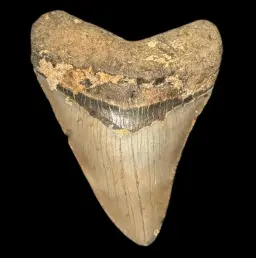
Lot MT97
3 500,00 AEDMegalodon Tooth, 109 gr, h 9.5 cm, circa 13 mln years old
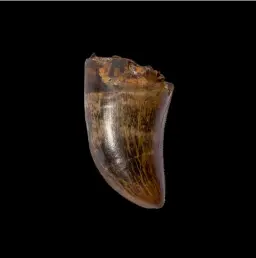
Lot TT11
27 000,00 AEDTyrannosaurus tooth
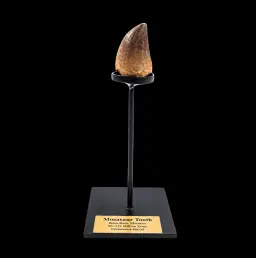
Lot FSL-034
1 800,00 AEDMosasaur Tooth – Relic of a Cretaceous Sea Predator
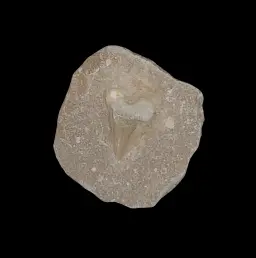
Lot FSL-011
600,00 AED290 gr Plate of Fossilised Otodus Shark’s Tooth
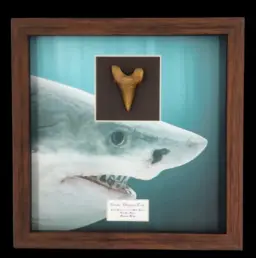
Lot OOT-005
900,00 AEDPrehistoric Power: Authentic Otodus obliquus Tooth, 4.7 cm
Lot FSL-041
Item has been added to your Cart
You cannot add "Megantereon Skull – Rare Saber-Toothed Predator of the Pliocene and Pleistocene" to your cart again.
Enquiry
Lot FSL-041
Thank you for your interest. Please fill out the below form, and our specialist will follow up with you shortly.
Thank you for your interest
We will be in touch shortly
We will never pass your personal information to anyone outside of Artefactum Gallery for their own marketing purposes without your consent. For more information about how we processes your data, please click here to read our Privacy Notice.
Brought to you by

Enquiry
Thank you for your interest. Please fill out the below form, and our specialist will follow up with you shortly.
Thank you for your interest
We will be in touch shortly
We will never pass your personal information to anyone outside of Artefactum Gallery for their own marketing purposes without your consent. For more information about how we processes your data, please click here to read our Privacy Notice.