


Qasr Al Hosn Review: A Complete Guide to Abu Dhabi’s Oldest Historic Landmark
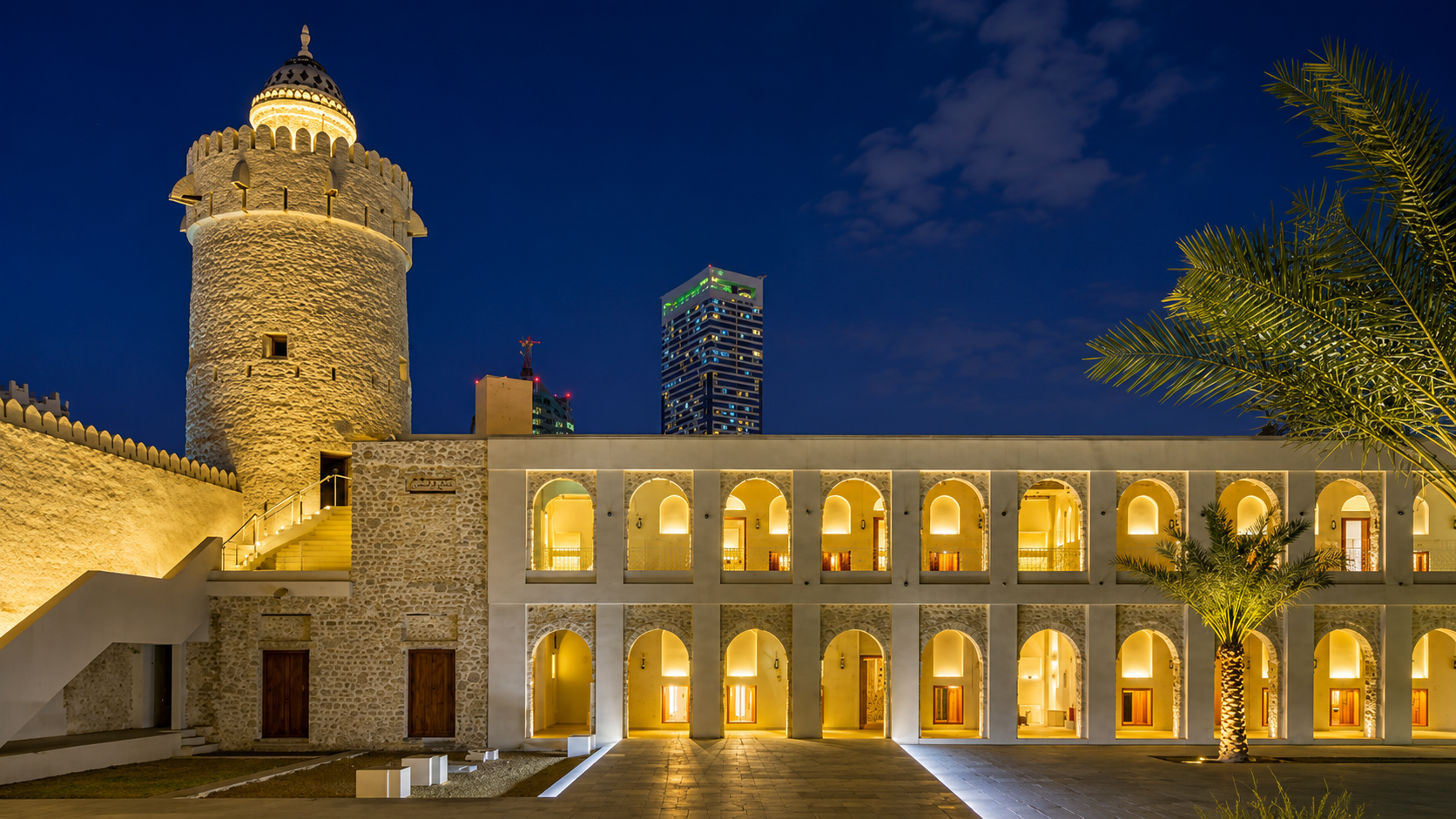
Among the gleaming skyscrapers and modern boulevards of the UAE capital stands a monument that tells the story of Abu Dhabi long before the discovery of oil transformed the region. Qasr Al Hosn is not simply another museum or restored fort—it is the birthplace of the city itself and the oldest surviving building in Abu Dhabi. For more than 250 years, this remarkable complex served as a watchtower, defensive fortress, royal residence, seat of government, and symbol of political authority. Today it remains one of the country’s most significant cultural landmarks, preserving the history of the Emirate through authentic architecture, carefully curated exhibitions, and immersive visitor experiences.
Unlike many historical museums that present collections removed from their original context, Qasr Al Hosn Museum allows visitors to experience history exactly where it unfolded. Every courtyard, tower, and corridor reflects a different chapter in Abu Dhabi’s remarkable transformation from a small coastal settlement dependent on fishing and pearling into one of the world’s most prosperous capitals. The complex functions simultaneously as an architectural monument, a history museum, a cultural centre, and a symbol of Emirati national identity.
For anyone searching for an outstanding museum in Abu Dhabi, Qasr Al Hosn offers something completely different from the city’s modern art museums and contemporary cultural institutions. Instead of focusing on international collections, it tells the story of the UAE through authentic buildings, historical artifacts, traditional crafts, and the people who shaped the nation.
Whether your interests include architecture, archaeology, photography, Emirati culture, or simply discovering what to see in Abu Dhabi beyond the famous skyline, Qasr Al Hosn deserves a place at the very top of your itinerary. Few places explain the origins of the capital with such authenticity while allowing visitors to walk through the very spaces where the city’s history began.
What Is Qasr Al Hosn?
Qasr Al Hosn is the oldest surviving structure in Abu Dhabi and one of the most important historical landmarks in the United Arab Emirates. The complex began as a simple coral-stone watchtower built in the late eighteenth century to protect the island’s only freshwater well. This strategic source of fresh water attracted settlement and eventually became the nucleus around which Abu Dhabi developed.
As the settlement expanded, the original tower evolved into a fortified residence for the ruling Al Nahyan family. During the nineteenth and twentieth centuries, additional defensive walls, residential quarters, administrative buildings, and ceremonial spaces transformed the small fortress into the political heart of the emirate. For generations, Qasr Al Hosn served as the residence of rulers, the seat of government, and the administrative centre from which the future capital was governed.
Following extensive conservation and restoration, the fortress has been transformed into a museum complex that preserves both its architecture and its historical significance. Rather than reconstructing the building artificially, restoration specialists carefully retained original construction techniques and historic materials wherever possible, allowing visitors to appreciate the authenticity of the structure.
Today, Qasr Al Hosn Museum presents the story of Abu Dhabi through exhibitions combining archaeological discoveries, historical artifacts, archival photography, multimedia installations, and restored architectural spaces. Together they reveal how one small defensive tower became the symbolic heart of an entire nation.
As the oldest building in Abu Dhabi, Qasr Al Hosn represents the city’s physical and cultural origins while continuing to serve as one of its most important educational institutions.
Why Qasr Al Hosn Is So Important in UAE History
The historical significance of Qasr Al Hosn extends far beyond its impressive age. For more than two centuries it served as the political, administrative, and social centre of Abu Dhabi, witnessing every major stage in the emirate’s development. Long before modern government ministries existed, decisions affecting the future of the region were made within these walls.
The fortress became closely associated with the ruling Al Nahyan family, whose leadership guided Abu Dhabi through periods of tribal alliances, maritime trade, pearling prosperity, economic hardship, oil discovery, and ultimately the formation of the United Arab Emirates. Because of this continuous political role, the complex occupies a central place within Abu Dhabi history.
Visitors quickly realize that the city’s modern skyline developed around this modest fortress. Before high-rise buildings, luxury hotels, and wide boulevards appeared, Qasr Al Hosn stood almost alone beside the Arabian Gulf, overlooking a small coastal settlement whose economy depended largely on pearling, fishing, and trade. As the city expanded throughout the twentieth century, the fortress remained a symbol of continuity connecting Abu Dhabi’s traditional past with its rapidly modernizing future.
The museum also illustrates the broader story of Abu Dhabi heritage, emphasizing the importance of preserving historical architecture, traditional crafts, oral history, and cultural identity during a period of extraordinary economic transformation. Through careful conservation, Qasr Al Hosn reminds visitors that the UAE’s remarkable modernization has been built upon strong cultural foundations rather than replacing them.
Today the fortress continues to function as a national symbol, hosting cultural events, educational programmes, heritage festivals, and public celebrations that reinforce its enduring role within Emirati society.
Location: Exploring the Historic Heart of Abu Dhabi
One of the most fascinating aspects of visiting Qasr Al Hosn is experiencing the dramatic contrast between the historic fortress and the modern city that now surrounds it. Located in the centre of Abu Dhabi, the complex occupies one of the most historically significant locations in the capital while remaining only minutes from many of its contemporary landmarks.
The surrounding district illustrates the extraordinary pace of Abu Dhabi’s development. Glass skyscrapers, government buildings, luxury hotels, and modern business towers rise around the restored fortress, creating one of the city’s most striking visual juxtapositions. Few historic sites in Abu Dhabi demonstrate the relationship between past and present as clearly as Qasr Al Hosn, where traditional coral-stone architecture stands beside twenty-first-century urban development.
The nearby Corniche provides beautiful waterfront promenades, landscaped parks, beaches, and panoramic views across the Arabian Gulf, making it easy to combine a visit to the museum with a leisurely exploration of central Abu Dhabi. Numerous cafés, restaurants, shopping destinations, and cultural institutions are also located within walking distance or a short taxi ride.
The museum forms part of Abu Dhabi’s wider network of cultural attractions, making it one of the city’s most rewarding places to visit. Nearby cultural institutions complement the fortress by offering exhibitions, performances, educational programmes, and artistic events throughout the year.
Its central location also makes Qasr Al Hosn one of the easiest places to visit in Abu Dhabi, particularly for first-time visitors who wish to combine history, architecture, and modern city life within a single day.
The Architecture of Qasr Al Hosn
Although modest in scale compared with many modern landmarks, the architecture of Qasr Al Hosn possesses extraordinary historical significance. Constructed primarily from coral stone, sea rock, lime mortar, gypsum, and timber, the fortress reflects traditional Gulf building techniques developed to withstand the region’s demanding climate while using locally available materials.
The oldest section of the complex is the defensive watchtower, whose thick walls, narrow windows, and elevated position provided protection for the settlement’s precious freshwater supply. As the fortress expanded over time, additional defensive walls, residential quarters, reception rooms, administrative offices, and open courtyards were added, gradually transforming the original tower into a fortified palace.
The spacious internal courtyard became the heart of daily life, providing shade, ventilation, and gathering spaces for residents and official visitors alike. Traditional architectural elements, including arcades, timber doors, carved details, and carefully proportioned windows, illustrate the practical elegance of historic Emirati construction.
Extensive conservation work has ensured that visitors experience the fortress as authentically as possible. Restoration specialists carefully studied historical records, archaeological evidence, and surviving building techniques before repairing damaged sections using traditional materials and craftsmanship whenever feasible.
Today, Qasr Al Hosn stands not only as one of the finest preserved examples of traditional Emirati architecture but also as a powerful symbol of Abu Dhabi’s origins. Its understated beauty demonstrates that the city’s most important historical monument derives its significance not from monumental scale but from the centuries of history preserved within its walls.
What to See Inside Qasr Al Hosn
The museum experience at Qasr Al Hosn extends far beyond the fortress walls themselves. Visitors journey through a sequence of carefully restored historic spaces and permanent exhibitions that explain how Abu Dhabi developed over more than two centuries. Authentic architecture, original artifacts, archival photographs, interactive technology, and traditional craftsmanship combine to create one of the most engaging historical experiences in the United Arab Emirates.
Rather than presenting isolated collections behind glass, the exhibitions allow visitors to understand how people lived, governed, traded, and adapted to the challenging desert environment long before the city’s modern skyline emerged. Every gallery adds another chapter to the story of Abu Dhabi, making the entire complex feel like a walk through history.
The Historic Inner Fort
The oldest section of Qasr Al Hosn is the Historic Inner Fort, built around the original watchtower that protected the settlement’s freshwater well during the late eighteenth century. This is the heart of the entire complex and the place where Abu Dhabi’s story began.
Visitors enter thick defensive walls constructed from coral stone and lime, immediately experiencing the atmosphere of one of the Gulf’s oldest surviving forts. The restored rooms illustrate how the ruling Al Nahyan family once lived and governed from within these modest yet strategically important buildings. Living quarters, reception rooms, administrative spaces, and defensive structures reveal the practical organization of daily life inside the fortress.
The original watchtower remains one of the most important architectural features of the complex. Standing within its walls provides a powerful reminder that the city of Abu Dhabi developed from a small protected settlement surrounding a vital source of fresh water. Every architectural detail reflects the practical needs of security, climate, and governance rather than decorative luxury.
The Inner Fort remains the most historically significant area of the museum because it preserves the authentic spaces where many of the emirate’s earliest political decisions were made.
The Outer Palace
As Abu Dhabi grew throughout the nineteenth and twentieth centuries, the fortress expanded beyond its original defensive function. The Outer Palace illustrates this transformation, demonstrating how Qasr Al Hosn gradually became the residence of rulers and the administrative centre of the emirate.
The additional buildings introduced larger reception halls, residential apartments, government offices, meeting rooms, and ceremonial spaces that reflected the growing importance of Abu Dhabi within the region. While the defensive character of the original fort remained visible, the expanding palace emphasized administration, diplomacy, and governance rather than military protection.
Visitors gain insight into the changing political role of the complex through carefully restored interiors, historical displays, and multimedia presentations explaining how the palace evolved alongside the rapidly developing city. The contrast between the older defensive structures and later palace additions beautifully illustrates Abu Dhabi’s transition from a fortified coastal settlement to a modern capital.
The Story of Abu Dhabi Exhibition
Among the museum’s most important permanent exhibitions is The Story of Abu Dhabi, which presents a comprehensive narrative of the city’s remarkable development over more than two centuries.
Beginning with the region’s early settlements, the exhibition explains how fishing, pearling, oasis agriculture, and maritime trade supported local communities long before the discovery of oil. Visitors learn about the economic importance of pearl diving, which connected Abu Dhabi with international trading networks extending across the Gulf, India, Persia, and East Africa.
Archival photographs, historical maps, interactive timelines, and audiovisual presentations document the dramatic transformation that followed the discovery of oil during the twentieth century. Roads, schools, hospitals, housing, airports, ports, universities, and cultural institutions gradually reshaped the city while preserving important elements of traditional identity.
The exhibition successfully connects Abu Dhabi history with broader themes of resilience, adaptation, and visionary leadership, helping visitors appreciate how rapidly the modern capital emerged while remaining connected to its historical roots.
Historical Artifacts and Documents
Throughout the museum, carefully preserved historical objects provide authentic evidence of Abu Dhabi’s political, social, and cultural development. Rather than relying solely on digital interpretation, the galleries display original artifacts that allow visitors to connect directly with the past.
Archival photographs document the changing appearance of the city over many decades, revealing dramatic differences between the small coastal settlement of the early twentieth century and today’s global metropolis. Historical maps illustrate expanding trade routes, urban growth, and administrative development, while official documents record important moments in the emirate’s political history.
Visitors also encounter traditional household objects, weapons, tools, jewelry, textiles, ceramics, pearl-diving equipment, and everyday possessions that illustrate the practical realities of life before modernization. Together these collections transform historical events into personal human stories, making the development of Abu Dhabi both accessible and deeply engaging.
Traditional Emirati Life Gallery
The Traditional Emirati Life Gallery introduces visitors to the customs, traditions, and everyday experiences that shaped society long before contemporary urban life transformed the region.
The exhibition explores family life, hospitality, clothing, food preparation, architecture, education, trade, and community relationships through authentic objects and carefully reconstructed environments. Visitors discover how families adapted to seasonal changes, balanced desert and coastal livelihoods, and maintained strong social traditions based on cooperation and mutual support.
Traditional craftsmanship receives particular attention, illustrating the remarkable skills developed using locally available natural materials. Palm fronds became baskets and shelters, wool was woven into textiles, wood was transformed into fishing boats, and locally sourced materials supported almost every aspect of daily life.
These galleries emphasize that Emirati culture developed through centuries of practical knowledge passed from one generation to the next, creating traditions that continue to influence the country’s identity today.
House of Artisans
One of the highlights of the entire complex is the House of Artisans, where visitors experience the living traditions of traditional Emirati culture rather than simply reading about them in museum displays.
Dedicated to preserving traditional craftsmanship, the House of Artisans showcases weaving, embroidery, basket making, palm-frond weaving, rope production, maritime crafts, jewelry making, and other heritage skills that played an essential role in everyday Emirati life. Many demonstrations are performed by skilled artisans who continue these traditions today, allowing visitors to observe techniques that have remained largely unchanged for generations.
The maritime heritage of Abu Dhabi also receives considerable attention. Traditional fishing methods, boat building, pearl-diving equipment, and coastal crafts illustrate the close relationship between local communities and the Arabian Gulf. Visitors gain a deeper appreciation for the remarkable expertise required to survive and prosper in both desert and marine environments.
Rather than functioning solely as an exhibition space, the House of Artisans actively contributes to safeguarding intangible cultural heritage by ensuring that traditional knowledge continues to be practiced, taught, and appreciated by future generations.
Interactive Multimedia Exhibits
While Qasr Al Hosn preserves one of the oldest buildings in the UAE, its interpretation makes extensive use of modern technology to enhance the visitor experience.
Interactive multimedia exhibits combine digital reconstructions, immersive audiovisual presentations, animated historical maps, touch-screen displays, and oral history recordings that bring Abu Dhabi’s past vividly to life. Visitors can explore historical timelines, compare old and modern city landscapes, examine architectural details in high resolution, and access additional historical information through engaging multimedia installations.
These technologies complement rather than replace authentic architecture and historical collections. The result is a museum experience that appeals equally to adults, children, students, and researchers while making complex historical developments easy to understand.
The combination of original buildings, genuine historical artifacts, and innovative digital interpretation allows Qasr Al Hosn to present more than two centuries of Emirati history in a way that is both educational and memorable.
Why Qasr Al Hosn Is Different from Other Museums in Abu Dhabi
Among all the museums in the UAE capital, Qasr Al Hosn occupies a truly unique position because it is not simply a museum built to display history—it is history itself. Unlike institutions constructed specifically as exhibition spaces, every wall, courtyard, and tower within the complex forms part of the original historical monument where Abu Dhabi’s political, social, and cultural development unfolded over more than two centuries.
This authenticity distinguishes the museum from every other museum in Abu Dhabi. Visitors are not looking at reconstructed environments or relocated artifacts; they are walking through the original residence of Abu Dhabi’s rulers and the oldest surviving building in the city. The historical context surrounding every exhibition creates an emotional connection that few museums can offer.
Another defining feature is the balance between preservation and interpretation. The museum carefully conserves traditional Emirati architecture while using advanced multimedia technology to explain historical events in accessible ways. Digital installations enhance rather than overshadow the original structure, allowing visitors to appreciate both the monument and the stories it preserves.
The location also reinforces the museum’s importance. Standing within the historic fortress while surrounded by Abu Dhabi’s modern skyline illustrates the city’s remarkable transformation more powerfully than any exhibition alone could achieve. Few museums present such a dramatic dialogue between past and present.
How to Get to Qasr Al Hosn
Qasr Al Hosn is centrally located in Abu Dhabi, making it one of the easiest cultural attractions in the city to reach.
Visitors travelling by car can access the museum conveniently from all major districts using Abu Dhabi’s modern road network. The fortress is situated close to Sheikh Rashid Bin Saeed Street and only a short drive from the Corniche, Al Maryah Island, and many of the city’s principal hotels. Public parking facilities are available nearby, allowing visitors to explore the museum comfortably.
Taxi services remain the most popular transportation option for tourists. Taxis are readily available throughout Abu Dhabi, and the fortress is a well-known destination familiar to local drivers. Whether travelling from Yas Island, Saadiyat Island, the Corniche, or Abu Dhabi International Airport, reaching Qasr Al Hosn is quick and convenient.
Public bus routes also provide access to the museum from different areas of the city. Several nearby stops are within walking distance of the complex, making public transportation an economical alternative for visitors staying in central Abu Dhabi.
For travelers planning a day trip from Dubai, Qasr Al Hosn is an excellent destination that can easily be combined with other major attractions in the capital. The drive typically takes around ninety minutes, allowing visitors to explore Abu Dhabi’s historical landmarks, museums, and waterfront in a single day.
Who Should Visit Qasr Al Hosn?
History Enthusiasts
Qasr Al Hosn is an essential destination for anyone interested in the history of Abu Dhabi and the United Arab Emirates. Its authentic buildings and exhibitions provide a clear understanding of how the emirate developed over more than 250 years.
Families with Children
Interactive multimedia displays, open courtyards, and educational exhibitions make the museum enjoyable for families. Children can explore Emirati history through engaging presentations while adults appreciate the site’s historical significance.
Culture Travelers
Visitors seeking an authentic introduction to traditional Emirati culture will enjoy the museum’s historic architecture, heritage exhibitions, and the House of Artisans, where traditional crafts continue to be demonstrated.
Architecture Lovers
The restored coral-stone fortress, traditional Gulf construction techniques, and careful conservation work make Qasr Al Hosn one of the finest surviving examples of historic Emirati architecture.
Visitors Exploring Abu Dhabi for the First Time
For first-time visitors, Qasr Al Hosn offers the perfect introduction to Abu Dhabi before exploring the city’s modern landmarks, museums, and cultural attractions.
Nearby Attractions Worth Visiting
One of the advantages of visiting Qasr Al Hosn is its location close to several of Abu Dhabi’s leading attractions, allowing visitors to create a rewarding full-day itinerary.
The Corniche lies only minutes away and offers one of the city’s most attractive waterfront promenades. Beautiful beaches, landscaped parks, cycling paths, cafés, and panoramic views across the Arabian Gulf make it an ideal place to relax after exploring the museum.
Immediately adjacent to the fortress stands the Cultural Foundation, one of Abu Dhabi’s most important centres for visual arts, literature, theatre, and public events. Its galleries, workshops, library, and cultural programmes complement the historical focus of Qasr Al Hosn while demonstrating the city’s continued investment in education and creativity.
Nearby, World Trade Center Abu Dhabi combines modern shopping, dining, and commercial spaces with Souk Central Market, whose contemporary interpretation of a traditional Arabian marketplace provides another interesting contrast between old and new Abu Dhabi.
Art enthusiasts may also wish to visit Etihad Modern Art Gallery, which showcases works by regional and international contemporary artists. Together with Qasr Al Hosn and the Cultural Foundation, it contributes to the city’s growing network of cultural institutions.
These nearby destinations allow visitors to experience both the historical origins and contemporary cultural life of Abu Dhabi within a relatively compact area.
Why Qasr Al Hosn Is One of the Best Places to Learn About the UAE
Few places explain the history of the United Arab Emirates as effectively as Qasr Al Hosn because the story of the nation is inseparable from the story of the fortress itself.
For more than two centuries, the complex witnessed nearly every major stage in Abu Dhabi’s political and social development. From the early days of fishing and pearling through the discovery of oil, modernization, and the creation of the federation, the fortress remained at the centre of the emirate’s public life.
The museum successfully connects national history with everyday experience. Rather than presenting abstract historical dates alone, it explains how ordinary families lived, worked, traded, celebrated, and adapted to changing circumstances across successive generations.
Educational programmes, authentic architecture, historical collections, and traditional craft demonstrations further strengthen the museum’s value for schools, universities, researchers, and international visitors seeking a deeper understanding of Emirati identity.
For anyone wishing to understand the cultural foundations of today’s United Arab Emirates, Qasr Al Hosn provides one of the country’s most complete and authentic introductions.
Is Qasr Al Hosn Worth Visiting?
Any balanced Qasr Al Hosn review should acknowledge both its exceptional strengths and the expectations visitors should have before arriving.
Its greatest advantage is authenticity. As the oldest surviving building in Abu Dhabi, the fortress preserves genuine historical spaces that cannot be replicated elsewhere. Combined with carefully curated exhibitions, interactive multimedia displays, and traditional craft demonstrations, the museum offers one of the richest heritage experiences in the UAE.
Its central location makes it particularly convenient for tourists exploring Abu Dhabi, while the surrounding cultural institutions and waterfront attractions allow visitors to enjoy a varied itinerary without travelling long distances.
Visitors should understand that the museum focuses primarily on Emirati history and cultural heritage rather than international art or archaeology. Those expecting large collections of paintings or ancient civilizations may wish to combine their visit with other museums such as Louvre Abu Dhabi.
The museum also rewards unhurried exploration. Allowing several hours provides enough time to appreciate both the historic architecture and the permanent exhibitions without rushing through the experience.
For anyone interested in understanding how Abu Dhabi developed into today’s modern capital, the museum is unquestionably one of the city’s essential cultural destinations.
This Qasr Al Hosn review demonstrates why the fortress remains the historical heart of the United Arab Emirates. More than simply another museum in Abu Dhabi, it is the birthplace of the city itself—a place where visitors can walk through authentic buildings that witnessed the emergence of Abu Dhabi from a small coastal settlement into a global capital. Every exhibition, courtyard, and restored room contributes to a deeper understanding of the country’s history, traditions, and national identity.
For travelers deciding what to see in Abu Dhabi, few destinations provide such a meaningful introduction to the emirate’s origins. The combination of genuine historic architecture, engaging exhibitions, multimedia interpretation, and living heritage creates an experience that appeals equally to historians, families, photographers, architects, and curious first-time visitors. Unlike many museums, Qasr Al Hosn allows guests to experience history in the exact location where it happened.
Whether you are searching for memorable things to do in Abu Dhabi, exploring unforgettable places to visit in Abu Dhabi, or simply wishing to understand the cultural foundations of the UAE, Qasr Al Hosn deserves a prominent place on your itinerary. It remains one of the country’s most significant historical landmarks and one of the finest places to discover the remarkable story behind modern Abu Dhabi.
Related Articles
If you would like to explore more of Abu Dhabi’s cultural landmarks, you may also enjoy these guides:
Other Articles
- Tyrannosaurus Rex: The True King of Dinosaurs
- Christie's Dubai Review: Exploring One of the World's Most Prestigious Auction Houses in the UAE
- Classification of Megalodon Teeth
- Lost in Abu Dhabi: The “Stan” T. Rex Skeleton and the Wonders of NHMAD
- Beyond the Mammoth: Discover the Diverse Creatures of the Ice Age
- Qasr Al Watan Review: A Complete Guide to Abu Dhabi's Presidential Palace and Cultural Landmark
- Louvre Abu Dhabi Review: A Complete Guide to the UAE's Most Famous Art Museum
- Sotheby's Dubai Review: A Guide to Dubai's Premier Art and Collectibles Destination
- Sabertooth Secrets: Exploring the Fierce Predators of Prehistoric Times
- Murchison : The Meteorite Older Than the Solar System — A Cosmic Icon of NHMAD
- NHMAD’s Role in Preserving Arabian Peninsula Heritage: Showcasing a Unique Natural Legacy
- Other Articles
- Dinosaurs - Records and Achievements
- Zawyeh Gallery Dubai Review: A Must-Visit Art Space for Contemporary Middle Eastern Art
- From Desert to Space: How NHMAD Tells the Story of Life on Earth — and Beyond
- The Best Collections and Exhibits at Natural History Museum Abu Dhabi: What Is Worth Seeing in the UAE's Most Ambitious Museum
- Dinosaur Teeth
- Saruq Al Hadid Archaeology Museum Review: One of Dubai's Most Underrated Attractions
- What is a Fossil?
- How Is the Age of Fossils Determined?
- Megalodon: The Largest Shark That Ever Lived
- Natural History Museum Abu Dhabi to open in November 2025 at Saadiyat Cultural District
- What Are Meteorites? A Beginner’s Guide to Space Rocks
- Dinosaurs Among Us
- An Architectural Masterpiece Inspired by Nature: A Journey Through the Design of NHMAD
- Opera Gallery Dubai Review: Discover One of Dubai's Leading International Art Galleries
- Best Collections and Exhibits at Al Shindagha Museum
- The Best Collections and Exhibits at Saruq Al Hadid Archaeology Museum
- XVA Gallery Review: A Hidden Art Gem in Historic Dubai
- Discovering Ammonites: The Mysterious Fossils of Earth's Past
- Al Shindagha Museum Review: A Complete Guide to Dubai’s Heritage Museum
- Giants of the Ancient World
- The Marine Dragons of the Mesozoic
- What Are Trilobites? Meet the Marine Pioneers of Earth's History
- Natural History Museum Abu Dhabi Review: Everything You Need to Know
- Best Collections and Exhibits at Etihad Museum: What to See in Dubai
- Historica Auction Review: Exploring One of the Leading Auction Houses for Historical Collectibles and Rare Artifacts
- Etihad Museum Review: Discover the Story Behind the United Arab Emirates
- Zayed National Museum Review: Discover the Story of the United Arab Emirates
- TP Auction Review: A Guide to One of the Most Fascinating Auction Houses for Collectors
- Ammolite: The Ancient Gemstone with a Mesmerizing Rainbow Glow
Lot WP-003
Phasianus colchicus (Phasianus colchicus) 75–90 سم

Lot TCWG-12
Tur
Lot DB6
سمفونية الفراشات الاستوائية
Lot FSL-005
12 860,00 AEDلوح أحفوري من فصيلة الكرينويدات يحتوي على زهور البحر المتصلة ببعضها
Lot HGF56
700,00 AEDTriclidac sp. “Walking Fish” – Fascinating Specimen in Perfect Condition

Lot IHU81
12 600,00 AEDحامل تذكار الأوريكس – رمز بارز للسهول القاحلة

Lot BGC-095
450,00 AEDDiaethria sp. on dandelion in Glass cloche, Peru

Lot C1
3 000,00 AEDهياكل عظمية لقنافذ محفوظة داخل غطاء زجاجي

Lot BGC-015
350,00 AEDSiproeta stelenes in Glass Cloche – Emerald Beauty of Peru

Lot BGC-002
420,00 AEDDeilephila porcellus on Flower in Glass Cloche, Europe
